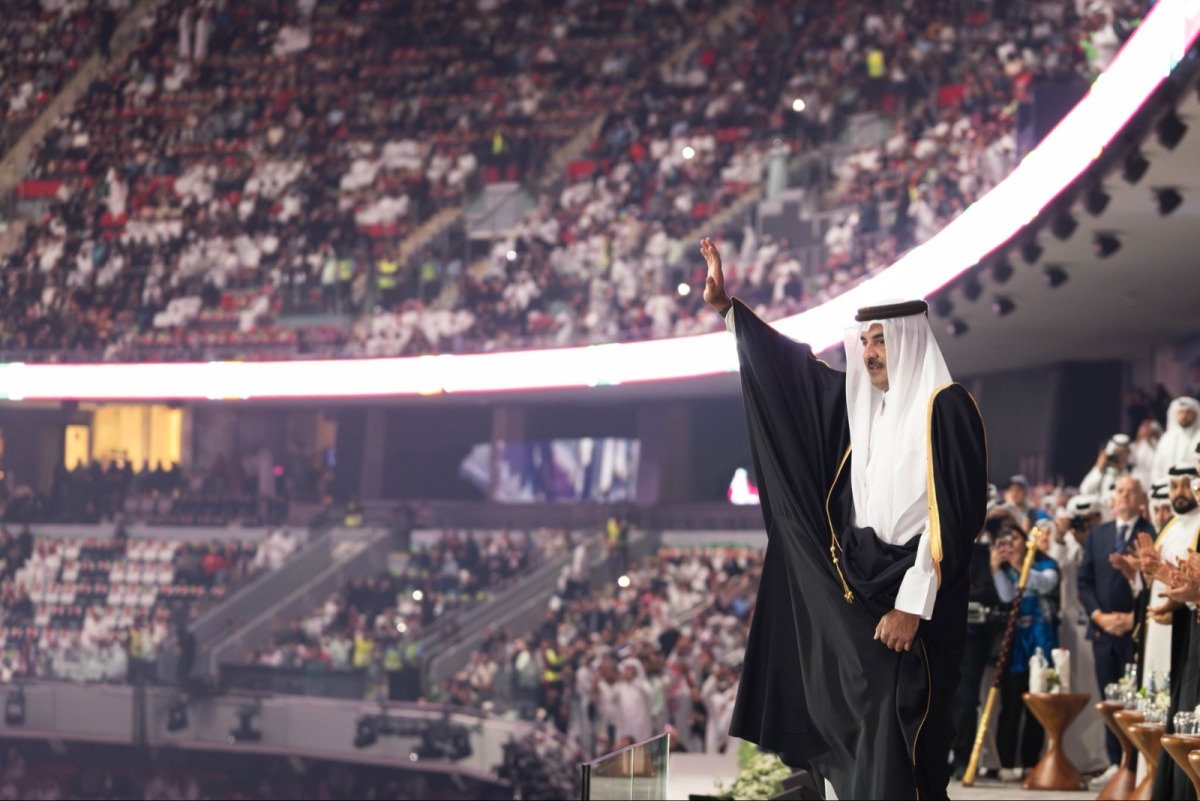

Doha, Qatar – His Highness The Amir Sheikh Tamim bin Hamad Al-Thani has extended a warm welcome to the participating nations in the upcoming FIFA Arab Cup Qatar 2025. The announcement, made via His Highness’s official X account, underscores Qatar’s commitment to fostering regional collaboration through sports and its continued investment in football development. The tournament is scheduled to take place in late 2025, serving as a crucial preparation event for potential future World Cup bids.
The Amir’s message specifically highlighted his pleasure in receiving teams from across the Arab world, wishing them success in the competition. He also offered congratulations to Palestine following their victory in a recent qualifying match, emphasizing the importance of unity and sportsmanship. This gesture signals Qatar’s support for the Palestinian team and its broader commitment to Arab solidarity.
Qatar Prepares to Host the FIFA Arab Cup 2025
The FIFA Arab Cup Qatar 2025 is intended to be more than just a football tournament; it’s a platform for strengthening ties between Arab nations. This event builds upon the success of the 2021 edition, which served as a “dress rehearsal” for the 2022 FIFA World Cup hosted by Qatar. According to FIFA, the tournament aims to promote football across the Arab region and provide competitive opportunities for national teams.
Tournament Significance and Regional Impact
The Arab Cup is a competition open to national teams affiliated with the Union of Arab Football Associations (UAFA). It’s seen as a vital stepping stone for improving the standard of football in the region, offering exposure and experience to players and coaching staff. The 2025 edition is particularly significant as it comes after Qatar’s successful hosting of the World Cup, demonstrating the nation’s capacity to organize and deliver major sporting events.
However, the tournament also faces challenges. Maintaining consistent participation and ensuring adequate infrastructure across all host cities will be key to its long-term success. The competition schedule and qualification pathways are still being finalized, with details expected to be released by UAFA in the coming months.
Qatar’s hosting of the Arab Cup aligns with its broader “National Vision 2030,” which prioritizes investment in sports and human capital. The country has consistently sought to position itself as a leading sports hub in the Middle East, attracting international events and fostering a culture of athletic excellence. This strategy has yielded positive results, as evidenced by the successful World Cup and the growing popularity of various sports within Qatar.
The 2021 Arab Cup saw Algeria emerge as champions, defeating Tunisia in the final. The tournament attracted significant media attention and showcased the talent within Arab football. The upcoming edition is expected to draw even larger crowds and generate greater economic benefits for Qatar and the surrounding region. The event also provides a boost to sports tourism in the country.
Meanwhile, preparations are underway to upgrade several stadiums and training facilities to meet FIFA standards. Qatar is also focusing on enhancing its hospitality infrastructure to accommodate the expected influx of fans and officials. The focus on infrastructure development extends to transportation networks, ensuring smooth and efficient movement throughout the tournament venues.
In contrast to some other regional sporting events, the FIFA Arab Cup has largely avoided political controversies, focusing instead on the unifying power of football. This approach is likely to continue in 2025, with Qatar aiming to create a welcoming and inclusive environment for all participants. The emphasis on fair play and sportsmanship is expected to be a central theme of the tournament.
Looking ahead, the next key step involves the completion of the qualification process and the official draw for the tournament. The final list of participating teams is anticipated by early 2025. The success of the FIFA Arab Cup 2025 will be measured not only by the quality of the football on display but also by its ability to strengthen regional cooperation and promote the sport’s development across the Arab world. Further details regarding ticketing and event schedules remain to be announced, and stakeholders will be closely monitoring these developments.
The event is also expected to contribute to the growth of football infrastructure in Qatar, building on the legacy of the 2022 World Cup. Qatar’s continued investment in sports is a testament to its commitment to becoming a global leader in the industry.