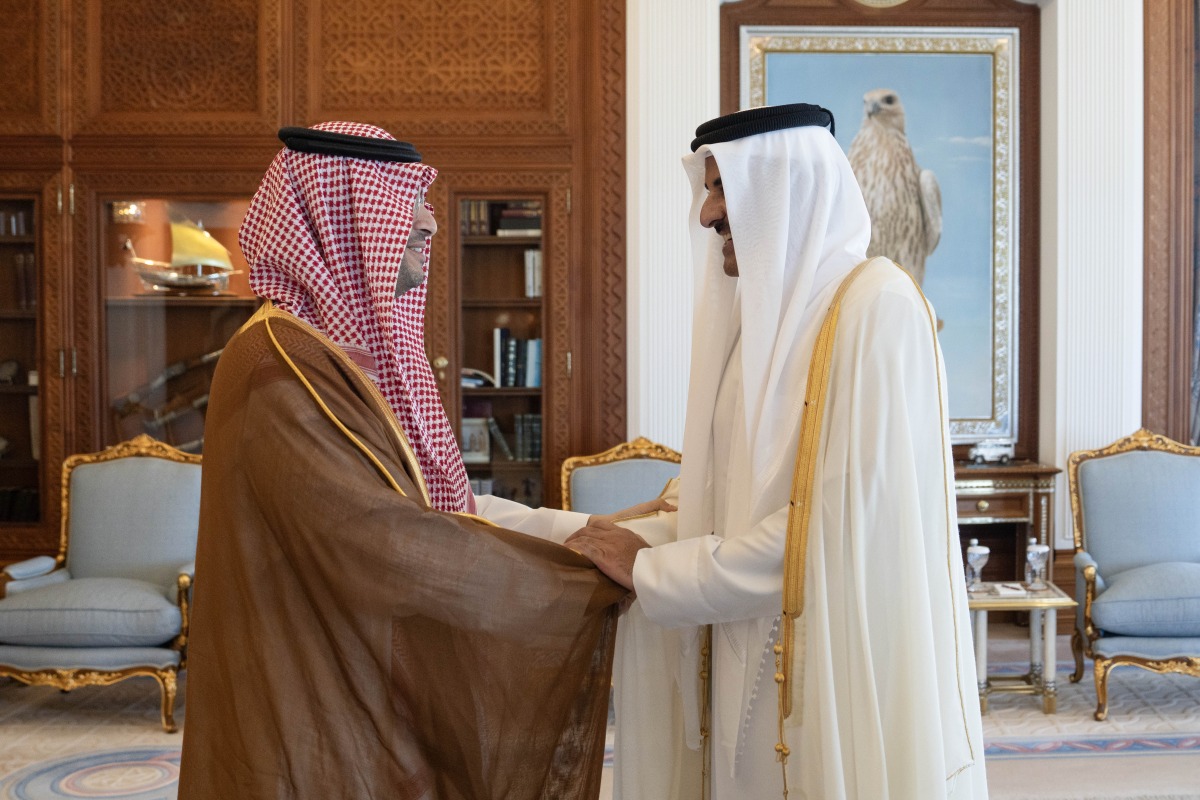

Doha, Qatar – His Highness the Amir Sheikh Tamim bin Hamad Al-Thani received Prince Turki bin Mohammed bin Fahd bin Abdulaziz Al Saud, Minister of State and Member of the Council of Ministers of Saudi Arabia, at the Amiri Diwan today. This meeting underscores the consistently strong Qatar Saudi relations and signals continued diplomatic engagement between the two Gulf nations. The visit, occurring on November 26, 2023, comes at a time of evolving regional dynamics and shared economic interests.
Prince Turki delivered greetings from King Salman bin Abdulaziz Al Saud and Crown Prince Mohammed bin Salman bin Abdulaziz Al Saud to the Amir, expressing wishes for Qatar’s continued progress and prosperity. His Highness the Amir reciprocated with greetings for the Saudi leadership and the Saudi people. Discussions centered on bolstering bilateral ties and addressing key issues of mutual concern.
Strengthening Qatar Saudi Relations Through High-Level Diplomacy
The meeting highlights Qatar and Saudi Arabia’s commitment to maintaining a stable and cooperative relationship, following a period of diplomatic strain. Relations between the two countries were restored in January 2021, after a three-and-a-half-year embargo imposed on Qatar by Saudi Arabia and several other nations. Since then, both sides have actively worked to rebuild trust and foster collaboration.
According to prior statements from both governments, the key areas of cooperation include economic development, investment, and regional security. Both nations are significant players in the global energy market, and coordination on oil production and pricing is a crucial aspect of their partnership. Furthermore, they share concerns regarding regional stability, particularly in relation to conflicts in Yemen and Sudan.
Focus on Regional Stability
The discussions likely touched upon ongoing efforts to mediate conflicts and promote peaceful resolutions in the region. Qatar has frequently played a mediating role, most notably in the negotiations between the United States and the Taliban. Saudi Arabia, similarly, has actively sought to de-escalate tensions in Yemen through peace talks.
Analysts suggest that enhanced cooperation between Qatar and Saudi Arabia is crucial for addressing shared challenges, such as countering terrorism and maritime security threats. Cooperation on defense and intelligence sharing could contribute to increased regional stability, benefitting both nations. The recent increase in geopolitical tension in the region also makes this type of dialogue even more pertinent.
The visit also reinforces the growing trend of diplomatic engagement within the Gulf Cooperation Council (GCC). While internal differences persist, there is a broader recognition of the need for collective action to address common threats and promote economic integration. This is especially apparent in light of efforts to diversify national economies beyond oil, as seen in both Qatar’s National Vision 2030 and Saudi Arabia’s Vision 2030.
Economic Cooperation and Investment
Beyond political alignment, representatives likely discussed potential investment opportunities and further integration of their economies. Saudi Arabia is a major trading partner for Qatar, and increased investment in sectors such as tourism, infrastructure, and technology could benefit both countries. The strengthening economic ties are a key component of the overall relationship.
Reports indicate that there’s a substantial increase in non-oil trade between the two nations in the past year, driven by diversification strategies. These efforts aim to reduce reliance on hydrocarbon revenue and create sustainable economic growth. Bilateral trade has been identified as a priority by both Qatari and Saudi officials.
While specific details of the discussions were not publicly released, the meeting itself serves as a positive signal for the future of Qatar-Saudi Arabia relations. The exchange of greetings and the review of mutual interests demonstrate a continued commitment to dialogue and cooperation.
Looking ahead, it is expected that further high-level meetings will take place to implement the agreements and understandings reached during Prince Turki’s visit. The timeline for any concrete outcomes, such as new investment projects or joint initiatives, remains uncertain, and will depend on continued negotiations and evolving regional circumstances. The development of a more formalized framework for ongoing dialogue, possibly through a joint commission, will be a key indicator of the depth of the renewed partnership.
Ongoing monitoring of official statements from both Qatar and Saudi Arabia, alongside analysis from regional experts, will provide further insight into the trajectory of this important relationship.