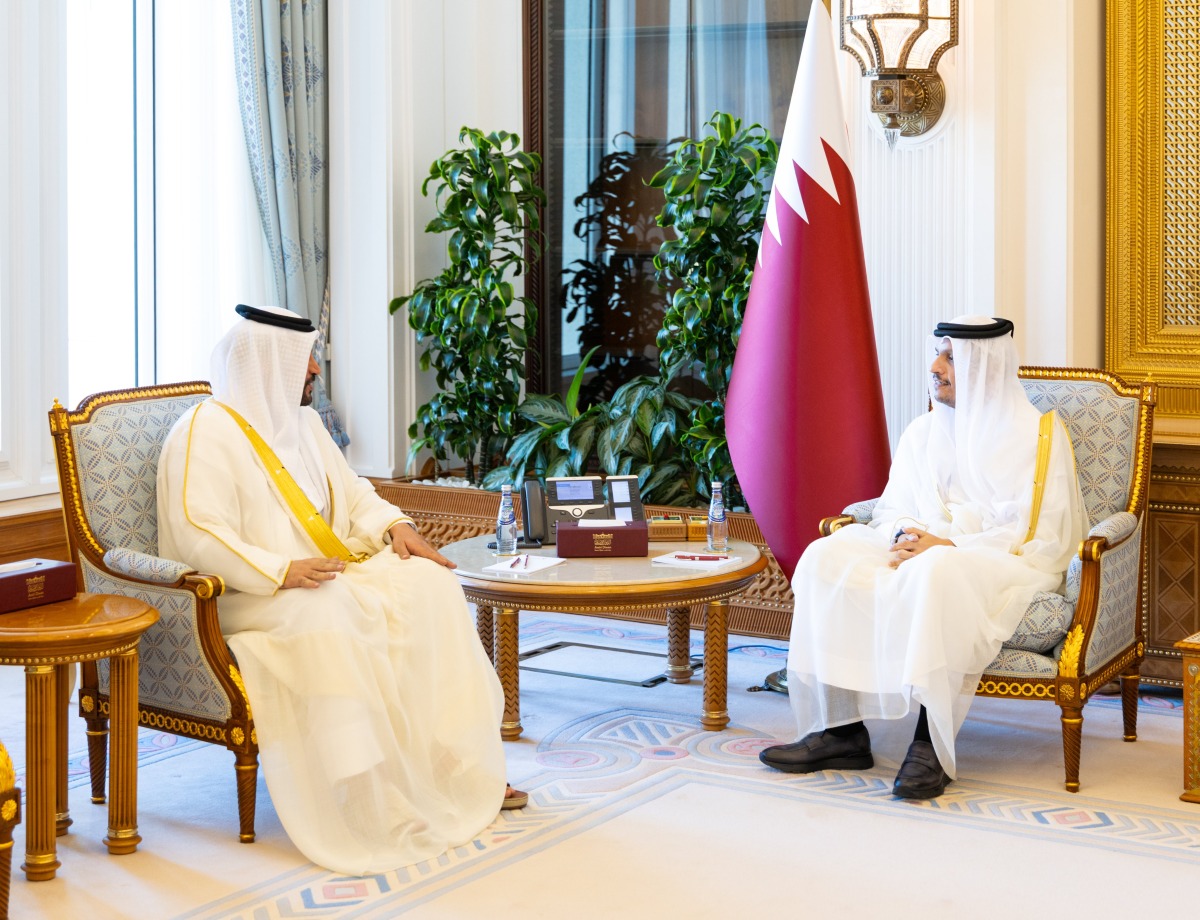

Doha, Qatar – Qatar’s Amir Sheikh Tamim bin Hamad Al-Thani has received an invitation from Bahrain’s King Hamad bin Isa Al Khalifa to attend the 46th session of the Gulf Cooperation Council Summit, scheduled to take place in Bahrain in December. The invitation underscores ongoing diplomatic efforts within the region and highlights the importance of the GCC as a forum for addressing shared challenges. This summit is anticipated to cover a range of critical issues impacting the stability and prosperity of the Gulf states.
The message was formally delivered to Sheikh Mohammed bin Abdulrahman bin Jassim Al-Thani, Qatar’s Prime Minister and Minister of Foreign Affairs, by Bahraini Ambassador Mohammed bin Ali Al-Ghatam during a meeting in Doha. The upcoming Gulf Cooperation Council Summit is expected to focus on regional security, economic integration, and collaborative initiatives among member states. Preparations are underway for high-level discussions on pressing geopolitical concerns.
Significance of the Gulf Cooperation Council Summit
The Gulf Cooperation Council (GCC), established in 1981, comprises Bahrain, Kuwait, Oman, Qatar, Saudi Arabia, and the United Arab Emirates. It serves as a platform for coordinating policies and fostering cooperation in areas such as defense, security, economics, and culture. The annual summit is the highest-level meeting of the GCC, providing an opportunity for heads of state to address critical regional issues and reaffirm their commitment to collective action.
Recent Regional Developments
The invitation comes amid a period of evolving dynamics in the Middle East. Recent diplomatic breakthroughs, including the restoration of diplomatic ties between Saudi Arabia and Iran brokered by China earlier this year, have reshaped the regional landscape. These developments are likely to be central to discussions at the summit, as GCC members assess their implications for regional stability and security cooperation.
Additionally, the ongoing conflict in Yemen and the situation in Syria remain significant concerns for the GCC. Member states have been actively involved in humanitarian efforts and diplomatic initiatives aimed at resolving these conflicts. The Gulf Cooperation Council has consistently advocated for peaceful resolutions and a commitment to regional stability.
Economic Cooperation and Integration
Beyond security concerns, the summit is expected to address economic cooperation and integration among GCC members. Discussions may focus on advancing the GCC’s common market, promoting trade and investment, and diversifying economies away from reliance on oil revenues. The development of infrastructure projects and the promotion of sustainable development initiatives are also likely to be on the agenda. Qatar’s economic diversification plans, as outlined in its National Vision 2030, align with these broader GCC goals.
However, economic challenges remain. Fluctuations in global energy markets and the impact of geopolitical tensions on trade routes pose ongoing risks to the region’s economic stability. The GCC is exploring strategies to mitigate these risks and enhance its economic resilience.
Meanwhile, Qatar’s role in mediating regional disputes has been increasingly recognized. Its efforts to facilitate dialogue and de-escalate tensions have contributed to a more stable regional environment. Qatar’s foreign policy emphasizes diplomacy and peaceful conflict resolution, aligning with the GCC’s broader objectives.
In contrast to previous years marked by internal divisions within the GCC, recent efforts have focused on strengthening unity and cooperation. The resolution of the diplomatic dispute with Qatar in 2021, following the Al Ula summit, signaled a renewed commitment to collective action. This positive momentum is expected to continue at the upcoming summit.
The specific agenda for the 46th Gulf Cooperation Council Summit remains to be fully disclosed. However, it is anticipated that discussions will cover a wide range of issues, including regional security, economic integration, and collaborative initiatives. The summit represents a crucial opportunity for GCC members to reaffirm their commitment to regional stability and prosperity.
Following the delivery of the invitation, Qatar is expected to finalize its preparations for the summit, including coordinating its position on key agenda items. The outcome of the summit will likely shape the GCC’s approach to regional challenges in the coming year. Observers will be watching closely for any new initiatives or agreements that emerge from the discussions in Bahrain, particularly regarding economic cooperation and security partnerships.
Source.
Gulf Cooperation Council.
Council on Foreign Relations – GCC.