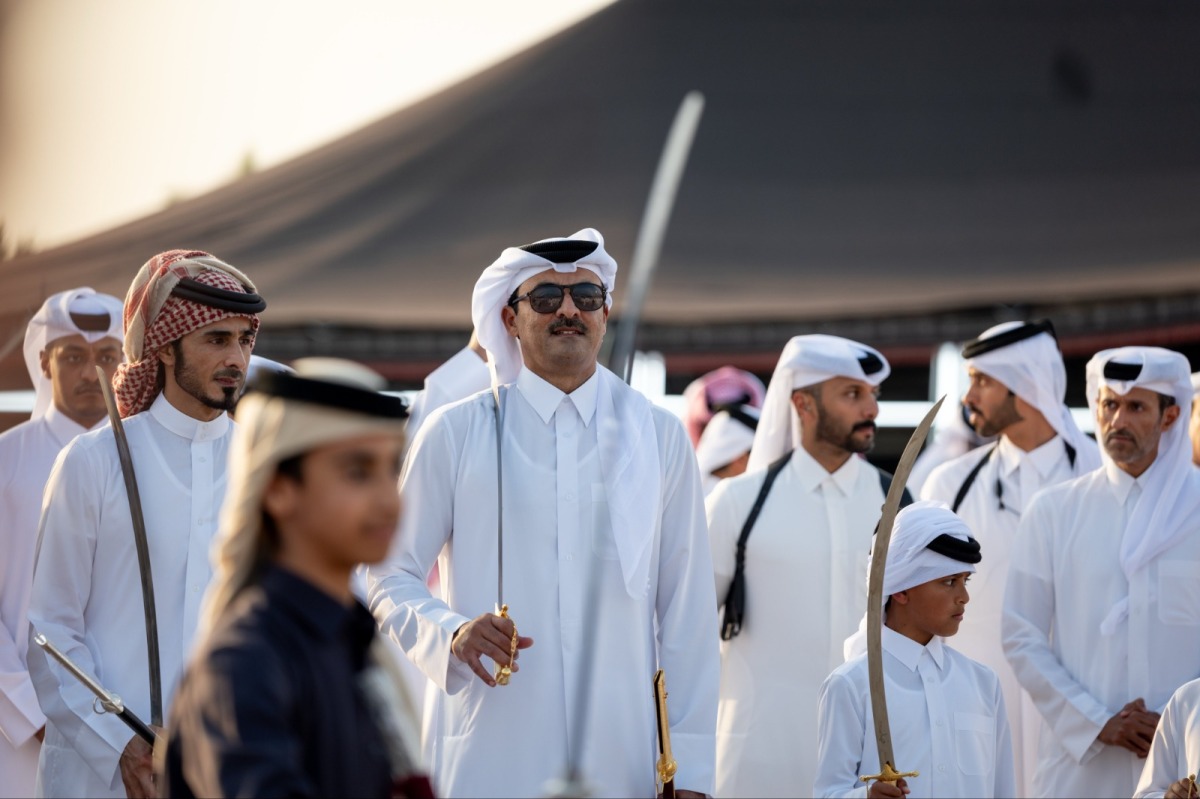

Doha, Qatar – His Highness Sheikh Tamim bin Hamad Al-Thani, the Amir of Qatar, actively participated in a traditional Arda sword dance held at Lusail Palace on Wednesday, December 18, 2024. The event marked a central celebration of Qatar National Day, a yearly observance commemorating the nation’s founding. The display of cultural heritage was attended by numerous dignitaries and citizens.
The Arda, a symbolic performance deeply rooted in Qatari and wider Gulf Arab traditions, took place in the palace courtyard. Sheikh Jassim bin Hamad Al-Thani, the Personal Representative of the Amir, Sheikh Abdullah bin Khalifa Al-Thani, along with members of the ruling family, joined in the dance. The participation of high-ranking officials underscores the importance placed on preserving and promoting national identity.
The Significance of the Arda in Qatari Culture
The Arda is more than just a dance; it’s a powerful expression of courage, unity, and historical narrative. Traditionally performed during celebrations and important occasions, the dance involves rhythmic movements with swords, accompanied by drums and vocalizations. It’s believed to have originated as a war dance, evolving over time into a symbol of national pride and hospitality.
The event at Lusail Palace featured a large gathering of participants, including Speaker of the Shura Council Hassan bin Abdullah Al Ghanim, ministers, and a diverse representation of Qatari citizens. This broad participation highlights the inclusivity of the national celebration and the shared commitment to cultural preservation. Qatar National Day aims to foster a sense of belonging and national unity among its population.
Historical Roots and Modern Revival
While the exact origins of the Arda are debated, its roots are firmly planted in the Bedouin traditions of the Arabian Peninsula. Historically, the dance served as a demonstration of strength and skill, often performed before or after battles. Over the past few decades, there has been a conscious effort to revive and promote traditional arts like the Arda, ensuring their continuity for future generations.
The modern revival of the Arda is often linked to the growing national consciousness following Qatar’s independence in 1971. The government and cultural institutions have actively supported initiatives to teach the dance to young people and showcase it during national events. This support is part of a broader strategy to strengthen cultural identity in a rapidly globalizing world.
The display of national heritage, such as the Arda, also plays a role in Qatar’s international image. The country has increasingly focused on cultural diplomacy, using its traditions to build bridges with other nations and promote understanding. This is particularly relevant as Qatar continues to host major international events, including the FIFA World Cup in 2022 and various sporting and cultural festivals.
The participation of the Amir in the Arda sends a strong message about the value placed on these traditions at the highest levels of leadership. It reinforces the idea that cultural heritage is not merely a relic of the past, but a living and vital part of Qatar’s present and future. The event also served as a platform for showcasing traditional Qatari attire and music, further enriching the cultural experience.
Looking ahead, Qatar is expected to continue its investment in preserving and promoting its cultural heritage. Further initiatives to document and teach traditional arts, as well as to integrate them into educational curricula, are likely. The ongoing success of these efforts will depend on continued support from both the government and the community, and on adapting to the evolving needs of a modern society while remaining true to its roots. The Ministry of Culture is expected to release a report detailing the impact of National Day celebrations on cultural tourism in the coming months.
Related keywords include Qatari cultural experiences, Qatar National Day events, and Qatar history.