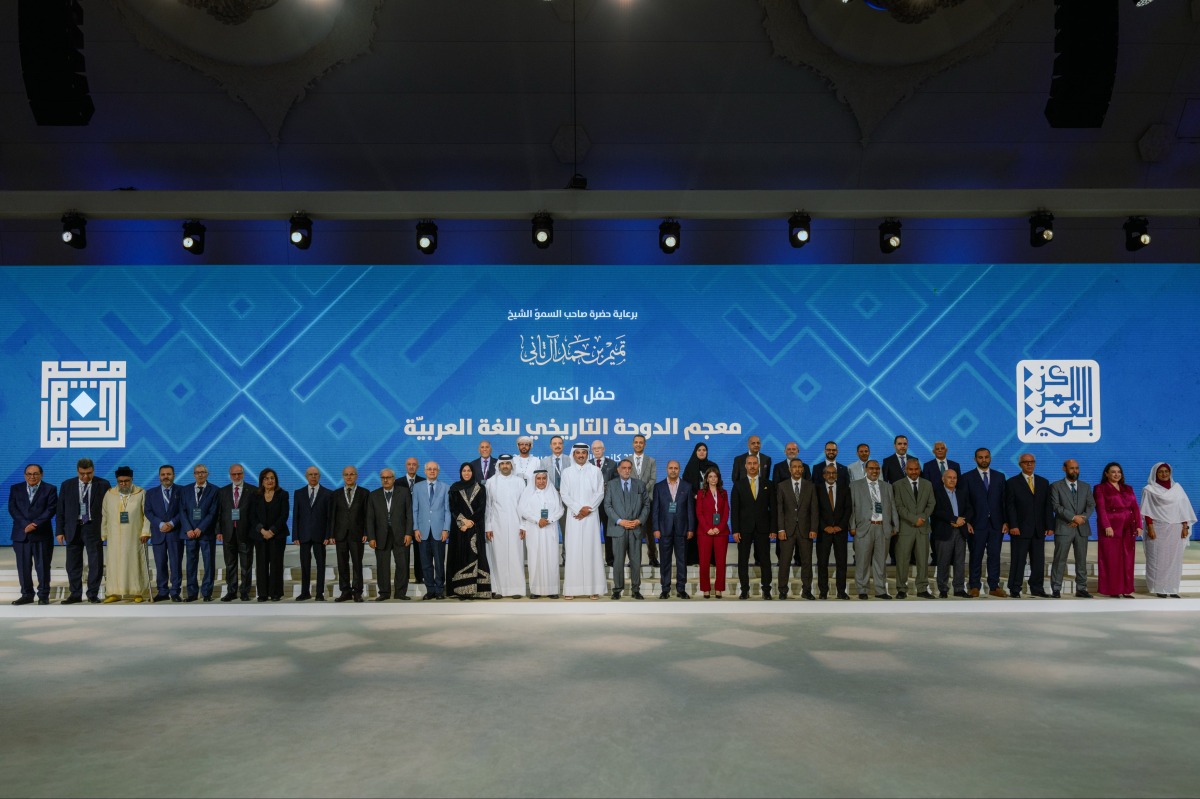

Doha, Qatar – The Amir of Qatar, Sheikh Tamim bin Hamad Al-Thani, has celebrated the completion of the Doha Historical Dictionary of the Arabic Language, a project hailed as a significant cultural milestone for the Arab world. The comprehensive dictionary, years in the making, documents the evolution of Arabic vocabulary and usage throughout history. The achievement underscores Qatar’s commitment to preserving and promoting Arabic language and heritage.
The announcement, made via the Amir’s official X account, emphasized the dictionary’s role in strengthening cultural identity while fostering engagement with the modern world. The project involved extensive collaboration across multiple Arab nations, demonstrating a unified effort in linguistic preservation. According to the Amiri Diwan, the dictionary represents a major civilizational accomplishment.
The Significance of the Doha Historical Dictionary
The Doha Historical Dictionary of the Arabic Language is not simply a compilation of words and definitions; it’s a detailed tracing of semantic shifts and contextual changes over centuries. This historical approach distinguishes it from standard dictionaries, offering researchers and language enthusiasts a deeper understanding of the Arabic language’s development. The project aims to provide a definitive resource for scholars studying Arabic literature, history, and linguistics.
A Collaborative Effort
The dictionary’s creation involved contributions from numerous experts and institutions across the Arab world. This collaborative spirit, as highlighted by the Amir, is considered a key aspect of the project’s success. Participating countries included Egypt, Lebanon, and Saudi Arabia, among others, each contributing expertise in specific areas of Arabic linguistics and historical texts. The initiative was funded by the Qatar Foundation.
Scope and Methodology
The dictionary meticulously examines the origins and evolution of Arabic words, drawing upon a vast collection of historical texts, including classical literature, poetry, and religious writings. Researchers analyzed these sources to document the earliest known usages of words and track changes in their meanings over time. This process involved extensive lexicographical research and the development of sophisticated digital tools for data management and analysis. The project also incorporated insights from Arabic linguistics and historical linguistics.
However, compiling such a comprehensive resource presented significant challenges. The Arabic language boasts a rich and complex history, with regional variations and numerous dialects. Researchers had to navigate these complexities to create a dictionary that accurately reflects the language’s diversity while maintaining a consistent and scholarly approach. Additionally, the sheer volume of historical texts required extensive resources and a dedicated team of experts.
In contrast to existing Arabic dictionaries, the Doha Historical Dictionary prioritizes historical context. Many contemporary dictionaries focus on modern usage, offering limited insight into the evolution of words. This new resource fills a critical gap in Arabic lexicography, providing a valuable tool for understanding the language’s historical roots. The project also contributes to the broader field of Arabic heritage preservation.
The completion of the dictionary is expected to have a ripple effect on Arabic language education and research. It will serve as a foundational resource for universities, research institutions, and language learners worldwide. Furthermore, the project’s digital platform will make the dictionary accessible to a global audience, promoting a wider appreciation for the Arabic language and culture.
Looking ahead, the Qatar Foundation plans to continue developing and expanding the dictionary’s digital platform. Future updates may include the addition of new entries, enhanced search functionality, and interactive features. The long-term sustainability of the project and its continued relevance will depend on ongoing funding and collaboration with linguistic experts. The official launch date for public access to the complete digital dictionary remains to be announced, though it is anticipated within the next quarter.