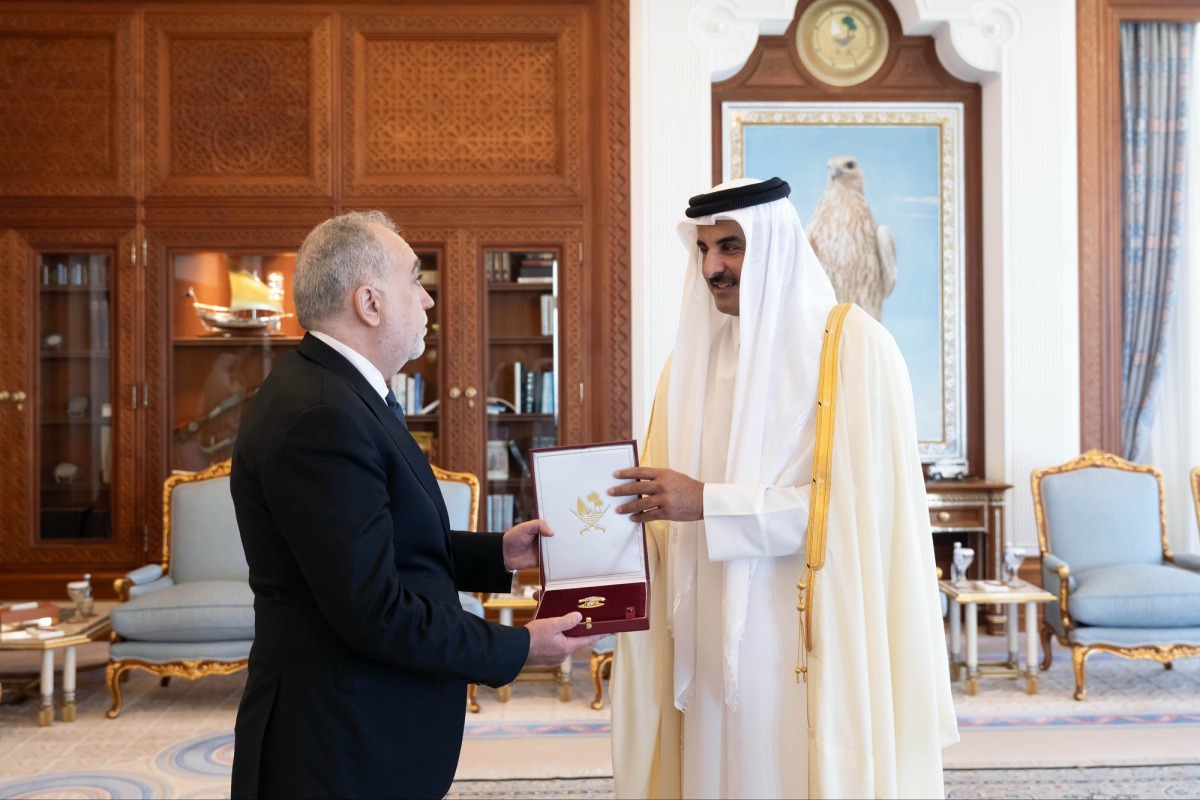

Doha, Qatar – On December 7, 2025, the Amir of Qatar, HH Sheikh Tamim bin Hamad Al-Thani, conferred the Al Wajbah Decoration upon the outgoing Ambassador of the Republic of Bulgaria, Plamen Stankov Delev. This recognition highlights the strengthening Qatar-Bulgaria relations during Ambassador Delev’s tenure. The meeting took place at the Amiri Diwan and marked the official end of the ambassador’s assignment in the country.
The Amir’s decision to award the Al Wajbah Decoration, one of Qatar’s highest honors, underscores the importance Qatar places on its diplomatic ties with Bulgaria. Ambassador Delev expressed gratitude for the support he received from Qatari officials throughout his time in Doha, facilitating successful collaboration between the two nations. The gesture signifies Qatar’s appreciation for Bulgaria’s contributions to regional stability and economic partnership.
Strengthening Qatar-Bulgaria Relations: A Period of Growth
Diplomatic relations between Qatar and Bulgaria were established in 1993, following the dissolution of Yugoslavia and Bulgaria’s transition to a democratic government. Over the past three decades, these relations have evolved from primarily political engagement to include increased cooperation across multiple sectors. Ambassador Delev’s tenure appears to be viewed by Qatari leadership as particularly fruitful in this development.
Key Areas of Bilateral Cooperation
Economic partnership forms a cornerstone of the Qatar-Bulgaria relations. According to data from the Qatari Ministry of Commerce and Industry, bilateral trade volume has seen a steady, but moderate, increase in recent years. Investment flows between the two countries are also growing, particularly within Qatar’s sovereign wealth fund, the Qatar Investment Authority (QIA), exploring opportunities in Bulgarian infrastructure and technology.
Additionally, security cooperation has become an increasingly important aspect of the relationship. Both nations share common interests in combating terrorism and maintaining regional stability. Discussions on enhancing collaboration in intelligence sharing and counter-terrorism initiatives have reportedly taken place between high-level officials.
Cultural exchange programs, aimed at fostering understanding and people-to-people connections, have also been implemented. These initiatives include student scholarships and artistic collaborations. This focus on cultural diplomacy contributes to the broader goal of strengthening the bonds between Qatar and Bulgaria.
However, it’s worth noting that while relations are demonstrably improving, the overall trade and investment volume remains relatively modest compared to Qatar’s partnerships with other European nations, such as Germany or the United Kingdom. This could be due to logistical factors, differing economic structures, or prioritization of resources towards other regional partnerships.
The Al Wajbah Decoration is typically granted to heads of state, prime ministers, or individuals who have made significant contributions to Qatar’s interests. Extending this honor to an ambassador signals a deliberate effort by Doha to acknowledge and encourage continued positive engagement. The award could also be seen as a move to bolster support for Qatar’s regional policy initiatives within Bulgaria’s governmental circles.
Meanwhile, Bulgaria is actively seeking to diversify its economic and political relationships. Qatar represents a potential key partner in attracting foreign investment and accessing new markets. The outgoing ambassador’s work would have been instrumental in communicating these opportunities to Qatari investors and decision-makers.
The confirmation of a new Bulgarian ambassador to Qatar is the next procedural step. The Bulgarian Ministry of Foreign Affairs is expected to announce the successor in the coming weeks. The speed of this appointment, and the background of the new envoy, will be closely watched by observers interested in the future of diplomatic ties. The consistency of commitment to bilateral investment will also be important to observe in coming months.
While the overall trajectory of Qatar’s foreign policy suggests a continued interest in strengthening relations with European partners, including Bulgaria, external factors such as broader geopolitical shifts and economic fluctuations may impact the pace and scope of future collaboration. Continued monitoring of trade statistics, investment flows, and high-level diplomatic visits will be crucial to assessing the long-term impact of Ambassador Delev’s work and the future of this partnership.