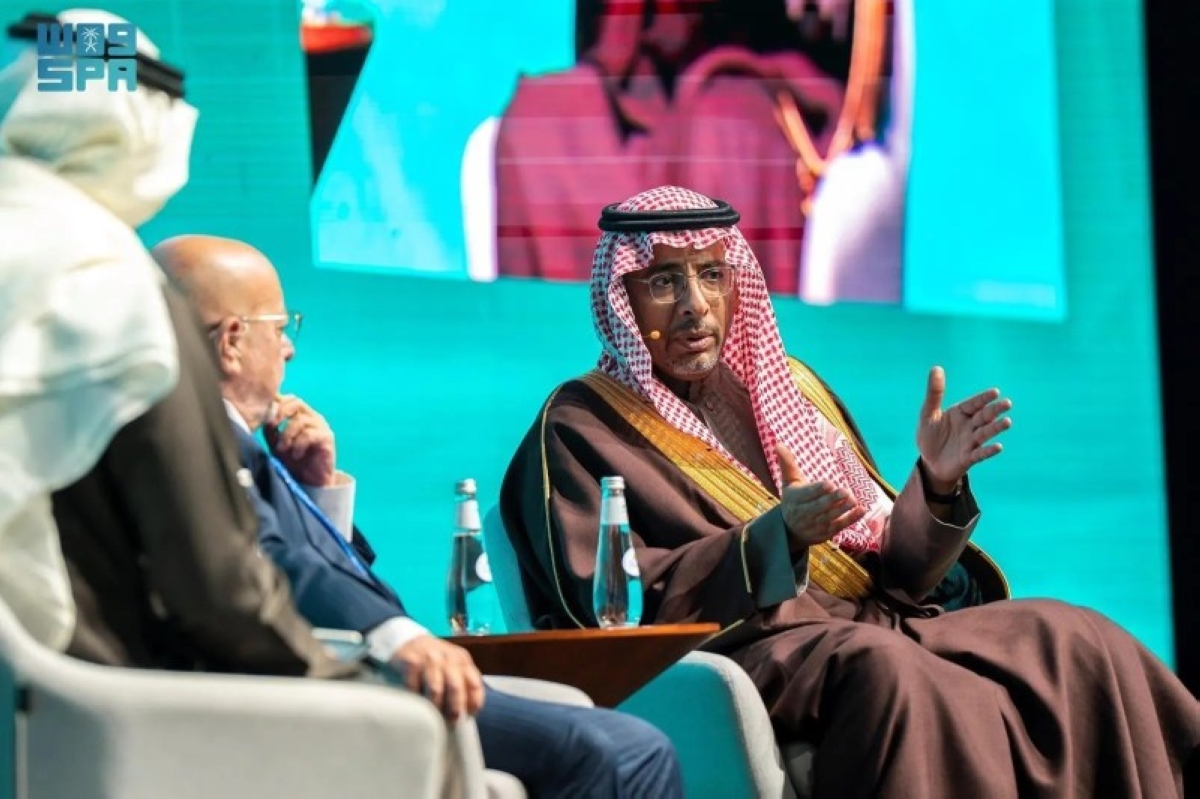

Saudi Arabia’s non-oil exports surged to a record SR307 billion (approximately $81.6 billion USD) in the first half of 2024, according to the Ministry of Industry and Mineral Resources. This marks the highest semiannual growth ever recorded for the Kingdom’s diversifying economy. The announcement came during a dialogue session focused on regional economic cooperation and the upcoming ‘Made in Saudi Expo 2025’.
Minister of Industry and Mineral Resources Bandar Alkhorayef highlighted the pivotal role of Saudi Vision 2030 in driving this expansion. The growth reflects increased national industrial capacity, improved product quality, and broader access to international markets. The ministry also noted growing trade ties with Syria, with non-oil exports to the country reaching SR1.2 billion in the first nine months of 2024.
Record Growth in Saudi Non-Oil Exports
The SR307 billion figure represents a significant increase compared to previous periods, though specific year-over-year growth percentages were not immediately released. This performance underscores the success of Saudi Arabia’s efforts to reduce its reliance on crude oil revenue and build a more diversified and resilient economy. The Kingdom has been actively investing in various non-oil sectors, including manufacturing, petrochemicals, and mining.
Vision 2030 as a Catalyst
Saudi Vision 2030, launched in 2016, outlines a long-term plan for economic and social transformation. A key component of this vision is the development of a robust and competitive non-oil export sector. The initiative has spurred investments in infrastructure, technology, and human capital, creating a more favorable environment for businesses to thrive.
Additionally, the government has implemented policies aimed at attracting foreign investment and promoting local content. These measures are designed to encourage domestic production and reduce dependence on imports. The Saudi Export Development Authority (Saudi Exports) plays a crucial role in facilitating these efforts by providing support to exporters and promoting Saudi products abroad.
Strengthening Saudi-Syrian Economic Ties
The dialogue session with Syrian Minister of Economy and Industry Dr. Mohammad Nidal Al-Shaar focused on potential areas of collaboration. Alkhorayef emphasized opportunities for Syria to learn from Saudi Arabia’s experience in developing industrial cities and fostering export growth. This includes strategies for enhancing local content and improving the competitiveness of Syrian industries.
The minister also praised the contributions of Syrian investors to the Saudi industrial sector, noting their skill and craftsmanship. He expressed optimism that a revitalized industrial sector could be a cornerstone of Syria’s economic recovery. The SR1.2 billion in trade with Syria represents a growing, though still relatively small, portion of Saudi Arabia’s overall export revenue.
However, the ongoing political and economic challenges in Syria present obstacles to deeper economic integration. The stability of the region and the implementation of effective economic reforms in Syria will be critical factors in realizing the full potential of this partnership.
Diversification Beyond Oil
Saudi Arabia’s push for economic diversification is driven by several factors. Fluctuations in global oil prices have highlighted the vulnerability of an economy heavily reliant on a single commodity. Diversification aims to create a more stable and sustainable economic base, less susceptible to external shocks.
Furthermore, the Kingdom is seeking to create new job opportunities for its growing population. The development of non-oil sectors is expected to generate employment in a variety of industries, reducing reliance on public sector jobs. This aligns with the broader goals of Vision 2030 to empower Saudi citizens and improve their quality of life.
The growth in non-oil exports also reflects a broader trend of increasing global demand for Saudi products. The Kingdom has been actively marketing its products in key international markets, leveraging its strategic location and competitive advantages. Industrial production has seen significant investment in recent years.
In contrast to previous economic models, the current strategy prioritizes value-added industries. This means focusing on manufacturing and processing rather than simply exporting raw materials. This approach is expected to generate higher revenues and create more skilled jobs.
Looking ahead, the ‘Made in Saudi Expo 2025’ is expected to further showcase the Kingdom’s growing industrial capabilities and attract investment. The event will provide a platform for Saudi companies to connect with potential buyers and partners from around the world. The ministry has not yet released specific targets for non-oil exports in 2025, but continued growth is anticipated. Monitoring geopolitical stability in the region and the implementation of Vision 2030 initiatives will be key to assessing future performance.