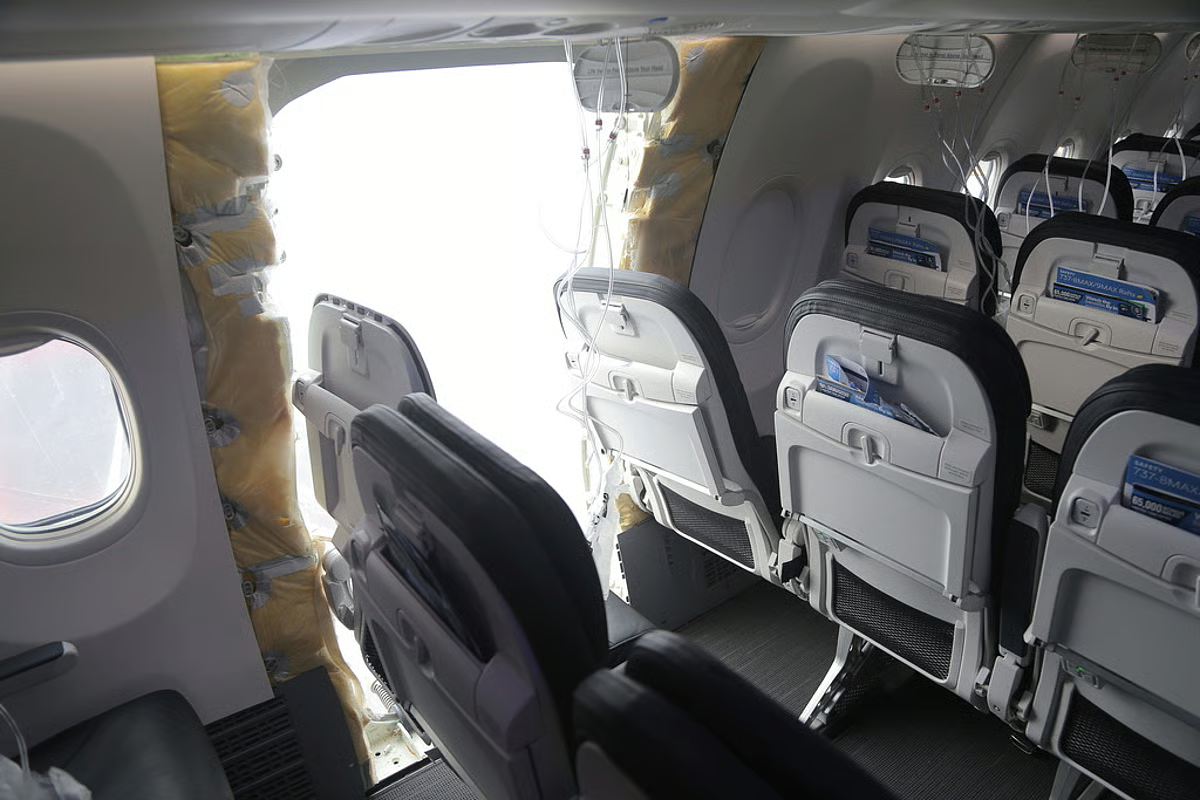

An Alaska Airlines captain has filed a lawsuit against Boeing, alleging the aircraft manufacturer caused him and his passengers emotional distress and potential physical harm due to the January 5th mid-air panel blowout on Flight 1282. The suit, filed in King County, Washington, claims Boeing negligently designed, manufactured, and inspected the Boeing 737-9 MAX aircraft. The incident, which led to the grounding of the model for inspection by the Federal Aviation Administration, has escalated legal and regulatory scrutiny of Boeing’s production practices.
The Alaska Airlines flight, traveling from Portland, Oregon, to Ontario, California, returned to Portland shortly after takeoff when a door plug – a panel covering an emergency exit – detached mid-flight. No one was seriously injured, but the event triggered widespread fear and concern among air travelers. The captain’s lawsuit seeks damages for emotional distress, potential future medical monitoring, and other related costs.
Details of the Alaska Airlines Lawsuit and Boeing’s Response
The captain, identified in court documents as John Repa, contends that Boeing failed to ensure the adequate and safe assembly of the 737-9 MAX. The suit argues that the manufacturer prioritized production speed over quality control, contributing to the conditions that caused the panel to separate. He further alleges he experienced significant emotional distress, fearing for the safety of his passengers and crew during the emergency landing.
Boeing has acknowledged the incident and stated it is cooperating fully with the FAA investigation. In a public statement, the company expressed its regret and reiterated its commitment to safety. However, Boeing has not yet publicly addressed the specific claims made in Captain Repa’s lawsuit.
The FAA’s Investigation and Findings
The Federal Aviation Administration (FAA) launched a probe immediately following the incident. Initial findings presented to the Senate Commerce Committee indicated that the door plug was not properly secured after maintenance work performed by Spirit AeroSystems, a major Boeing supplier. Specifically, reports suggested that key bolts intended to secure the panel were missing.
The FAA has since issued an Airworthiness Directive requiring inspections of all 737-9 MAX aircraft and an immediate repair or replacement of any improperly installed or missing door plugs. The agency has also temporarily halted further production expansion of the 737 MAX. These actions reflect growing concerns about manufacturing quality at Boeing and its suppliers.
Passenger Accounts and Subsequent Claims
Passengers on Flight 1282 have independently described the terrifying experience of the sudden depressurization and the sight of the missing panel. Several passengers have also filed their own claims against Boeing, seeking compensation for emotional distress and fear. These individual lawsuits are likely to be consolidated into a larger class-action case.
The National Transportation Safety Board (NTSB) is also conducting an independent investigation. The NTSB will focus on determining the root cause of the panel separation and identifying any systemic issues that contributed to the event. Their final report is expected to provide a comprehensive analysis of the incident and recommendations for preventing similar occurrences in the future.
Broader Implications for Boeing and the Aviation Industry
The panel blowout and the resulting fallout have intensified scrutiny of Boeing’s safety culture. The incident has drawn comparisons to the 737 MAX crashes in 2018 and 2019, which resulted in the deaths of 346 people and led to a nearly two-year grounding of the aircraft. It’s reignited the debate about the relationship between Boeing and the FAA, with some critics alleging that the agency has been too lenient in its oversight of the manufacturer.
Additionally, the incident is likely to have financial consequences for Boeing. The cost of inspections, repairs, and potential compensation to passengers and airlines could be substantial. Furthermore, the damage to Boeing’s reputation may lead to a decline in future aircraft orders.
The situation with Spirit AeroSystems is also becoming a focal point. Boeing is considering bringing more of the manufacturing process in-house, potentially absorbing Spirit AeroSystems or taking on a greater role in quality control. This move would represent a significant shift in Boeing’s outsourcing strategy and could reshape the aviation supply chain. Reports indicate this potential acquisition is being seriously considered to address quality control issues.
Meanwhile, airlines are working to minimize disruption to their schedules while ensuring the safety of their fleet. The grounding of the 737-9 MAX has led to flight cancellations and delays, impacting travelers across the country. Airlines are monitoring the FAA inspections and repairs closely to determine when the aircraft can safely return to service. Some airlines have cited a lack of transparency from Boeing regarding the issue.
In contrast to Boeing’s current challenges, Airbus continues to experience strong demand for its aircraft. The European manufacturer has capitalized on the difficulties faced by Boeing, increasing its market share. The competitive landscape between Boeing and Airbus will likely be further impacted by the fallout from the panel blowout.
The Path Forward: FAA Review and Potential Changes
The FAA’s comprehensive review of Boeing’s manufacturing processes is expected to take several months. The review will assess Boeing’s quality control systems, safety protocols, and overall culture. Based on the findings, the FAA may impose stricter regulations on Boeing, including more frequent inspections and increased oversight of its suppliers. The aim is to prevent a recurrence of the quality control lapses that led to the Boeing 737 MAX incident.
Boeing CEO David Calhoun has pledged to take “full accountability” for the incident and has outlined a series of steps to address the concerns raised by the FAA and the public. These steps include bolstering quality control, enhancing communication with regulators, and investing in employee training. However, the effectiveness of these measures remains to be seen.
Looking ahead, the NTSB’s final investigation report is anticipated within the next 12-18 months. The FAA is expected to issue its final recommendations for Boeing based on the findings of both investigations. What remains uncertain is the extent of the long-term impact on Boeing’s production capacity, its financial performance, and its reputation within the aviation industry.