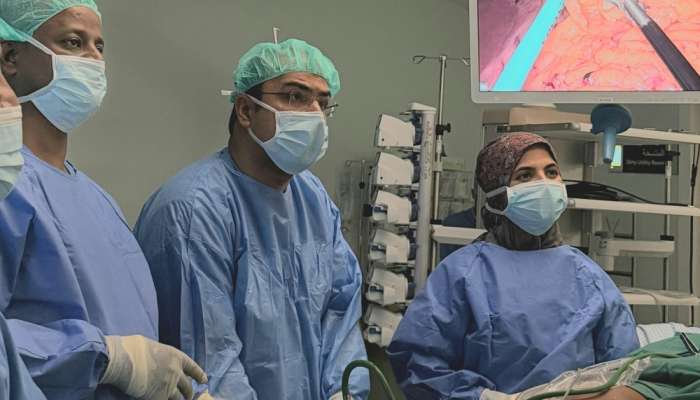

Healthcare access in Oman continues to improve with significant advancements being made at regional hospitals. Recently, Al Suwaiq Hospital achieved a landmark success, performing its first laparoscopic colon resection – a minimally invasive surgical procedure to remove part of the colon. This achievement marks a pivotal moment for the hospital and the communities it serves, bringing specialized surgical care closer to home and reducing the need for travel to the capital, Muscat.
Al Suwaiq Hospital Performs First Laparoscopic Colon Resection
The successful completion of the laparoscopic colon resection at Al Suwaiq Hospital represents a major step forward in the hospital’s commitment to providing advanced medical services. Dr. Hatim Dhiab Al Saadi, Director of Al Suwaiq Hospital, highlighted the surgery as a testament to the rapid development of the hospital’s facilities and its dedication to staying current with the latest surgical techniques. The three-hour procedure was conducted adhering to stringent approved medical standards, ensuring the safety and well-being of the patient.
Minimally Invasive Surgery Benefits
Laparoscopic surgery, also known as keyhole surgery, offers numerous advantages over traditional open surgery. These include smaller incisions, reduced pain, shorter hospital stays, and faster recovery times. For patients requiring colon surgery, this translates to a significantly improved quality of life during and after treatment. The adoption of this technique at Al Suwaiq Hospital demonstrates a proactive approach to patient care and a commitment to utilizing the most effective and modern methods available.
Expanding Access to Specialized Surgical Care
Previously, residents of North Al Batinah and South Al Batinah governorates needing a colon resection had to travel to Muscat for the procedure. This presented logistical challenges and increased the burden on patients and their families. Dr. Al Saadi emphasized that this new capability at Al Suwaiq Hospital directly addresses this issue, making specialized surgical care more accessible within the local community. This is a crucial development in reducing healthcare disparities and ensuring equitable access to quality medical treatment.
Decentralization of Health Services
The success of this surgery isn’t just a win for Al Suwaiq Hospital; it’s a reflection of Oman’s broader strategy to decentralize health services. By empowering regional hospitals to perform complex procedures, the healthcare system becomes more resilient and responsive to the needs of the population. This approach reduces strain on central facilities like the Royal Hospital and allows for more efficient allocation of resources. The collaboration with the Royal Hospital was instrumental in achieving this milestone.
Collaboration and Knowledge Transfer
The laparoscopic colon resection was performed by a highly skilled team of national staff from Al Suwaiq Hospital, working in close collaboration with a specialized surgical team from the Royal Hospital. This partnership exemplifies a commitment to knowledge transfer and the development of local expertise. Dr. Al Saadi explained that this collaborative model is vital for enhancing the sustainability of advanced surgical practices across all healthcare institutions in Oman.
Building National Capacity in Surgery
Investing in the training and development of Omani medical professionals is a key priority. The successful execution of this surgery demonstrates the growing capabilities of the nation’s healthcare workforce. By providing opportunities for surgeons at Al Suwaiq Hospital to work alongside experts from the Royal Hospital, the hospital is fostering a culture of continuous learning and improvement. This ultimately benefits patients throughout the region.
Future Plans for Advanced Surgical Services
Al Suwaiq Hospital’s ambitions don’t stop with colon resection surgery. Dr. Al Saadi outlined plans to expand the hospital’s advanced endoscopic surgery offerings to include procedures for the upper and lower gastrointestinal tract, as well as surgeries related to the liver and pancreas. Furthermore, the hospital aims to incorporate orthopedic and pediatric surgeries into its repertoire of specialized services.
A Strategic Vision for Healthcare Development
These expansion plans are guided by a clear strategic vision focused on developing specialized services, enhancing the skills of national medical personnel, and improving the overall quality of healthcare provided to the local community. The hospital is committed to investing in state-of-the-art equipment and attracting top talent to ensure it can continue to meet the evolving healthcare needs of the population. The hospital is also actively exploring opportunities for further collaboration with other specialized centers within Oman and internationally to broaden its expertise and service offerings. This commitment to continuous improvement will solidify Al Suwaiq Hospital’s position as a leading provider of healthcare in the North Al Batinah Governorate.
The successful implementation of the first laparoscopic colon resection at Al Suwaiq Hospital is a significant achievement for Oman’s healthcare system. It demonstrates a commitment to innovation, decentralization, and the development of national expertise. For residents of North and South Al Batinah, this means access to world-class surgical care closer to home. We encourage readers to share this positive news and learn more about the expanding services offered at Al Suwaiq Hospital by visiting the Ministry of Health Oman website.