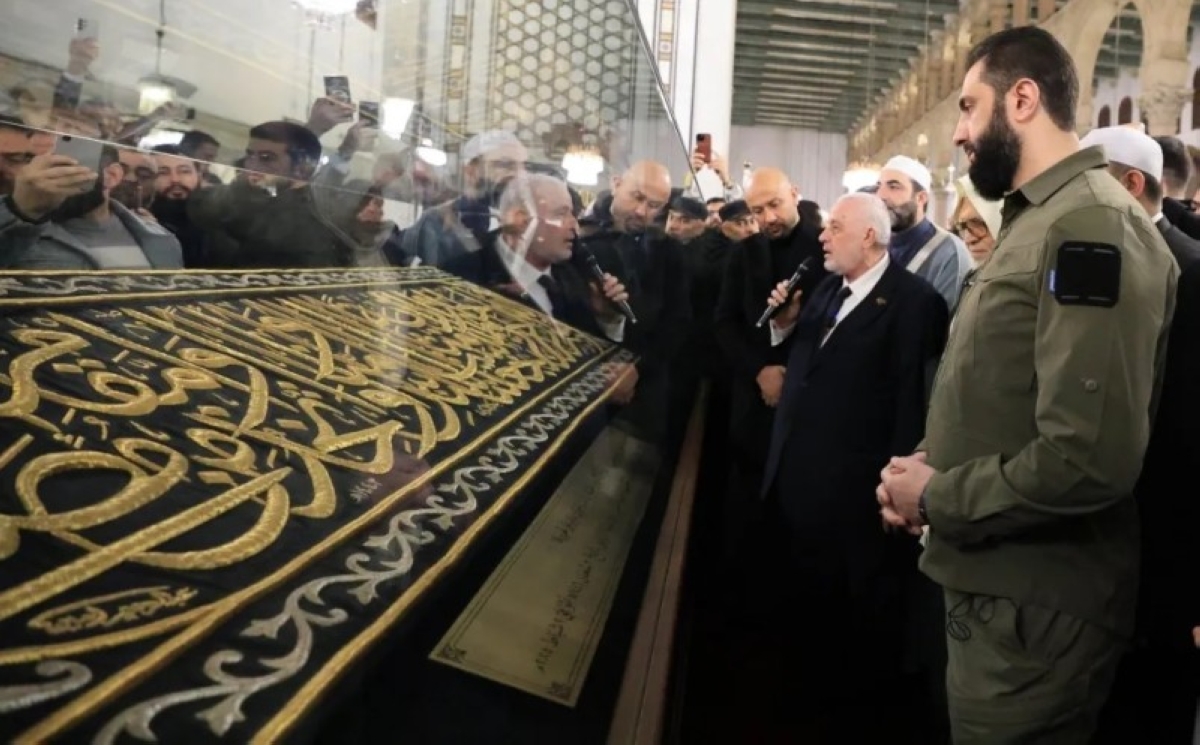

Damascus, Syria – Syrian President Ahmed Al-Sharaa received a piece of the Kiswa, the sacred cloth covering the Kaaba in Mecca, from Saudi Crown Prince Mohammed bin Salman and publicly displayed it at the Umayyad Mosque in Damascus on Monday. The presentation and unveiling coincided with the first anniversary of the fall of the Assad regime and celebrations of Syria’s Liberation Day. This symbolic gesture underscores the strengthening relationship between Syria and Saudi Arabia following years of regional conflict.
The event took place as Syrians commemorated the anniversary of the opposition forces, led by Al-Sharaa, gaining control of major cities, culminating in the capture of Damascus on December 8th and the departure of former President Bashar al-Assad. King Salman and Crown Prince Mohammed bin Salman also sent congratulatory cables to Al-Sharaa, marking the occasion and signaling Saudi support for the new Syrian government.
The Significance of the Kiswa Presentation and Syria’s Liberation
The Kiswa, considered one of Islam’s most sacred coverings, is a highly symbolic gift. According to reports, Al-Sharaa received the piece of the cloth during his first official foreign trip to Saudi Arabia. He specifically requested its placement within the Umayyad Mosque, a historically significant Islamic site, to promote unity and strengthen ties between the Arab nations.
The Umayyad Mosque holds immense religious and cultural importance, having served as a major place of worship for centuries. Choosing this location for the display is intended to emphasize a message of reconciliation and shared faith. Additionally, the timing of the unveiling – on the anniversary of the regime change – reinforces the narrative of a new beginning for Syria.
A New Era for Syrian-Saudi Relations
The presentation of the Kiswa represents a significant shift in Syrian-Saudi relations. For years, the two countries were on opposing sides of regional conflicts, particularly in Syria’s civil war. Saudi Arabia initially supported certain opposition groups seeking to overthrow Assad, while Syria maintained close ties with Iran.
However, recent diplomatic efforts have led to a thaw in relations. The restoration of diplomatic ties earlier this year, brokered by China, paved the way for increased cooperation and engagement. This improved relationship is expected to have implications for regional stability and economic development.
Al-Sharaa’s speech at the Umayyad Mosque further emphasized his commitment to rebuilding Syria and fostering unity. He called on Syrians to support his leadership, stating his dedication to serving the nation and upholding justice. He also pledged to restore Syria to its former strength and prominence.
Commemorating the Fall of the Assad Regime
The first anniversary of the Assad regime’s fall is being marked by celebrations across Syria, though the country continues to grapple with the aftermath of years of conflict. The transition of power has been complex, and significant challenges remain in rebuilding infrastructure, restoring essential services, and addressing the humanitarian crisis.
The opposition forces’ victory followed a prolonged and devastating civil war that began in 2011. The conflict resulted in hundreds of thousands of deaths, millions of refugees, and widespread destruction. The report indicates that the new government faces the daunting task of addressing these issues and fostering national reconciliation.
While the fall of the Assad regime marked a turning point, the situation remains fragile. Various factions and armed groups still operate within Syria, and the threat of renewed conflict persists. The new government is working to establish security and stability, but faces ongoing challenges from extremist groups and remnants of the former regime.
Looking Ahead: Reconstruction and Regional Integration
The Syrian government, under President Al-Sharaa, is now focused on reconstruction and economic recovery. International aid and investment will be crucial to these efforts. The government has announced plans to prioritize infrastructure projects, including rebuilding schools, hospitals, and transportation networks. Liberation Day celebrations are expected to continue throughout the week.
The success of these efforts will depend on continued regional support and cooperation. The improved relationship with Saudi Arabia is a positive sign, and further engagement with other Arab nations is expected. The government is also seeking to strengthen ties with international organizations, such as the United Nations, to secure assistance and expertise. The long-term stability of Syria and the success of its reconstruction efforts remain uncertain, and will be closely monitored by regional and international observers. The next key deadline will be the government’s announced plan for a national economic summit in February, where they hope to secure pledges for investment.
The ongoing security situation and the potential for political instability will continue to be key factors to watch in the coming months.