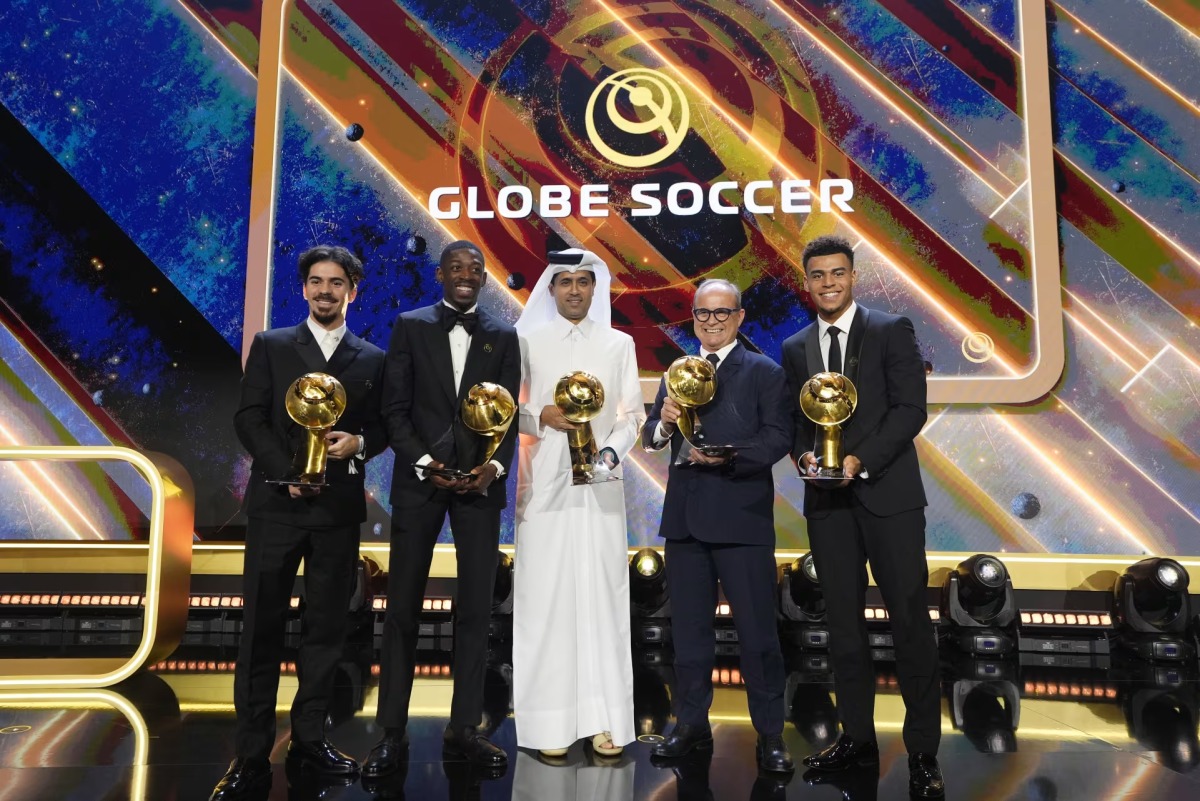

Dubai hosted the Globe Soccer Awards yesterday, where Paris Saint-Germain (PSG) dominated the accolades. The French club secured seven awards, including the prestigious Men’s Club of the Year and the President of the Year award for Nasser Al-Khelaifi, recognizing their exceptional 2025 season and historic achievements in football. The awards ceremony highlighted PSG’s success across multiple competitions.
PSG’s remarkable year culminated in a 2025 Intercontinental Cup victory over Flamengo, marking their sixth trophy of the season. The club also claimed titles in Ligue 1, the Coupe de France, the Trophee des Champions, the Champions League, and the UEFA Super Cup, solidifying their position as a leading force in European and global football. The event took place in Dubai, a growing hub for international sports recognition.
Paris Saint-Germain’s Triumphant 2025 Season and the Significance of the Awards
The recognition at the Globe Soccer Awards underscores a period of sustained investment and strategic development at PSG. Al-Khelaifi’s leadership has been central to the club’s transformation, overseeing significant player acquisitions and infrastructure improvements. This focus on building a world-class squad and organization has clearly paid dividends, resulting in unprecedented success on the pitch.
Key Achievements Driving the Recognition
PSG’s domestic dominance in Ligue 1 continued throughout 2025, demonstrating their consistent performance against local competition. Their Coupe de France and Trophee des Champions victories further cemented their status as the top club in France. However, the most significant achievements came in continental competitions.
The Champions League title was a watershed moment for the club, representing their first major European trophy. This victory was followed by success in the UEFA Super Cup, adding another prestigious title to their collection. These wins showcase PSG’s ability to compete and win at the highest level of football, attracting further attention and investment.
The Intercontinental Cup win against Flamengo was particularly noteworthy, as it pitted the champions of Europe against the champions of South America. This victory demonstrated PSG’s global competitiveness and their ability to overcome challenges from different footballing styles. The Intercontinental Cup, while evolving in format over the years, remains a symbol of club football supremacy.
Al-Khelaifi’s individual award as President of the Year acknowledges his broader impact on the sport, beyond just PSG’s on-field success. He has been involved in discussions regarding financial fair play and the future of European football governance. His role in shaping the landscape of the game is increasingly recognized by industry stakeholders.
The Globe Soccer Awards, organized by the Dubai Sports Council and the European Club Association, have become a prominent event in the football calendar. They provide a platform to celebrate achievements and recognize individuals who have made significant contributions to the sport. The awards are judged by a panel of industry experts and former players.
While PSG’s success is undeniable, questions remain about the long-term sustainability of their model, which relies heavily on significant financial backing. Maintaining a competitive edge in the face of evolving financial regulations will be a key challenge for the club in the coming years. Additionally, the pressure to consistently deliver results at the highest level is immense.
Looking ahead, PSG will be aiming to defend their titles in the 2026 season and continue to build on their recent success. The January transfer window could see further adjustments to the squad as Al-Khelaifi and the coaching staff look to strengthen their position. The club’s performance in the upcoming Club World Cup will also be closely watched, as they seek to further establish their global dominance.
The future direction of PSG, and Al-Khelaifi’s role within it, will be a key storyline to follow in the world of football. The club’s ability to navigate the complexities of modern football and maintain its competitive edge will determine its long-term legacy.