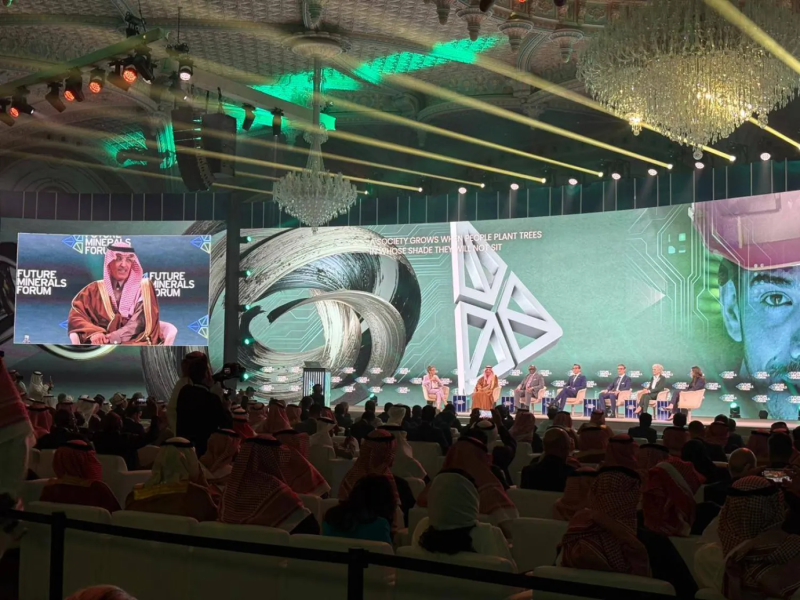

RIYADH — Saudi Arabia is actively positioning itself as a central global hub for the mining sector, according to statements made by Minister of Finance Mohammed Al-Jadaan at the Future Minerals Forum 2026 in Riyadh this week. The Kingdom aims to attract significant capital investment into the industry, leveraging its resources and focusing on long-term economic diversification. The forum, which began Tuesday, is bringing together international leaders to discuss responsible and resilient mineral supply chains.
Al-Jadaan’s remarks came during a panel discussion focused on the evolving landscape of mineral investment. He highlighted the importance of a stable and predictable environment for attracting long-term capital, particularly in a sector characterized by extended operating cycles. The event is attended by representatives from 100 countries and 59 international organizations.
Saudi Arabia’s Ambitions in the Mining Sector
The Kingdom’s push into the mining sector is part of a broader strategy to reduce reliance on oil revenues and diversify its economy, aligning with the goals of Vision 2030. Saudi Arabia possesses substantial untapped mineral wealth, including significant deposits of phosphate, gold, copper, and increasingly, rare earth minerals. Developing these resources is seen as crucial for future economic growth and industrialization.
Geopolitical Impacts on Investment
Al-Jadaan acknowledged the growing impact of geopolitical tensions on the global economy, and specifically on long-term investments like mining. He stated that these tensions create uncertainty and require careful navigation by both countries and investors. The minister noted a shift in perspective, with many nations now viewing access to minerals as a matter of national and economic security.
This evolving security concern is opening up new avenues for partnerships, both with host countries and with third parties, according to Al-Jadaan. However, he cautioned that successfully capitalizing on these opportunities requires strategic handling and a clear understanding of the risks involved. The increasing focus on supply chain resilience is a direct result of these geopolitical concerns.
Economic Headwinds and Long-Term Outlook
Slowing global growth and elevated interest rates present immediate challenges to mining investments, the finance minister conceded. These factors can increase the cost of capital and potentially delay or scale back projects. However, Al-Jadaan expressed optimism about the long-term prospects for the sector.
He emphasized that minerals are becoming increasingly fundamental to a wide range of strategic industries, including renewable energy, electric vehicles, and advanced technologies. This growing demand is expected to drive sustained investment in the mining sector despite short-term economic fluctuations. The demand for critical minerals is projected to increase significantly in the coming decades.
The Future Minerals Forum 2026 is themed “Dawn of a global cause: Minerals for a new era of development,” reflecting the growing recognition of the importance of sustainable and responsible mineral sourcing. The forum aims to mobilize stakeholders to create resilient supply chains and foster collaboration across the industry. This includes a focus on supporting development in supplier regions.
Rare Earth Mineral Cooperation
A key outcome of the forum thus far has been the agreement of an international framework for rare earth minerals. This framework is intended to promote global cooperation and establish more flexible and secure supply chains for these vital materials. Rare earth minerals are essential components in many high-tech applications, and securing their supply is a priority for many nations.
The agreement seeks to address concerns about the concentration of rare earth mineral production in a limited number of countries. Diversifying supply sources and fostering international collaboration are seen as crucial steps to mitigate risks and ensure stable access to these critical resources. The details of the framework are still being finalized, but it represents a significant step towards greater international cooperation in the mining of these materials.
Additionally, discussions at the forum have centered on the importance of environmental, social, and governance (ESG) factors in the mining industry. Participants have emphasized the need for responsible mining practices that minimize environmental impact and benefit local communities. Sustainable development is increasingly seen as a key driver of long-term value creation in the sector.
The 5th Future Minerals Forum is expected to conclude later this week with a series of commitments and announcements regarding new investments and partnerships. Further details regarding specific project agreements and policy initiatives are anticipated. The long-term success of Saudi Arabia’s ambitions in the mining sector will depend on its ability to attract foreign investment, develop its infrastructure, and establish a regulatory framework that promotes both sustainability and economic growth. Monitoring the implementation of the rare earth mineral framework and the Kingdom’s progress towards its Vision 2030 goals will be key indicators of success.