

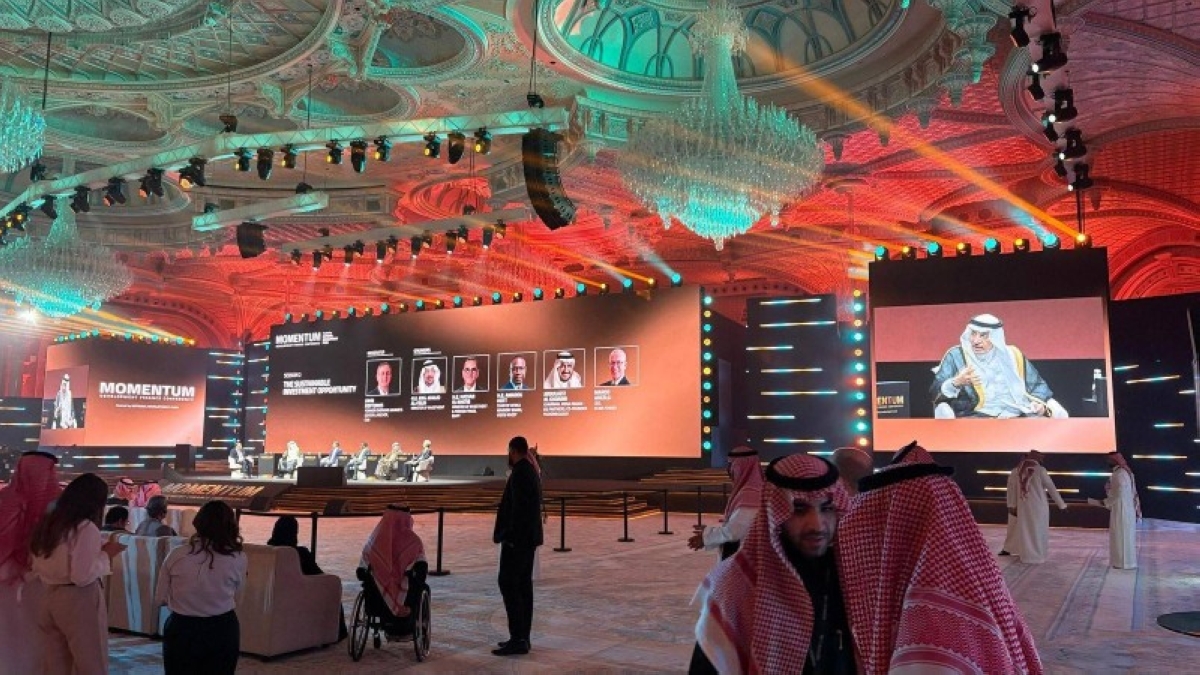

Saudi Arabia is accelerating its ambitious plans to diversify its economy and achieve net-zero carbon emissions by 2060, fueled by trillions of dollars in anticipated infrastructure investments. Minister of Investment Khalid Al-Falih announced the Kingdom’s commitment at the Development Finance Conference (MOMENTUM2025) in Riyadh, emphasizing a significant role for the private sector in financing these projects. This push towards sustainability is coupled with a drive to become a global hub for artificial intelligence and digital infrastructure.
Speaking on Tuesday, Al-Falih stated that approximately 40 percent of the projected $500 billion in investments will originate from private sources. These funds will be channeled through privatization programs, projects led by the Ministry of Energy, and initiatives undertaken by major national companies like ACWA Power, as well as expansions by Saudi Aramco into blue hydrogen production and marketing.
The Kingdom’s Investment in Net-Zero
The Kingdom’s commitment to net-zero carbon emissions represents a substantial shift in energy policy. According to the minister, Saudi Arabia has already surpassed its targets outlined in the Paris Climate Agreement through the implementation of balanced energy strategies. These strategies prioritize renewable energy sources, aiming for 50 percent of electricity generation to come from renewables, alongside high-efficiency gas turbines and battery storage solutions.
This investment surge isn’t limited to energy. Al-Falih highlighted a growing focus on sustainable infrastructure, including major upgrades to four airports and a significant expansion of desalination projects to meet future water demands driven by population growth. The Red Sea Project, a large-scale tourism development involving ACWA Power, is being showcased as a global model for environmentally advanced projects.
Green Finance Framework and ESG Initiatives
Saudi Arabia is actively building a robust financial ecosystem to support its sustainability goals. The Debt Management Office has launched a green finance framework, and the Capital Market Authority has established regulations governing green bonds. The Tadawul stock exchange is also working to expand its carbon credit market, which is already one of the largest in the Middle East.
The Kingdom currently accounts for roughly two-thirds of all green finance and Environmental, Social, and Governance (ESG) initiatives in the Middle East, according to the minister. The Public Investment Fund (PIF) is playing a key role, expanding its issuance of sustainable financing instruments, including innovative 100-year green bonds.
Beyond financial mechanisms, Saudi Arabia is also prioritizing digital transformation as a cornerstone of its future economy. Ambitious plans are underway to establish the Kingdom as a global leader in artificial intelligence, facilitated by agreements with international tech companies and the development of advanced digital infrastructure for sectors like transportation, aviation, and smart cities.
Al-Falih emphasized the attractiveness of investing in Saudi Arabia, noting its strong credit rating – surpassing some G7 nations – and competitive returns compared to other developing economies. This favorable investment climate is drawing interest from international capital, including sources from China and the G7 countries managed through asset managers in the United States and Europe.
The minister also underscored the importance of collaboration, pointing to close cooperation with Egypt to enhance financing and investment systems, strengthening regional value chains and addressing shared global challenges. He noted that both local and international partners are expected to contribute expertise and implementation capabilities, not merely financial investment.
Saudi Arabia’s economic performance is bolstering its investment capacity. The Kingdom is projected to approach the 15th largest economy globally, driven by its strong economic assets and effective public-private partnerships. This growth is expected to continue as the nation executes its Vision 2030 plan, a comprehensive roadmap for economic diversification and sustainable development.
Looking ahead, the success of these initiatives will depend on continued regulatory development, attracting sufficient private sector participation, and effectively integrating new technologies. The Kingdom is expected to continue refining its green finance framework and expanding its carbon market in the coming months. Monitoring the progress of key projects like the Red Sea Development and the implementation of AI strategies will be crucial indicators of Saudi Arabia’s commitment to a sustainable and diversified future.