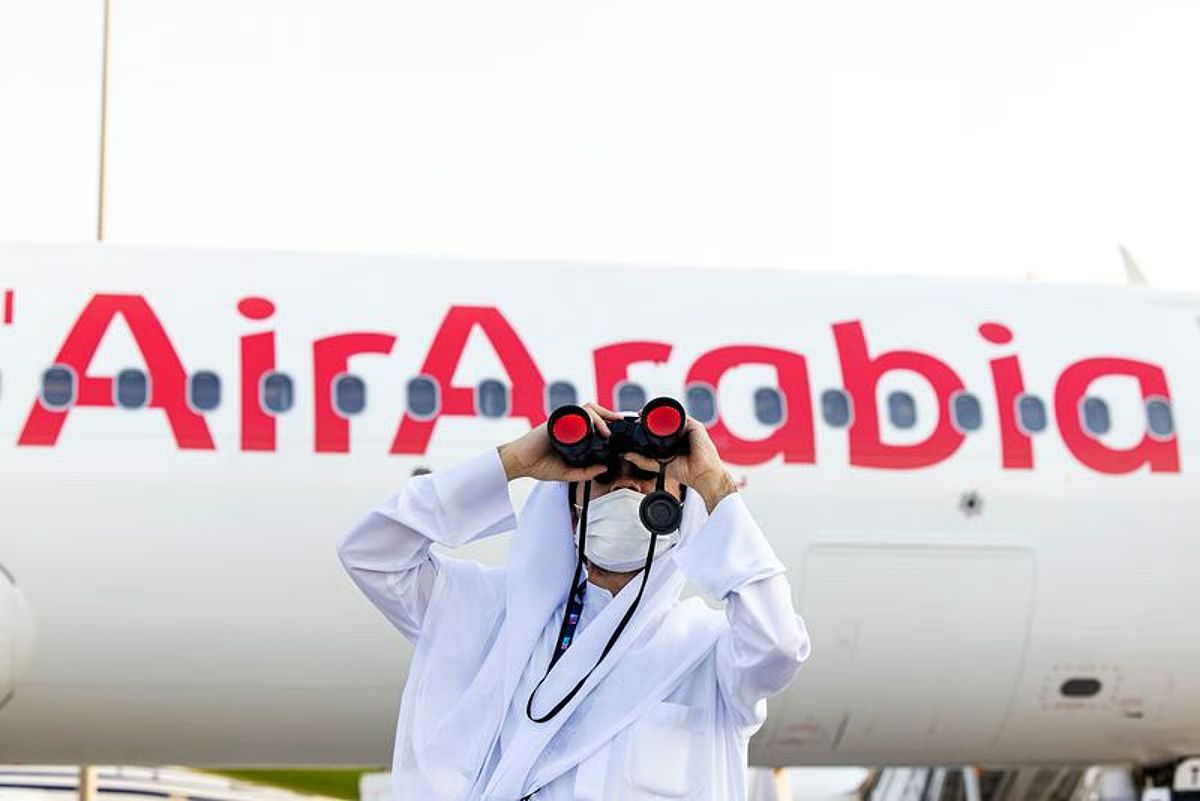

Air Arabia, the Middle East’s largest low-cost carrier, reported a record profit in the third quarter, driven by surging demand for air travel. The airline’s net profit soared to AED 371 million (USD 101 million) for the three months ending September 30, according to its latest financial results.
The strong performance was attributed to the airline’s strategic expansion and increased passenger numbers. Air Arabia carried 4.6 million passengers during the quarter, representing a 25% year-over-year increase, the airline said in a statement.
Air Arabia’s Financial Performance
The airline’s revenue rose to AED 1.67 billion (USD 455 million) in the third quarter, up 30% from the same period last year. The increase was largely driven by higher passenger yields and load factors. Air Arabia’s cost management efforts also contributed to its improved financial performance, with operating expenses rising by 22% to AED 1.23 billion (USD 335 million).
However, the airline faced some challenges, including rising fuel prices. Air Arabia’s fuel costs increased by 41% to AED 431 million (USD 117 million) during the quarter. Despite this, the airline’s operating profit margin remained healthy at 26.4%.
Demand Surge and Expansion Plans
The surge in demand for air travel has been driven by a combination of factors, including the recovery of the global economy and increased travel demand from the Middle East and North Africa. According to the International Air Transport Association (IATA), the Middle East region is expected to continue to experience strong air travel demand growth in the coming years.
Air Arabia is well-positioned to capitalize on this trend, with a growing network of routes and a modern fleet of aircraft. The airline has been expanding its presence in key markets, including India and Egypt. In July, Air Arabia announced plans to launch new services to several destinations in India, further solidifying its position as a major player in the region.
Strategic Expansion
Air Arabia’s strategic expansion plans are focused on tapping into growing demand for air travel in the Middle East and beyond. The airline has been investing in its infrastructure and capacity to support its growth plans. According to the airline’s management, Air Arabia is committed to maintaining its low-cost model while continuing to invest in its products and services.
Meanwhile, the airline’s competitors in the region are also expanding their operations. In contrast to some of its peers, Air Arabia’s focus on cost management and operational efficiency has enabled it to maintain its competitive edge.
Outlook
Looking ahead, Air Arabia is expected to continue to benefit from the strong demand for air travel. The airline’s management has indicated that it is cautiously optimistic about the outlook for the remainder of the year. According to the airline, the next key milestone to watch will be the release of its full-year financial results, expected in the coming months.
The report indicates that Air Arabia’s financial performance is likely to remain strong, driven by continued demand growth and the airline’s strategic expansion plans. However, uncertainties remain, including the potential impact of rising fuel prices and global economic trends on the airline’s operations. As the airline continues to navigate these challenges, investors and industry observers will be watching closely for further updates on its performance and future plans.