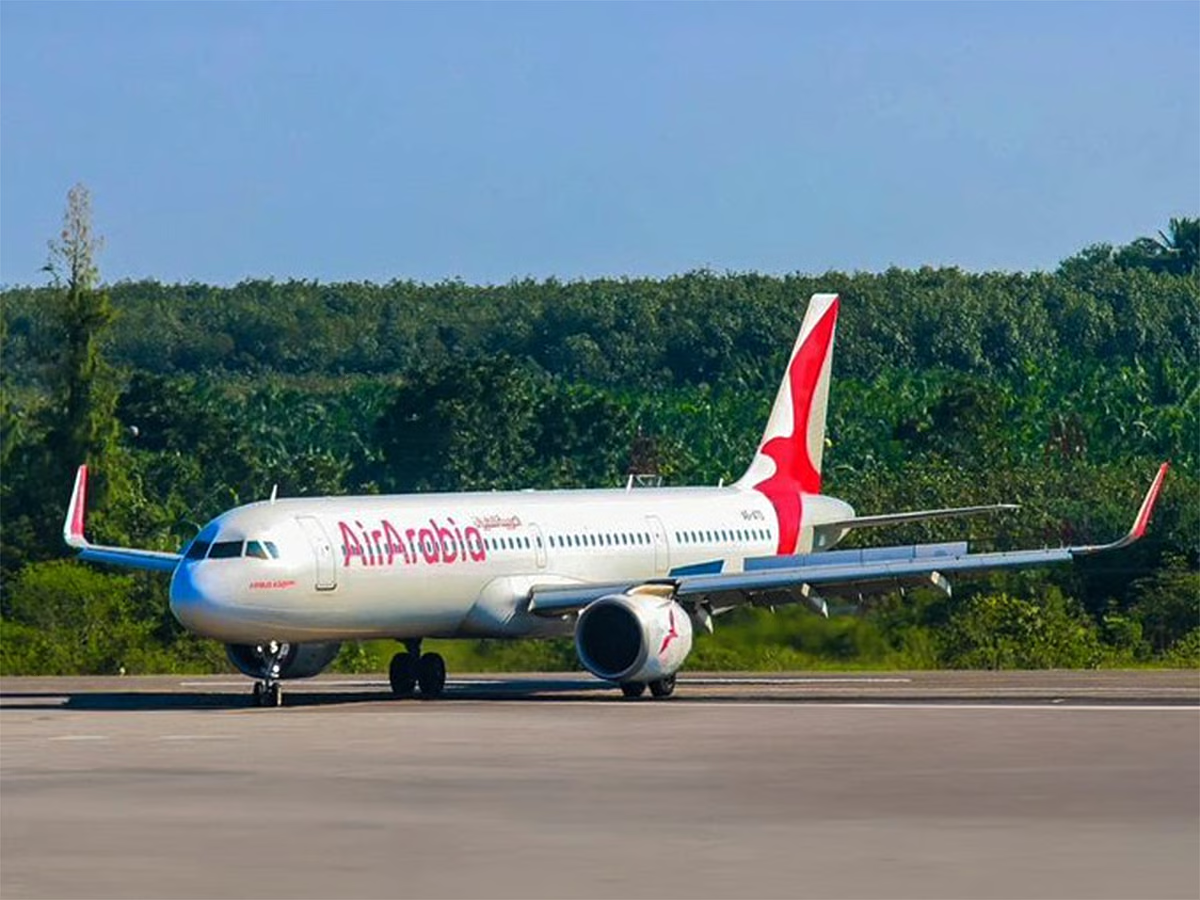

Air Arabia has announced a new direct service to Munich, Germany, expanding its European network from its UAE hub in Sharjah. The low-cost carrier will begin flights to Munich Airport (MUC) starting November 15, 2024, offering travelers a more affordable option for travel between the Middle East and Bavaria. This expansion of Air Arabia’s routes demonstrates continued growth in the region’s travel sector.
The new route represents the latest step in Air Arabia’s ongoing strategy to connect travelers with destinations across Europe. Currently, the airline serves Vienna, Athens, Milan Bergamo, Krakow, and Warsaw Chopin with direct flights from Sharjah (SHJ). Future plans include routes to Warsaw Modlin and Prague, further solidifying its European presence.
Expanding Air Arabia’s European Footprint
Air Arabia’s decision to add Munich to its roster comes amid rising demand for travel between the UAE and Germany. According to recent data from the German National Tourist Board, the UAE remains a significant source market for German tourism. The airline aims to capture a portion of this market by offering competitive fares and convenient direct connections.
The new Sharjah-Munich route will operate three times weekly. Passengers can anticipate offering both business and economy class options, consistent with Air Arabia’s current service model. The move allows for streamlined travel for tourists and business travelers alike, bypassing often-required connections through other major European hubs.
Growing Demand for Affordable Travel
The introduction of this route aligns with a broader trend of increased demand for budget-friendly travel options. Traditional airlines often carry higher price points, especially for long-haul flights. Air Arabia, as a low-cost carrier, caters to travelers seeking value without sacrificing direct routes.
Additionally, experts suggest potential consequences for legacy carriers operating similar routes. Increased competition could drive down prices and force established airlines to reassess their strategies. The competition is further enhanced by the airline’s strategy of using secondary airports like Milan Bergamo and Warsaw Modlin, reducing operational costs.
Impact on Tourism and Business Ties
The Sharjah-Munich route is expected to boost tourism in both regions. Munich serves as a gateway to southern Germany, known for its cultural attractions, historical sites, and picturesque landscapes. Greater accessibility may encourage more residents of the UAE and surrounding countries to explore this part of Europe.
Beyond tourism, this connection will likely foster greater business ties between the UAE and the German state of Bavaria. Munich is a major economic hub, home to numerous international companies. The direct flight will facilitate easier travel for business professionals, potentially leading to increased investment and trade. Munich Airport officials have expressed optimism about the new route’s economic benefits.
However, external factors could influence the success of the new route. Global economic conditions, fuel prices, and geopolitical events all have the potential to impact air travel demand. The ongoing situation in Eastern Europe, for instance, could create uncertainty amongst travelers.
Air Arabia is not the only carrier increasing flights to Germany. Other airlines, including Emirates and Lufthansa, have also been expanding their capacity on routes serving the German market. This increased competition within the airline industry highlights Germany’s importance as a travel destination and transit point.
The UAE’s own tourism industry stands to benefit from increased connectivity. As a major international transit hub, the UAE relies on strong airline partnerships for continued growth. Expanding Air Arabia’s network enhances the country’s position as a convenient starting point for journeys to Europe and beyond. This is particularly relevant given the ongoing preparations for Expo 2025 in Osaka, Japan, which will likely increase transit flows through the region.
The airline’s expansion into Europe also mirrors a broader trend of Middle Eastern carriers aiming to establish themselves as key players in the international aviation market. Qatar Airways and Etihad Airways, for example, have similarly focused on building extensive global networks. This competition encourages innovation and ultimately benefits passengers.
Looking ahead, Air Arabia will be closely monitoring the performance of the Munich route and assessing passenger feedback. The airline has not yet announced plans for further European expansion beyond Warsaw Modlin and Prague, but it continuously evaluates new opportunities based on market demand and profitability. Continued monitoring of Air Arabia’s flight schedules will reveal their future operational choices. The overall success will depend on maintaining competitive pricing, ensuring reliable service, and navigating ever-changing global travel dynamics.