
The story of Bahrain is etched in its landscape, and nowhere is this more apparent than in its ancient springs. For decades, many have fallen into disrepair, fading from communal memory. Now, there’s renewed hope for one such site: Ain Huwais, a historically significant spring in Buri, poised for a potential revival thanks to a proactive proposal by members of parliament. This initiative aims to restore the spring not just as a water source, but as a vital piece of Bahrain’s heritage and a welcoming green space for its people.
The Historical Significance of Ain Huwais
Local accounts and preliminary research suggest Ain Huwais could be remarkably old, potentially dating back 3,000 to 4,000 years. This places its origins firmly within the Dilmun era, a period of significant trade and civilization in the ancient world. The spring wasn’t merely a geological feature; it was a lifeline.
Connecting to Bahrain’s Past
The importance of Ain Huwais extends beyond the Dilmun civilization. It continued to play a crucial role throughout the early Islamic period and in supporting the traditional farming communities that characterized Bahrain for centuries. These springs were integral to the islands’ agricultural practices and daily life, providing water for households, irrigating crops, and fostering a sense of community. The decline of these springs represents a tangible loss of connection to these foundational periods of Bahraini history.
Decades of Neglect and the Call for Restoration
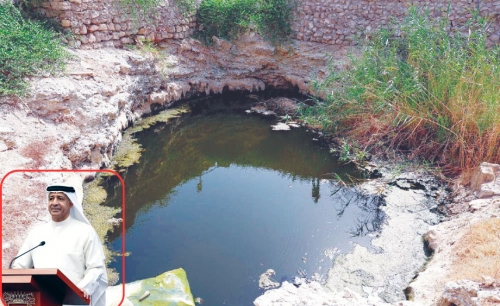
Over time, Ain Huwais has suffered from neglect. The natural environment surrounding the spring has deteriorated, and the features that once defined it have largely disappeared. What was once a vibrant focal point for social interaction in Buri now stands abandoned, a shadow of its former self. This deterioration isn’t simply an aesthetic issue; it’s viewed by many as the loss of a valuable heritage site.
MPs Muneer Seroor, Jaleela Alawi, Abdulwahid Qarata, Mohammed Mousa, and Hamad Al Doy have recognized this critical situation and are championing its restoration. Dr. Seroor highlighted the broader issue, stating that Bahrain has over a dozen archaeological springs in varying states of disrepair, each holding a unique piece of the nation’s story. He emphasized the need to protect Bahrain’s water heritage – a crucial aspect of the island’s identity.
A Vision for a Revitalized Oasis
The proposed revival of Ain Huwais isn’t just about restoring water flow. The vision extends to transforming the area into a thriving green oasis, a welcoming space for families and visitors alike. Imagine a place where people can reconnect with nature, learn about Bahrain’s history, and enjoy a peaceful retreat. This is the potential that lies dormant within the neglected spring.
The plan aims to recreate the natural beauty of the area, providing a much-needed green lung within the community. This aligns with growing calls for increased green spaces in Bahrain, offering residents opportunities for recreation and a connection to the environment. Furthermore, a revitalized Ain Huwais could become a tourist attraction showcasing Bahrain’s rich cultural and natural landscape.
Prioritizing Archaeological Understanding
Recognizing the spring’s potential age and historical importance, Dr. Seroor has wisely called for a thorough archaeological study and scientific dating exercise before any physical restoration work begins. This precautionary measure is essential to ensure that the site is treated with the respect it deserves as a significant cultural asset.
Ensuring Sensitive Development
The study will help determine the spring’s precise age and its evolution over time. This knowledge will then inform the restoration process, ensuring that any interventions are sensitive to the site’s archaeological integrity. Experts will need to carefully document any existing structures or artifacts, and prioritize preservation over modernization. A thoughtful approach to historical preservation is paramount.
The aim is to reveal the story of Ain Huwais and its place within the broader narrative of Bahrain’s past. This includes understanding how it was used by different communities over the centuries and what it represents in terms of ancient water management techniques and social practices.
In conclusion, the proposal to revive Ain Huwais represents a significant opportunity to safeguard a vital piece of Bahrain’s history and create a valuable community resource. By prioritizing archaeological investigation and a sensitive restoration approach, the MPs are demonstrating a commitment to preserving the nation’s cultural heritage for future generations. The potential transformation of this neglected spring into a thriving oasis underscores the importance of recognizing and valuing the historical and environmental treasures that lie within Bahrain’s landscape. We can all look forward to learning more about this exciting project and its potential to enrich the lives of both residents and visitors.