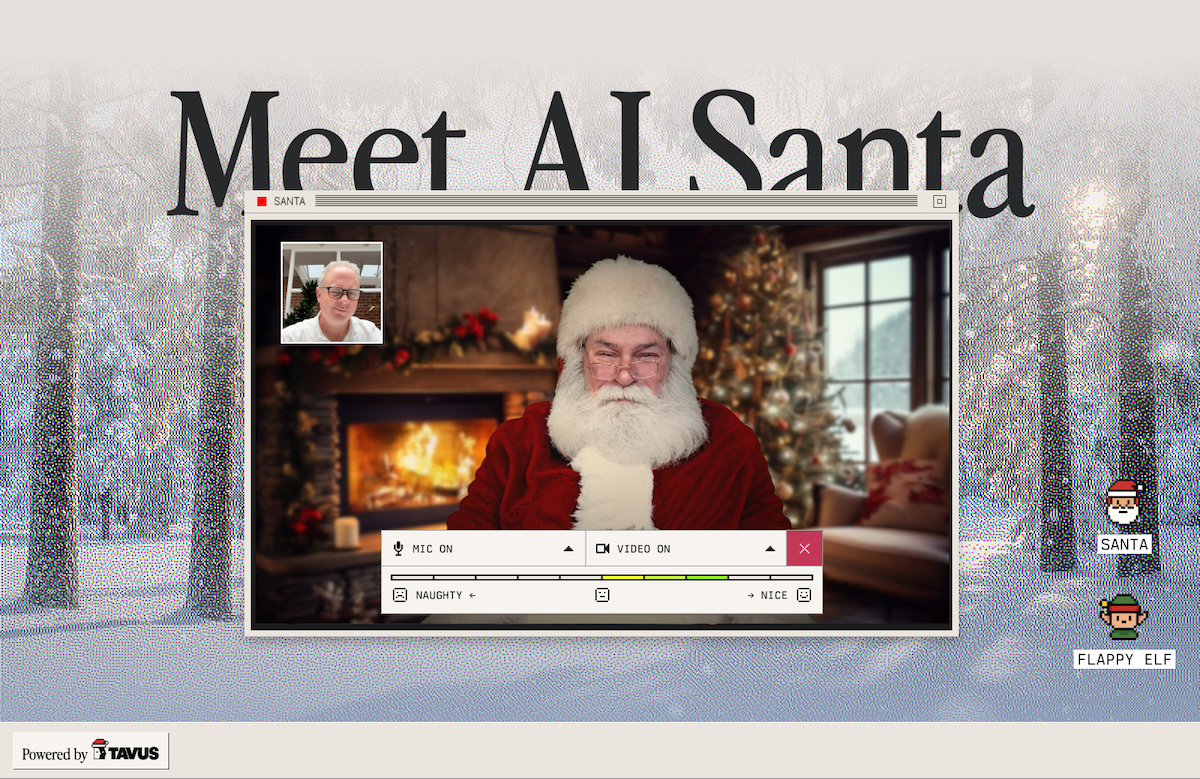

The holiday season is getting a high-tech twist as more companies explore the potential of artificial intelligence. This year, AI Santa, a virtual version of Saint Nick created by AI startup Tavus, is back for a second year, offering personalized video chats with children. The experience utilizes voice and face cloning technology to simulate a conversation with Santa, raising both excitement and ethical questions about AI’s role in childhood traditions.
AI Santa Evolves with Real-Time Interaction
Tavus has significantly upgraded its AI Santa experience since its debut last year. The new version, dubbed “Tavus PAL,” is designed to be a real-time AI agent capable of seeing, hearing, and responding to users in a more human-like manner. This includes recognizing facial expressions and gestures, and remembering details from previous conversations to create a more personalized interaction.
Unlike simpler chatbot versions, AI Santa can now proactively engage in conversation. During testing, the AI followed up on requests for a PlayStation with questions about favorite video games, even referencing specific titles like Baldur’s Gate 3, demonstrating a level of contextual awareness previously unseen in similar applications. It also attempted to mirror the user’s smile, though the result was described as somewhat unsettling.
Growing Popularity and User Engagement
According to Tavus founder and CEO Hassaan Raza, the platform is experiencing substantial growth. He reports that the AI Santa experience is on track to surpass the millions of hits it received during its initial launch last year. Users are reportedly spending considerable time interacting with the virtual Santa, often reaching their daily usage limits.
This increased engagement highlights the growing appeal of AI-powered entertainment and the novelty of interacting with a convincingly realistic virtual character. However, it also fuels concerns about the potential impact of these interactions, particularly on young children.
Ethical Considerations and the Impact on Children
The rise of sophisticated AI like AI Santa raises important questions about distinguishing between artificial and human interaction, especially for children. Experts worry that prolonged engagement with AI could blur the lines of reality for young users, potentially affecting their emotional development and understanding of relationships. This concern is amplified by reports linking chatbot interactions to negative psychological effects in adults, including instances of serious harm.
Character.AI, another platform offering AI-powered conversations, recently removed access for users under 18 in October, citing similar safety concerns. The potential for AI to influence beliefs and behaviors in vulnerable populations is a growing area of scrutiny for regulators and researchers.
Tavus acknowledges these concerns and emphasizes that the AI Santa experience is intended for family use, with safety measures in place. These include content filters designed to maintain family-friendly conversations and the ability to terminate interactions if necessary. The company also states it provides links to mental health resources when appropriate.
When questioned about its authenticity, AI Santa is programmed to respond by acknowledging its artificial nature while affirming its festive spirit: “I’m an AI Santa powered by Tavus’ magic and technology. I might not be the physical Santa, but I’ve got the spirit and the cheer.”
Data Privacy and Collection
Addressing data privacy concerns, Raza stated that Tavus collects logs, session timestamps, metadata, and user-shared information during chats. This data is used to maintain a safe experience and improve the platform. Users have the right to request data deletion at any time, according to the company.
The use of AI in children’s entertainment, and the data collection practices associated with it, are likely to face increased regulatory scrutiny in the coming months. The broader conversation around artificial intelligence and its impact on society, including the development of virtual assistants, will continue to shape the future of these technologies.
Looking ahead, the success of AI Santa will likely encourage further development of AI-powered holiday experiences. The key will be balancing innovation with responsible design and prioritizing the well-being of young users. It remains to be seen how parents and children will ultimately embrace these technologies and whether concerns about authenticity and psychological impact will limit their adoption. The ongoing evolution of AI capabilities and the increasing availability of these platforms will be crucial factors to watch in the next year.