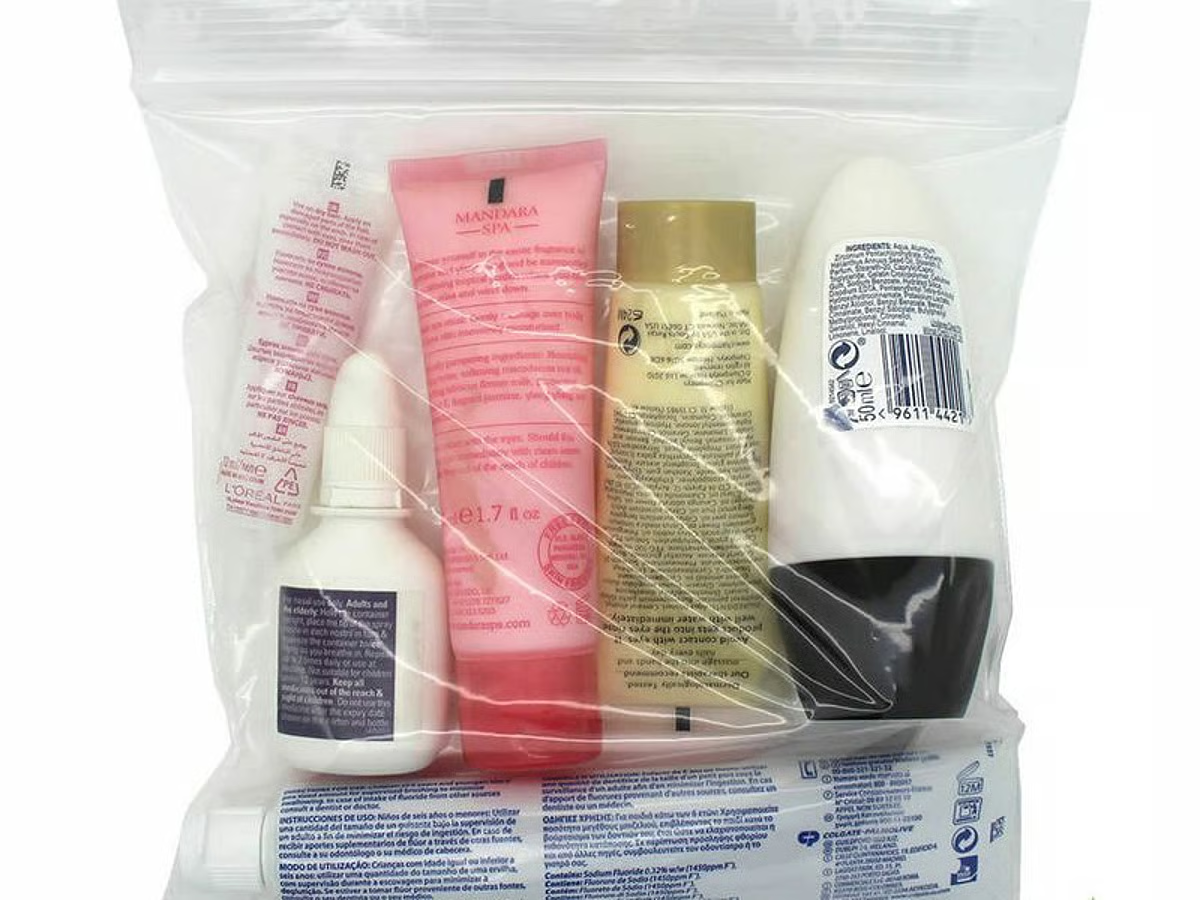

Dubai International Airport (DXB) has implemented a permanent easing of security restrictions on liquids and large electronics in carry-on baggage, effective immediately. This change, announced by Dubai Airports, streamlines the passenger experience by eliminating the 100ml rule for liquids and the requirement to remove laptops and tablets from bags during security screening. The move follows successful trials of advanced screening technology and aims to improve efficiency as the airport manages increasing passenger volumes.
The updated security protocols apply to all departing passengers from DXB. According to Dubai Airports, the changes are a direct result of the deployment of cutting-edge Computed Tomography (CT) scanners throughout the airport’s security checkpoints. This technology provides more detailed images of bag contents, allowing security personnel to identify potential threats without requiring the removal of personal items.
Streamlining Travel with New DXB Security Measures
The decision to relax these long-standing rules reflects a global shift towards risk-based security approaches. Traditionally, airport security focused on prohibiting certain items outright or limiting their size due to limitations in detection technology. However, advancements in scanning capabilities are enabling airports to adopt more sophisticated methods that prioritize threat identification over blanket restrictions. This benefits passenger flow and reduces wait times.
The Technology Behind the Change
DXB partnered with Smiths Detection, a British security technology company, to implement the new CT scanners. These scanners utilize X-ray technology to create three-dimensional images of baggage, allowing for a more thorough and accurate assessment of contents. The technology can differentiate between harmless liquids and potential explosives, reducing the need for manual inspection and the associated delays.
The implementation of these scanners wasn’t immediate. Trials were conducted throughout 2023 to ensure the technology’s effectiveness and to refine security procedures. Paul Griffiths, CEO of Dubai Airports, previously stated to Gulf News that improving efficiency was crucial for managing growth without significant terminal expansion. He specifically highlighted passenger frustration with the existing liquids, aerosols, and gels (LAGs) restrictions.
Impact on Passenger Experience
The most noticeable impact of the change will be a faster and less disruptive security screening process. Passengers will no longer need to decant toiletries into small travel-sized containers or remove electronic devices from their carry-on bags. This is expected to significantly reduce the time spent at security checkpoints, particularly during peak travel periods.
However, it’s important to note that security personnel retain the authority to conduct additional screening if necessary. While the new technology minimizes the need for manual checks, officers can still request to inspect bags or items if they have concerns. Passengers should continue to cooperate fully with security instructions.
The move aligns with similar initiatives at other major international airports. Last year, several airports began easing restrictions on liquids and electronics following approvals from relevant security agencies. This trend suggests a broader acceptance of advanced screening technologies as a means of enhancing both security and passenger convenience. The adoption of these technologies is a key component of modern airport security.
The change at DXB also has implications for airport retail. Previously, passengers were often compelled to purchase travel-sized toiletries after passing through security. With the 100ml rule eliminated, this demand may decrease, potentially impacting sales at airport shops. This could lead to a shift in the types of products offered, with a greater focus on larger sizes and destination-specific items.
The United Arab Emirates’ Ministry of Interior has been a driving force behind the adoption of advanced security measures across the country’s airports. They have consistently emphasized the importance of utilizing innovative technologies to maintain high levels of security while minimizing disruption to travelers. This latest development at DXB is a testament to that commitment. The overall goal is to improve airport operations.
While the initial rollout has been successful, ongoing monitoring and evaluation will be essential. Dubai Airports will likely continue to analyze passenger flow data and security effectiveness to identify areas for further optimization. The long-term impact on security threat detection rates will also be a key metric to track. The airport is also focused on handling passenger volume.
Looking ahead, Dubai Airports has not specified a timeline for expanding these relaxed security measures to other terminals or for introducing similar changes for inbound flights. The focus remains on ensuring a smooth and secure transition with the current implementation. Further decisions will likely depend on the continued success of the CT scanner program and ongoing collaboration with international security partners. The next step will be to assess the impact on security protocols.
The permanent easing of security rules at DXB represents a significant step forward in modernizing the airport experience. It demonstrates the potential of advanced technology to enhance security without compromising convenience, and it sets a precedent for other airports around the world to follow.