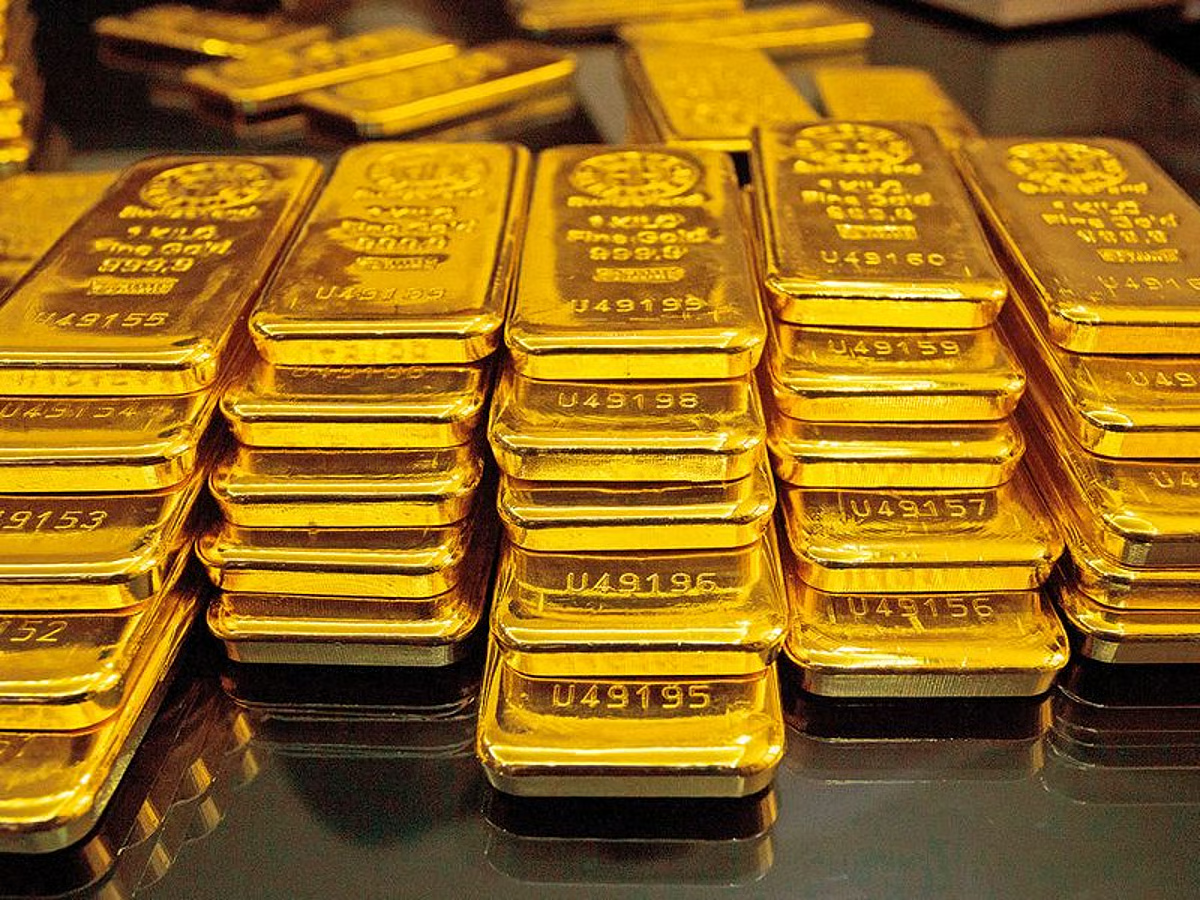

Gold prices experienced a significant surge in 2025, marking its fourth strongest annual return since 1971. This rally was primarily fueled by a heightened global risk environment and a weakening US dollar alongside modestly declining interest rates, driving investors and central banks to seek safe-haven assets. The outlook for gold in 2026 remains uncertain, dependent on evolving macroeconomic conditions and geopolitical factors.
The metal’s performance throughout 2025 reflected a broader trend of diversification away from traditional assets. Lackluster bond yields and concerns about potential overvaluation in equity markets further contributed to the increased demand for gold as a store of value. According to analysis from the Gold Return Attribution Model (GRAM), geopolitical risk accounted for approximately 12 percentage points of the year’s gains, while reduced opportunity cost from currency movements and interest rate adjustments added another 10 percentage points.
Understanding the Drivers of Gold’s Rally
The World Gold Council noted that the contributions from the key factors influencing gold prices were unusually balanced in 2025, indicating a market response to a confluence of forces rather than a single dominant catalyst. Momentum also played a larger role than in previous years, reflecting growing investor interest in the metal’s robust performance. The combined impact of political and macroeconomic uncertainty, particularly renewed volatility in the United States, accounted for roughly 16 percentage points of the price increase.
However, the future trajectory of gold is far from guaranteed. While current macroeconomic consensus suggests stable growth, modest interest rate cuts, and a relatively stable dollar, historical trends demonstrate that economic forecasts are often inaccurate. Analysts have identified three distinct scenarios for 2026, each with significantly different implications for the price of gold.
Scenario 1: The Shallow Slip – Moderate Gains
This scenario anticipates a moderate slowdown in the US economy, potentially triggered by waning momentum, contracting profit margins, or a reassessment of artificial intelligence expectations impacting equity markets. A softening labor market could prompt the Federal Reserve to implement more aggressive interest rate cuts than currently anticipated.
Under this “shallow slip” scenario, analysts project gold could increase by 5% to 15% in 2026. This growth would likely be supported by continued strategic purchases from central banks and increased investment from markets like China and India. Demand for precious metals is expected to remain strong.
Scenario 2: The Doom Loop – Strong Upside
The most bullish outlook envisions a deeper, more synchronized global economic slowdown driven by escalating geopolitical and geoeconomic risks. Unresolved conflicts or new geopolitical flashpoints could erode investor confidence, leading to reduced business investment and consumer spending, creating a self-reinforcing negative cycle.
In this “doom loop” scenario, gold could surge by 15% to 30% in 2026. A pronounced flight to safety, coupled with falling yields and a heightened geopolitical risk premium, would provide substantial upward pressure. Investment demand, particularly through gold ETFs, would be a key driver, potentially offsetting weakness in other sectors like jewelry. Despite recent inflows, global gold ETF holdings remain below previous bull cycle peaks, indicating room for further growth.
Scenario 3: Reflation Return – Bearish Pullback
Conversely, a bearish scenario involves stronger-than-expected economic growth fueled by policies implemented by a new administration. This reflationary environment could lead to rising inflation pressures, potentially forcing the Federal Reserve to maintain or even increase interest rates in 2026.
This environment, characterized by rising long-term yields, a strengthening US dollar, and a shift towards riskier assets, would increase the opportunity cost of holding gold. This could trigger a price correction of 5% to 20%, with expected outflows from gold ETFs reinforcing the downward trend. Silver prices could also be affected by this scenario.
Central Bank Activity and Recycling
Beyond these macroeconomic scenarios, two additional factors could significantly influence the gold market: central bank demand and the supply of recycled gold. Official sector purchases have been robust, and structural support remains strong, particularly as gold reserves in emerging market countries remain lower than those held by developed nations. Increased geopolitical tensions could further stimulate central bank buying.
Recycling flows also represent a potential swing factor. Recycling has been relatively muted, partly due to the increased use of gold as collateral for loans, particularly in India, where over 200 tonnes of gold jewelry has been pledged through formal lending channels this year. A significant economic slowdown in India could lead to forced liquidations of this collateral, increasing secondary supply and potentially putting downward pressure on prices.
Ultimately, gold’s enduring appeal lies in its ability to provide diversification and downside protection in an increasingly unpredictable global landscape. Market participants will be closely monitoring economic data releases, geopolitical developments, and central bank actions in the coming months. The next key data point will be the release of Q1 2026 central bank gold reserve data, expected in April, which will provide an early indication of official sector sentiment and potential future trends.