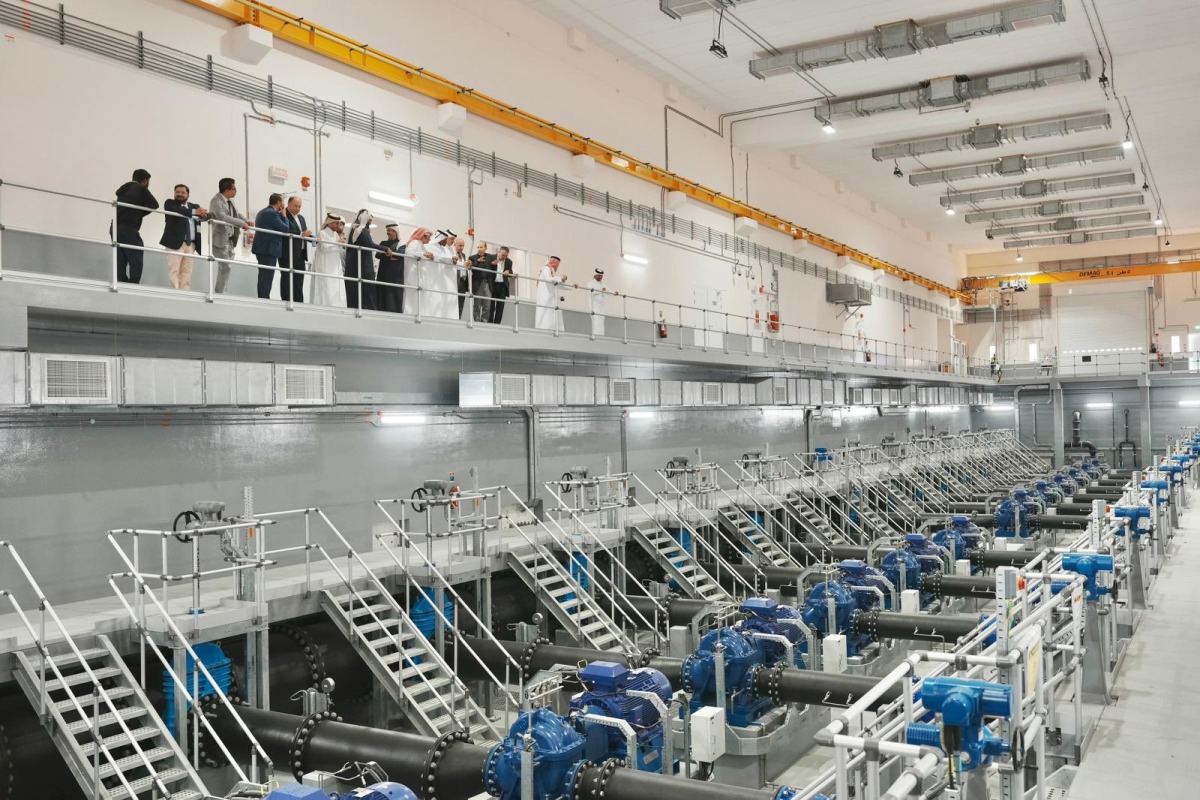

Qatar has significantly bolstered its water security with the official inauguration of the Afjat Muaither Reservoirs and Water Pumping Station, announced by the Qatar General Electricity and Water Corporation (Kahramaa) on November 20, 2025. The new facility, located in the Muaither area, adds 36 million gallons of strategic water storage capacity to the national grid and increases the total number of main water stations operating across Qatar to over 40. This expansion is crucial for meeting growing demand and ensuring a reliable supply of potable water.
The inauguration represents a major investment in Qatar’s infrastructure, designed to support the country’s rapid urbanization and industrial development. According to Kahramaa officials, the station will serve key areas including Birkat Al Awamer, Al Wakrah, Hamad Port, and the Qatar Amiri Naval Forces Base, distributing up to 71.7 million gallons of water daily. The project aims to reduce reliance on temporary water supply solutions and enhance the overall resilience of the national network.
Enhancing Qatar’s Water Infrastructure
The Afjat Muaither station’s increased capacity is a direct response to Qatar’s increasing population and economic diversification. The country has experienced substantial growth in recent years, placing greater demands on its essential resources, including water. This new facility is part of a broader strategy by Kahramaa to proactively address these challenges and ensure long-term water resources sustainability.
Key Features of the New Station
The station incorporates high-efficiency pumping systems with 13 pumps and two 900-millimeter diameter transmission lines. Additionally, it features an emergency tanker filling station with four points, alongside supporting infrastructure like a chlorination building and surge absorption tank. These components contribute to a robust and adaptable water distribution system.
Advanced technology is central to the station’s operation. Kahramaa has integrated sophisticated water quality monitoring systems, automated control technologies, and comprehensive safety measures, including alarm and protection systems. These features allow for real-time monitoring and efficient management of the water supply.
Eng Hamad bin Ali Al Thani, Project Engineer at Kahramaa’s Water Projects Department, highlighted the inauguration as a milestone in strengthening the security, efficiency, and reliability of water supply nationwide. Eng Mubarak Faraj Al Abdullah, Reservoirs and Water Stations Engineer at Kahramaa’s Operation and Control Department, explained that the station will primarily serve southern areas while also providing backup support to neighboring stations and transmission lines.
However, Qatar continues to face challenges related to water scarcity, relying heavily on desalination for its freshwater supply. The country is actively exploring alternative water sources and implementing water conservation measures to mitigate these concerns. The new station, while a significant step forward, is part of a larger, ongoing effort to optimize water management practices.
The Afjat Muaither station also aims to minimize the need for the Temporary Filling System (TFS), providing a stable and permanent water supply. This transition is expected to improve the consistency and reliability of water delivery to consumers and industries. The partial operation of the station began in late August 2025, indicating a phased approach to full integration into the national grid.
Looking ahead, Kahramaa is expected to continue investing in infrastructure projects to further enhance Qatar’s water security. Future plans may include expanding desalination capacity, exploring groundwater resources, and implementing advanced water recycling technologies. Monitoring the effectiveness of the Afjat Muaither station in meeting peak demand and supporting emergency situations will be crucial in informing these future investments and ensuring a sustainable water supply for Qatar’s growing population.
Source: The Peninsula Qatar
Kahramaa Official Website
Ministry of Environment and Climate Change