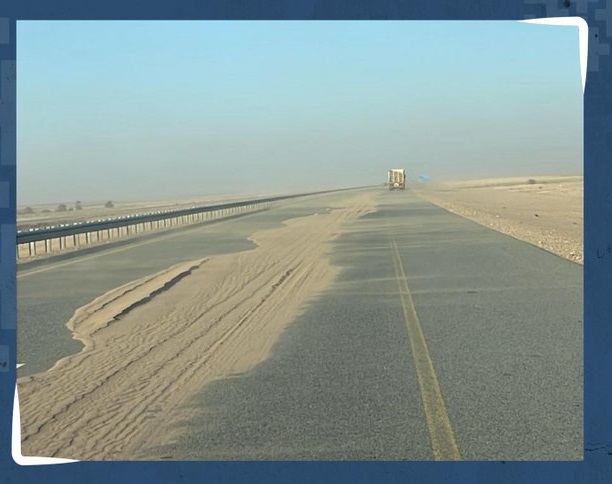

Recent weather patterns in Oman are causing concern for drivers traveling along the Sultan Said bin Taimur Road, particularly the stretch between Adam and Haima. Active winds are leading to significant sand accumulations, impacting visibility and creating potentially hazardous driving conditions. This article provides crucial information for motorists using this route, emphasizing safety precautions and offering guidance for a secure journey. Understanding these risks and taking appropriate action is vital for all travelers.
Understanding the Risks of Sand Accumulations on Sultan Said bin Taimur Road
The Sultan Said bin Taimur Road, a vital artery connecting different regions of Oman, is susceptible to sandstorms and wind-driven sand, especially during certain times of the year. The relatively flat and open terrain between Adam and Haima offers little natural protection from the wind, allowing sand to easily accumulate on the roadway. This isn’t a new phenomenon, but recent increases in wind activity have heightened the risk. Reduced visibility is the primary danger, making it difficult to see other vehicles, road markings, and potential obstacles.
How Wind and Sand Impact Driving Conditions
Strong winds can quickly reduce visibility to extremely low levels, creating a “whiteout” effect. This makes judging distances incredibly difficult and increases the risk of collisions. Furthermore, sand accumulation can alter the road surface, reducing traction and making it harder to control your vehicle. Even a thin layer of sand can significantly increase braking distances.
Safety Precautions for Travelers on the Adam–Haima Route
Prioritizing safety is paramount when traveling on the Sultan Said bin Taimur Road during periods of high wind and sand accumulations. Several precautions can significantly reduce your risk and ensure a safer journey. Staying informed about weather conditions is the first step.
Before You Travel: Checking Weather Forecasts
Before embarking on your trip, always check the latest weather forecast from reliable sources such as the Oman Meteorology Authority. Pay close attention to warnings about strong winds and potential sandstorms. If a warning is in effect, consider postponing your travel if possible. Planning your journey around predicted weather patterns can save you considerable risk and inconvenience.
During Your Journey: Safe Driving Practices
If you must travel during windy conditions, adhere to the following safety guidelines:
- Reduce Speed: Slow down significantly to allow more time to react to changing conditions.
- Increase Following Distance: Maintain a greater distance between your vehicle and the one in front of you.
- Turn on Headlights: Even during daylight hours, activate your headlights to improve visibility for yourself and others.
- Avoid Sudden Maneuvers: Steer and brake gently to prevent skidding.
- Use Hazard Lights: If visibility becomes severely reduced, activate your hazard lights to warn other drivers.
Remember, patience and caution are key. Rushing will only increase your risk of an accident. Consider pulling over to a safe location if conditions become too dangerous. Road safety is everyone’s responsibility.
What to Do If You Encounter Severe Sand Accumulations
Despite taking precautions, you may encounter unexpectedly severe sand accumulations while driving. Knowing how to react in such situations is crucial. The immediate priority is to ensure your safety and the safety of others.
Pulling Over Safely
If visibility drops to a point where you can no longer safely navigate, pull over to the side of the road as far as possible. Choose a location that is away from traffic and, if possible, sheltered from the wind. Turn on your hazard lights and remain in your vehicle with your seatbelt fastened. Avoid attempting to drive through extremely dense sandstorms, as this can lead to getting stuck or losing control.
Staying Informed and Seeking Assistance
Monitor weather updates and road conditions using your mobile phone or radio. If you are in a dangerous situation and require assistance, contact the authorities immediately. The Royal Oman Police can provide guidance and support. Remember to stay calm and provide accurate information about your location. Emergency preparedness is vital in these situations.
The Importance of Community Awareness and Road Maintenance
Addressing the issue of sand accumulations requires a collaborative effort. Raising awareness among drivers about the risks and safety precautions is essential. Additionally, regular road maintenance and clearing of sand from the roadway are crucial for maintaining safe driving conditions. Local authorities are actively working to mitigate these challenges, but driver vigilance remains paramount. Furthermore, understanding desert driving techniques can be beneficial for those who frequently travel these routes.
In conclusion, traveling the Sultan Said bin Taimur Road between Adam and Haima requires heightened awareness and caution due to the potential for sand accumulations caused by active winds. By checking weather forecasts, practicing safe driving techniques, and knowing how to react in challenging situations, you can significantly reduce your risk and ensure a safe journey. May God protect you in your homes and during your travels. Please share this information with fellow travelers to promote road safety for all. For more information on road conditions in Oman, please visit the official website of the Oman Meteorology Authority.