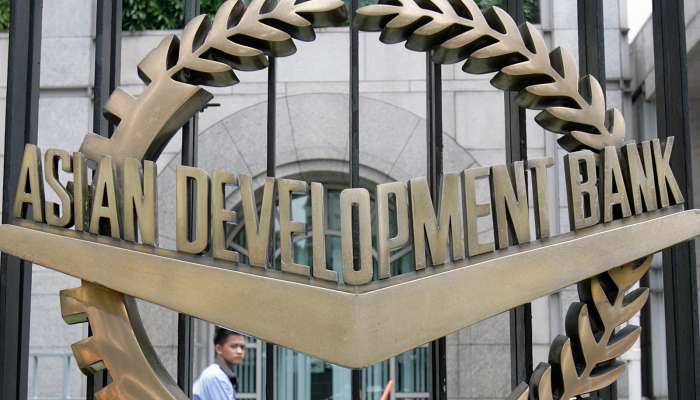

The Asian Development Bank (ADB) has significantly boosted its confidence in India’s economic trajectory, raising its growth forecast for the country to 7.2% for the fiscal year 2025-26. This upward revision, announced this week, reflects India’s strong economic performance in the July-September quarter and positive signals regarding fiscal health. The improved outlook for India’s economic growth is a key driver behind a broader positive revision for developing Asia and the Pacific.
ADB Raises Growth Forecast for India to 7.2% in 2025-26
The ADB’s latest projections, detailed in the Asian Development Outlook (ADO) December 2025 report, mark a substantial increase from the previous forecast of 6.5% for India. This optimistic adjustment is largely attributed to a more robust expansion in the third quarter, fueled by supportive tax cuts that stimulated consumer spending. While the 2026 forecast remains steady at 6.5%, the near-term outlook is decidedly brighter.
This isn’t just good news for India; it’s having a ripple effect across the region. The ADB now anticipates developing Asia and the Pacific to grow by 5.1% in 2024, up from the 4.8% predicted in September. For 2025, the forecast has been nudged up to 4.6% from 4.5%.
Factors Driving the Upward Revision
Several key factors contributed to the ADB’s revised assessment. Resilient export performance, particularly in the technology sector – specifically semiconductors – played a crucial role. Moderating inflation and stable financial conditions within the region also bolstered the positive outlook. The conclusion of several trade agreements with the United States has demonstrably reduced trade uncertainty, providing a more predictable environment for businesses.
The report specifically highlights the impact of lower-than-anticipated food inflation in India as a significant contributor to the overall easing of inflationary pressures across developing Asia. This demonstrates the importance of India’s internal economic management in influencing regional trends.
Regional Economic Outlook Strengthens
Beyond India, the ADB notes a strengthening of economic fundamentals across Asia and the Pacific. This resilience is allowing the region to maintain steady growth despite ongoing global trade challenges. ADB Chief Economist Albert Park emphasized this point, stating, “Asia and the Pacific’s solid economic fundamentals are underpinning robust export performance and steady growth, despite a global trade environment clouded by historic levels of uncertainty over the past year.”
He further added that while trade agreements have helped alleviate some concerns, external challenges persist. Park urged regional governments to continue prioritizing open trade and investment policies to sustain economic momentum and build resilience against future shocks. This focus on economic policy is crucial for navigating the complex global landscape.
Trade Agreements and Reduced Uncertainty
The recent trade agreements, particularly those with the US, have been instrumental in reducing the uncertainty that has plagued global trade for the past year. These agreements provide a clearer framework for trade relations, encouraging investment and fostering economic cooperation. The positive impact is visible in the improved export figures across the region, demonstrating the benefits of a more stable trade environment.
Potential Risks to the Forecast
Despite the optimistic revisions, the ADB acknowledges several potential risks that could derail the projected growth. Renewed trade tensions between major economies remain a significant concern. Financial market volatility, driven by factors like interest rate fluctuations and geopolitical events, could also negatively impact the region.
Furthermore, the report points to geopolitical pressures and the ongoing situation in China’s property market as potential headwinds. A worse-than-expected deterioration in the Chinese property sector could have significant spillover effects on the broader Asian economy. Monitoring these risks and implementing appropriate mitigation strategies will be vital for maintaining regional economic stability.
Inflation Trends and India’s Role
The ADB expects inflation in developing Asia and the Pacific to continue easing, falling to 1.6% in 2024, a slight decrease from the September projection of 1.7%. This downward trend is largely attributed to the moderation of food prices in India. The forecast for 2025 remains at 2.1%.
India’s ability to manage food inflation effectively is therefore not only beneficial for its own citizens but also contributes to overall price stability in the region. This highlights the interconnectedness of Asian economies and the importance of coordinated policy responses. The continued focus on controlling inflation will be key to sustaining economic development in the long term.
In conclusion, the ADB’s revised growth forecast for India, and for developing Asia as a whole, paints a positive picture. Driven by strong domestic performance, resilient exports, and a more stable trade environment, the region is poised for continued growth. However, policymakers must remain vigilant about potential risks and prioritize policies that foster open trade, investment, and financial stability. Readers are encouraged to explore the full Asian Development Outlook (ADO) December 2025 report for a more detailed analysis of the regional economic landscape and to stay informed about future updates.