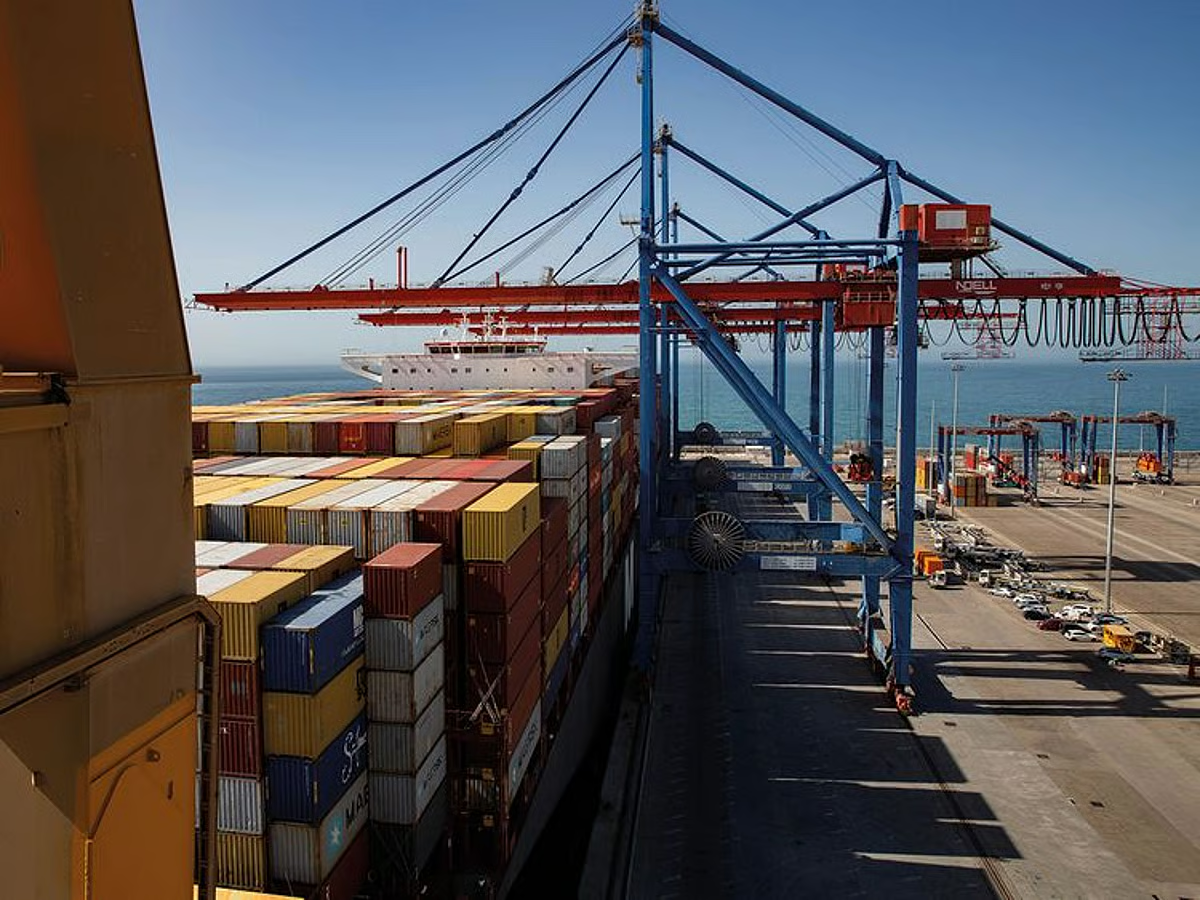

Abu Dhabi Ports (AD Ports) is pursuing a majority stake in Egypt’s Ain Sokhna Container Terminal (ALCN2m), a key facility on the Red Sea. The potential acquisition, announced in late February 2024, signals a significant expansion of AD Ports’ regional footprint and aims to bolster Egypt’s growing role in global trade. This move comes as Egypt seeks to attract foreign investment to revitalize its economy and shore up its logistical capabilities.
The deal, currently under negotiation, would see AD Ports acquire a 70% share in ALCN2m from Red Sea Bunkers Group. The terminal, located within the East Port Said development area, handles a substantial volume of cargo and is considered pivotal to the Suez Canal Economic Zone’s (SCZone) ambitions. According to reports, the transaction value hasn’t been publicly disclosed as of March 4, 2024.
AD Ports’ Expansion Strategy and the ALCN2m Acquisition
This potential investment in AD Ports aligns with the company’s broader strategy of establishing itself as a leading global port operator and logistics provider. AD Ports has been actively expanding its presence in key markets across Africa and the Middle East, seeking to capitalize on increasing trade flows and infrastructure development opportunities. The Red Sea corridor is particularly critical, handling approximately 12% of global trade, making ALCN2m a strategically valuable asset.
The planned acquisition of ALCN2m is also a manifestation of the strengthening economic ties between the United Arab Emirates and Egypt. Both nations are seeking increased cooperation on a range of ventures, and this deal builds on previous collaborations in areas like renewable energy and real estate. The UAE has pledged significant investments in Egypt to support its economic recovery efforts.
Why Ain Sokhna?
Ain Sokhna’s importance stems from its location as a gateway for trade between Asia and Europe via the Suez Canal. The terminal benefits from deep draft capabilities, enabling it to accommodate larger vessels. This makes it a crucial link in global supply chains and a prime location for transshipment activities.
Egypt has been focusing on modernizing its ports infrastructure to increase efficiency and attract more business. The SCZone, where ALCN2m is located, offers incentives to investors, including tax breaks and simplified customs procedures. This environment is designed to promote economic growth and solidify Egypt’s position as a regional trade hub.
The acquisition is expected to provide AD Ports with an opportunity to leverage its expertise in port management and operations to further enhance ALCN2m’s performance. This includes implementing advanced technologies, streamlining processes, and improving connectivity with other transport networks. Such improvements can lead to increased throughput and reduced turnaround times for vessels.
Moreover, the expansion into Egypt offers AD Ports diversification away from its core operations in Abu Dhabi. It allows the company to tap into new markets and reduce its reliance on regional economic fluctuations. This diversification strategy is aimed at enhancing long-term sustainability and resilience.
The Egyptian government has welcomed AD Ports’ interest in ALCN2m, viewing it as a vote of confidence in the country’s economic prospects. The Ministry of Transport emphasized the potential for increased investment and job creation resulting from the deal. Enhancements to port infrastructure and operating efficiencies are core government objectives.
Potential Impact on Regional Trade
The injection of capital and expertise from AD Ports could significantly improve the competitiveness of Ain Sokhna as a transshipment hub. This would likely attract more shipping lines and increase cargo volumes.
Additionally, improved port operations can reduce congestion and delays, benefiting businesses that rely on timely delivery of goods. Reduced logistical costs resulting from optimized operations could make Egyptian ports more attractive for international trade. However, the ultimate impact will depend on successful integration and further investments in supporting infrastructure.
In contrast, some analysts point to potential challenges, including navigating complex regulatory hurdles and managing labor relations. The report indicates a need for coordination between different government agencies and stakeholders to ensure a smooth transition and maximize the benefits of the partnership. Competition from other regional ports, such as those in Saudi Arabia and Jordan, also remains a factor.
This development comes amidst increasing global concerns about supply chain resilience in the wake of geopolitical instability. Efforts to improve logistics capabilities in the Red Sea region are seen as crucial to mitigating potential disruptions. The Suez Canal, a vital waterway, faced increased pressure recently with disruptions in shipping lanes.
Furthermore, the focus on container terminal upgrades generally signals a growing demand for containerized shipping. As global trade recovers, the demand for efficient port facilities becomes even more acute. The ALCN2m acquisition, when complete, will likely play a role in supporting this demand. Analysts are observing a trend toward maritime development across the Middle East and North Africa.
The finalization of the deal requires regulatory approvals from both Egyptian and UAE authorities. While a definitive timeline isn’t yet available, the expectation is that the process will be completed within the first half of 2024. The parties involved are working closely to address all necessary requirements. Key to watch is the satisfaction of due diligence and the final agreement on financial terms.
Following the initial agreement, the next steps involve completing the legal documentation and securing final approvals from relevant government bodies. Uncertainty remains regarding the precise impact of global economic headwinds on the long-term success of the investment. Monitoring traffic through the Suez Canal and the broader geopolitical landscape will be essential for evaluating the performance of ALCN2m under AD Ports’ ownership.