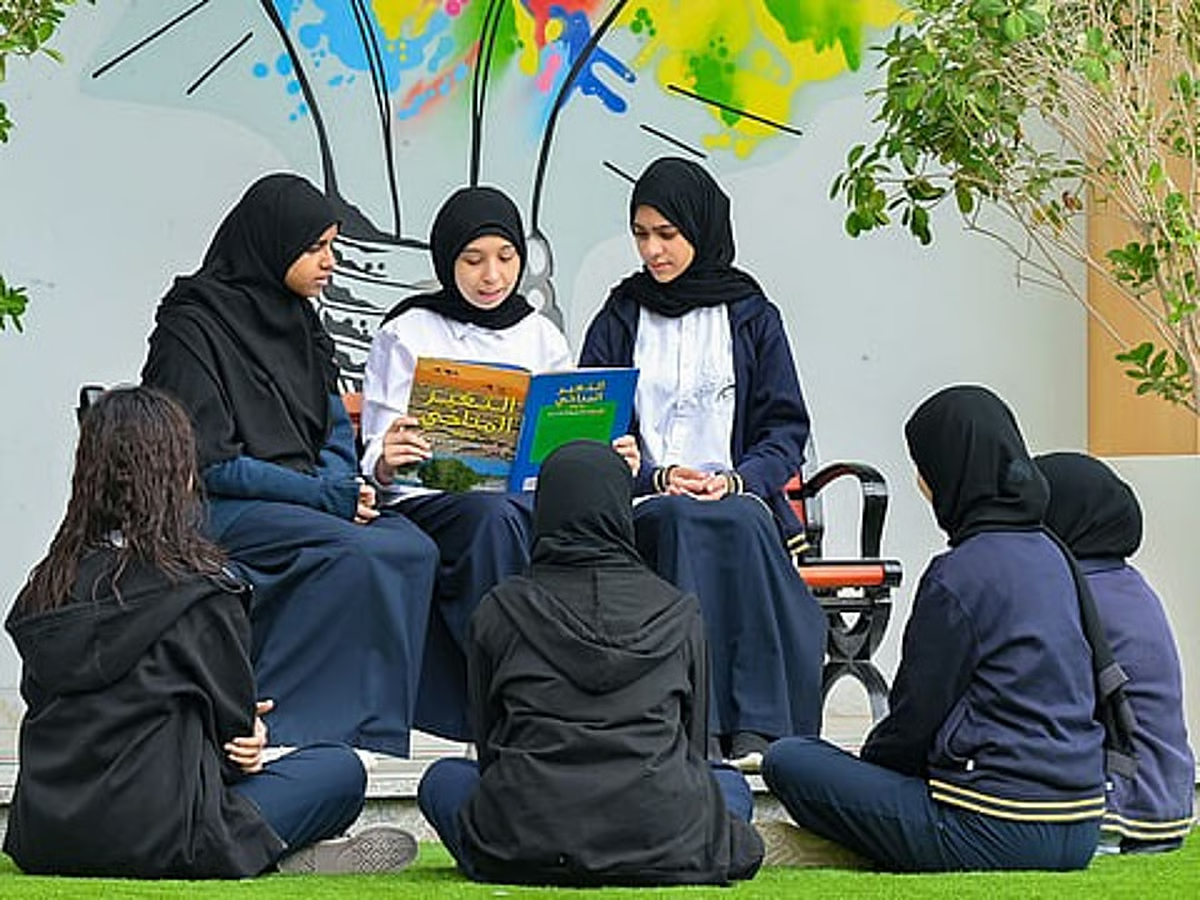

Abu Dhabi’s sustainable schools initiative is gaining international acclaim for its success in embedding environmental awareness and action within the education system. The program has facilitated 1,018 environmental projects and activities, engaging over 70,000 students in hands-on learning experiences. This commitment to environmental education has resulted in significant reductions in waste and energy consumption across participating schools, earning the initiative a prestigious 7-star rating.
The Environment Agency – Abu Dhabi (EAD) spearheaded the initiative, which currently involves 562 schools and approximately 344,000 students. The program’s impact extends beyond student engagement, with nearly 4,700 teachers receiving specialized training to effectively deliver environmental curricula. This latest recognition from international bodies underscores Abu Dhabi’s leadership in fostering a generation committed to sustainability.
The Rise of Sustainable Schools in Abu Dhabi
The sustainable schools initiative began as a response to growing global concerns about climate change and the need for increased environmental literacy. According to the EAD, the program aims to move beyond simply raising awareness to actively promoting behavioral changes within school communities. This is achieved through a combination of experiential learning, teacher development, and the implementation of practical sustainability measures.
Measurable Environmental Impact
Participating schools have demonstrated tangible results. Data collected during the 2022-2024 cycle reveals the recycling of 241,435 kg of waste and the equivalent of 2,442 liters of water per capita. Furthermore, a collective commitment from 71,864 school members led to significant energy conservation. These achievements highlight the effectiveness of the program in translating environmental knowledge into concrete action.
Digital Transformation and Global Accessibility
A key innovation of the initiative is the development of an electronic self-assessment system. This platform allows schools to track their environmental performance annually and facilitates data-driven improvements. Judges praised this digital transformation, noting its potential to expand access to the program globally. The EAD is actively promoting this system as a model for other countries seeking to integrate sustainability into their education systems.
Empowering Educators with e-Green Learning
Recognizing the crucial role of teachers, the initiative provides ongoing professional development through the e-Green e-learning platform. This online resource offers educators access to essential training and resources, enabling them to effectively incorporate environmental education into their lesson plans. The platform’s accessibility makes the sustainable schools initiative a scalable model for environmental education worldwide, promoting environmental awareness and climate education.
International Recognition and Replication
The 7-star award is the latest in a series of accolades for the program. It has previously been recognized by the United Nations Environment Programme (UNEP) and the Global Partnership for Environmental Education as a globally replicable model. Ahmed Baharoon, Executive Director of the EAD, stated that this recognition “underscores Abu Dhabi’s leading position in integrating sustainability principles into education.”
However, replicating the success of the initiative in other contexts may require adaptation to local conditions and educational systems. The EAD acknowledges this and is actively working to share knowledge and expertise with international partners to facilitate successful implementation in diverse settings.
The EAD continues to expand the reach of the Sustainable Schools Initiative, enhance its digital platforms, and promote the exchange of knowledge and expertise locally and internationally. Looking ahead, the agency plans to focus on further integrating sustainability into the core curriculum and fostering greater collaboration between schools, communities, and government agencies. The long-term success of the initiative will depend on continued investment and a sustained commitment to environmental education.
The next phase of the program will involve a comprehensive evaluation of the self-assessment system and its impact on school performance, with results expected by the end of 2025. Monitoring the program’s scalability and adaptability to different educational contexts will also be crucial in determining its long-term viability as a global model for environmental stewardship.