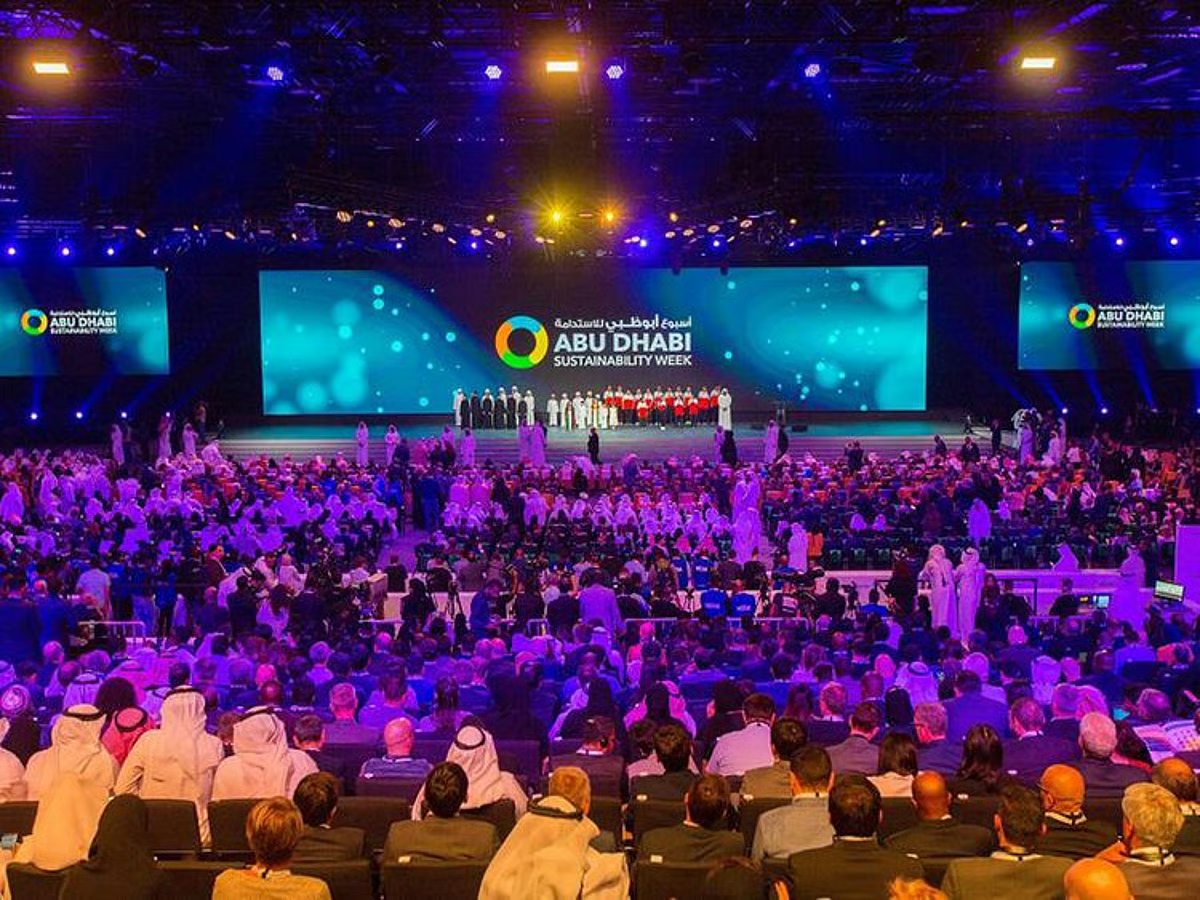

Abu Dhabi is investing heavily in its energy infrastructure, signaling a commitment to a cleaner energy future and bolstering the resilience of its power grid. Recent announcements at Abu Dhabi Sustainability Week highlight a strategic shift towards renewable sources, with plans to exceed 60% clean energy in the emirate’s mix before 2030. This large-scale investment underscores the region’s growing role in the energy transition and its focus on maintaining affordable and reliable power for both residents and industries.
Abu Dhabi’s Accelerated Energy Transition
The United Arab Emirates, and Abu Dhabi specifically, has rapidly evolved its energy strategy over the last decade. According to Dr. Abdulla Humaid Al Jarwan, Chairman of the Abu Dhabi Department of Energy, renewable and clean energy sources accounted for less than 1% of the emirate’s energy system ten years ago. Today, that figure has risen dramatically to 45%, demonstrating a significant acceleration in the adoption of sustainable practices.
This growth is largely driven by ambitious solar energy programs. Abu Dhabi is currently adding over three gigawatts of cost-competitive solar capacity annually and is on track to surpass 33 gigawatts of renewable power by 2035. Supporting this expansion will be 20 gigawatt-hours of energy storage, designed to enhance grid stability and flexibility as intermittent renewable sources become more prevalent.
A Systems-Based Regulatory Approach
Dr. Al Jarwan emphasized a fundamental change in the approach to energy regulation. He stated that future regulation will focus on designing comprehensive, integrated systems rather than managing individual energy sectors in isolation. This holistic view requires regulators to understand the technical, operational, and financial implications of every decision they make.
The role of regulators is shifting from oversight to “system designers and system orchestrators,” aligning policy, capital investment, and operational practices to achieve strategic goals. This integrated approach, officials believe, will protect consumers, attract investors, and foster confidence in the energy sector through clarity and stability.
Beyond Technology: People and Resilience
While technology is a crucial component of the energy transition, Abu Dhabi’s strategy recognizes the importance of human capital. Dr. Al Jarwan stressed the need to invest in the people who design, operate, regulate, and continuously improve these complex energy systems. He argued that these individuals represent the most valuable asset in achieving long-term sustainability.
The emirate’s broader strategy is built around five key imperatives: resilience, affordability, credibility, innovation, and collaboration. Resilience is defined as the ability of the energy system to absorb shocks and maintain reliability under various circumstances. Affordability, according to the plan, will be achieved through efficiency gains and technological advancements, reducing the need for costly infrastructure build-outs.
The concept of a “sovereign right energy mix” was also introduced, signifying a tailored approach to energy development that prioritizes the UAE’s long-term strategic objectives. This mix isn’t solely focused on renewables, but on the optimal combination of resources to ensure energy security and economic growth. The interconnectedness of energy, water, climate, and food systems – the “Nexus of the Next” – is central to this planning.
Furthermore, the focus on collaboration acknowledges that no single entity can successfully navigate the complexities of the sustainable energy landscape. Partnerships between government, industry, and research institutions are considered essential for driving innovation and accelerating progress.
The development of robust energy infrastructure is also seen as vital for attracting foreign investment in the region. A stable and reliable energy supply is a key factor for businesses considering establishing or expanding operations in Abu Dhabi.
Looking ahead, the success of Abu Dhabi’s energy transition will depend on continued investment in both technology and human capital, as well as effective collaboration between stakeholders. The next few years will be critical in demonstrating the feasibility and scalability of these ambitious plans, and in navigating the challenges associated with integrating a growing share of renewable energy into the grid. Monitoring the progress towards the 2030 and 2035 targets, and assessing the impact of these investments on energy affordability and reliability, will be key indicators of success.