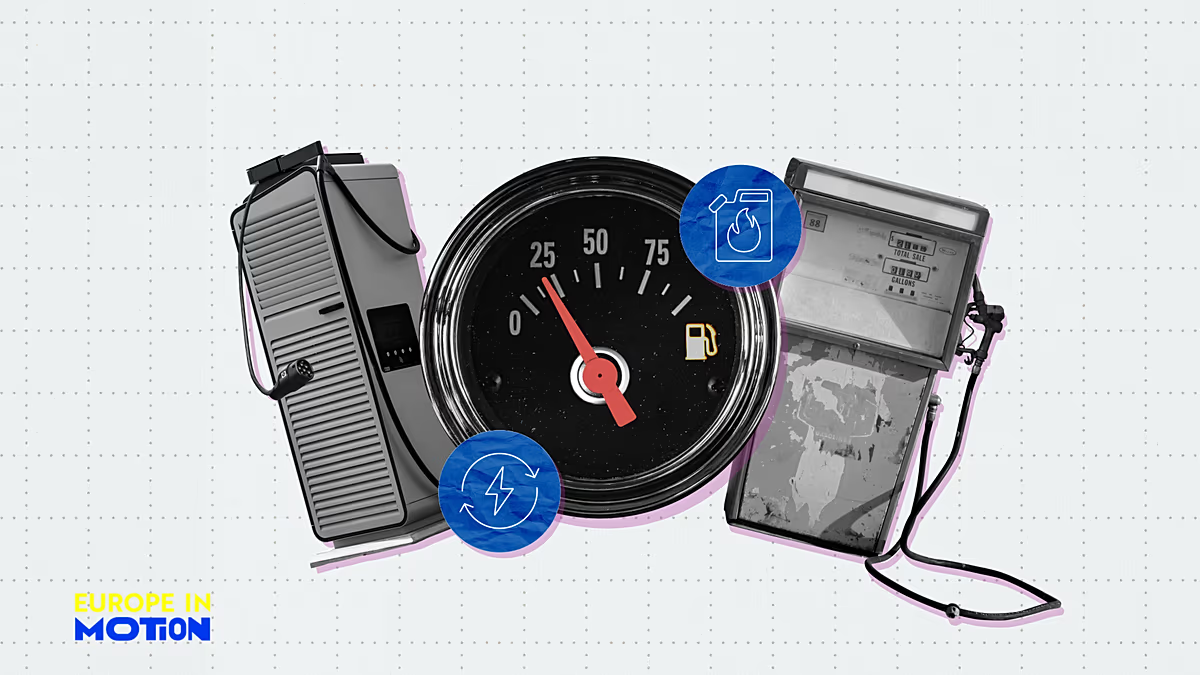

For the first time ever, sales of fully electric vehicles (EVs) in the European Union surpassed those of petrol-only cars in December 2025, marking a significant turning point in the automotive industry. Data released by the European Automobile Manufacturers’ Association (ACEA) reveals a growing consumer shift towards electric mobility, even as the EU adjusts its long-term emissions targets. This milestone comes amidst a broader trend of increasing adoption of electrified vehicles across the bloc.
While battery-electric cars led the charge in December, hybrid electric vehicles remained the most popular choice overall in 2025. This suggests a more gradual transition than initially anticipated, particularly following the EU’s decision to soften its 2035 car emissions ban. The revised regulations now require a 90% reduction in CO2 emissions from carmakers by 2035, rather than the previously mandated 100%.
The Rise of Electric Vehicles in Europe
The surge in electric vehicle adoption is not uniform across the EU. Germany, the Netherlands, Belgium, and France accounted for 62% of all battery-electric car registrations in 2025, solidifying their positions as key EV markets. These countries have benefited from established charging infrastructure and supportive government policies.
Meanwhile, registrations of petrol cars experienced a substantial decline, falling by 18.7% across the EU. France saw the most dramatic decrease, with a 32% drop, followed by Germany (-21.6%), Italy (-18.2%), and Spain (-16%). This indicates a clear shift away from traditional internal combustion engine (ICE) vehicles.
Government Incentives Driving Adoption
Consumer preferences regarding fuel type are heavily influenced by national incentives and taxation rules, according to Eurostat. Several EU member states have implemented generous subsidies to encourage EV purchases. Italy currently offers up to €11,000 for individuals, covering 30% of the purchase price, with certain income restrictions and vehicle price caps.
Greece and Poland also provide around €9,000 in subsidies, with Greece adding further incentives for scrapping older vehicles and for buyers under 29. Additionally, Greece offers tax exemptions on registration and circulation taxes for battery-electric vehicles. These financial benefits are clearly playing a role in accelerating the transition to electric mobility.
Impact on the Automotive Industry
The automotive industry is a significant contributor to the European economy, generating over 8% of the EU’s GDP. The sector supports 13.6 million jobs across the bloc, representing 8.1% of all manufacturing employment. The shift towards electric cars and hybrid technology is prompting substantial investment in new technologies and manufacturing processes.
However, the transition isn’t without challenges. The revised emissions targets, while less stringent than initially proposed, still require significant investment from automakers. The availability of charging infrastructure and the sourcing of battery materials remain key concerns. Diesel car sales have also fallen sharply, now accounting for less than 10% of the market.
Despite the softened 2035 targets, the trend towards electrification appears firmly established. The future of the European automotive market will likely see continued growth in EV sales, alongside the ongoing popularity of hybrid vehicles. Consumers considering a new vehicle should research available incentives and charging options in their region to make an informed decision.
Looking ahead, monitoring the development of charging infrastructure and the evolution of battery technology will be crucial. The pace of the transition will also depend on continued government support and the ability of automakers to deliver affordable and appealing electric models.