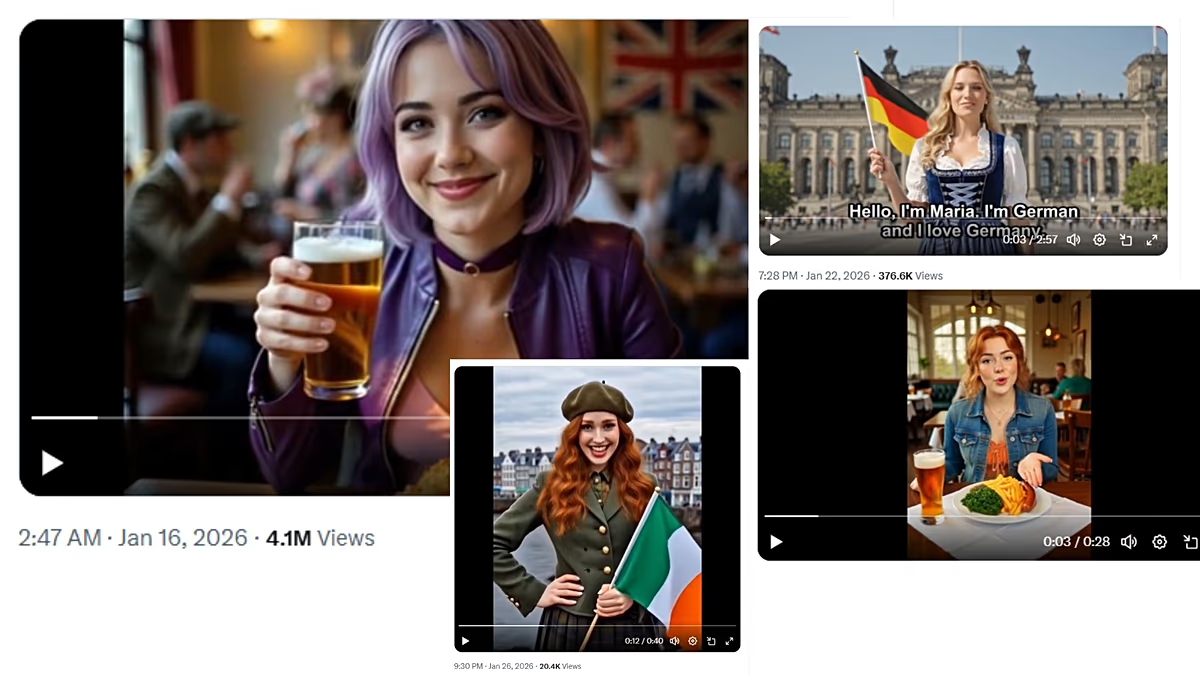

Across Europe, nearly identical AI-generated characters are spreading on social media platforms like X and Facebook, promoting anti-immigration and anti-government sentiments. These digitally created personas, including “Emma” in the Netherlands, “Maria” in Germany, and “Amelia” in Ireland and the UK, are gaining traction and raising concerns about the spread of disinformation. The phenomenon highlights the growing potential for artificial intelligence to be weaponized for political messaging and influence operations, particularly concerning AI-generated memes.
The characters, often presented as relatable young women, express nationalist viewpoints and criticize current political policies. They’ve attracted thousands of views and interactions, particularly on X, and are being shared within various online communities. While seemingly harmless individually, researchers are tracking increasingly extreme versions appearing in more niche spaces.
The Rise of AI-Generated Memes and Political Disinformation
The proliferation of these characters can be traced back to the UK, where “Amelia,” an AI-generated schoolgirl with purple hair, first went viral. Amelia appears in digitally-generated images alongside popular cultural references, encouraging viewers to “take their country back” and expressing concerns about immigration. However, the origins of Amelia are surprisingly rooted in a UK counter-extremism program.
Unexpected Origins in a Counter-Extremism Program
Amelia was initially created as part of “Pathways,” an educational game developed by the UK-based social enterprise Shout Out UK. The game, funded by the UK Home Office, aims to educate young people about online radicalization and safe online behavior. According to Matteo Bergamini, CEO of Shout Out UK, the game was designed to address the rising risk of online extremism, particularly among teenagers.
The game places students in online scenarios where they must respond to various posts and messages. Amelia serves as a minor character who encourages risky online behavior, not as a protagonist or role model. Shout Out UK emphasizes that the game is intended to be used as part of a broader learning package facilitated by teachers, and does not advocate questioning mass migration as online claims suggest.
The viral meme emerged as a backlash from far-right circles who perceived Amelia as a caricature of their views on immigration and government overreach. Creators of the original meme have not responded to requests for comment.
Escalation and Monetization
While many Amelia memes circulating on mainstream platforms like X do not violate platform rules under the Digital Services Act (DSA), researchers at the Institute for Strategic Dialogue (ISD) have identified more extreme versions appearing in closed online communities and on apps like Telegram. These versions often contain dehumanizing imagery and violent rhetoric targeted at specific communities. Shout Out UK reports that their character has been “memefied and sexualized” and linked to racist and antisemitic language.
Additionally, Amelia has become a vehicle for monetization. The ISD has identified accounts promoting Amelia-themed meme coins, capitalizing on the viral trend. Siddharth Venkataramakrishnan, an analyst at the ISD, notes the difficulty in distinguishing between accounts sharing memes for ideological reasons and those seeking profit. Emotionally charged content, like these AI-generated images, tends to gain traction more easily on social media, accelerating their spread.
The spread of these digital characters also raises concerns about the broader impact of synthetic media on public discourse. The ease with which these characters can be created and disseminated makes it challenging to combat disinformation and maintain trust in online information.
Looking ahead, it will be crucial to monitor the evolution of these AI-generated personas and their impact on political conversations. Platforms will need to continue refining their policies to address harmful content while respecting freedom of expression. Individuals should remain critical of information encountered online and verify sources before sharing content. Euronews provides further details on this developing story.