





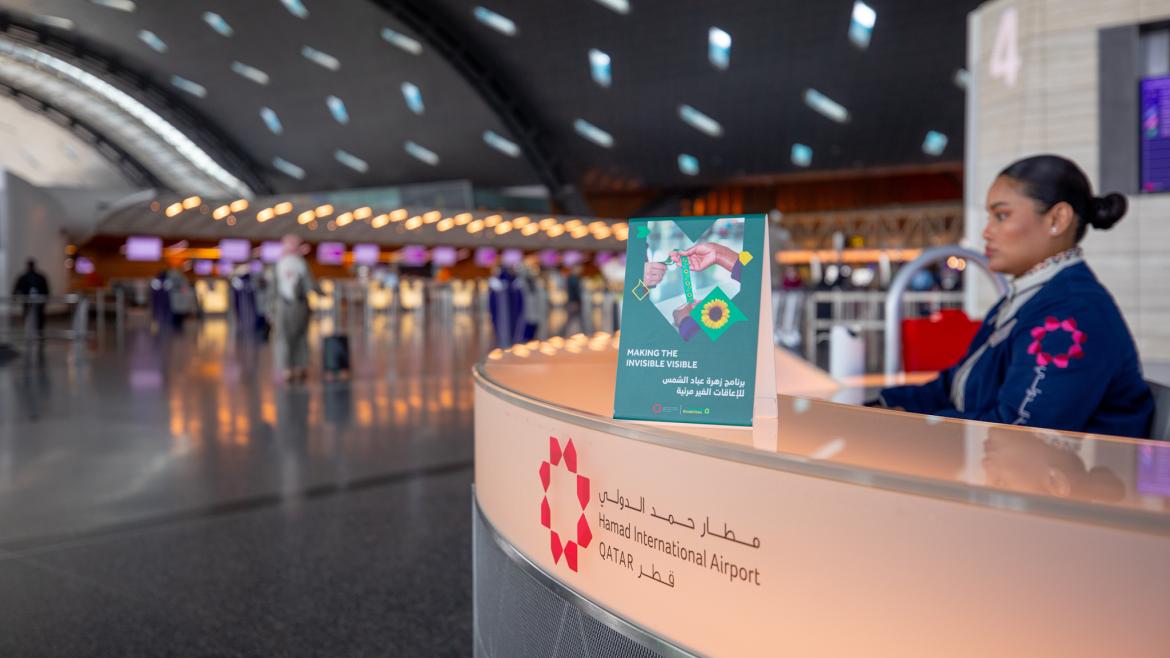

Doha, Qatar – Hamad International Airport (HIA) has implemented the Hidden Disabilities Sunflower program, offering a discreet signal for travelers with non-visible disabilities. This initiative aims to foster a more understanding and supportive travel experience for passengers who may require additional assistance navigating the airport. The program launched this month and is part of a wider effort to improve accessibility for all travelers.
The rollout at HIA, one of the world’s busiest airports, signifies a growing global movement to recognize and accommodate the needs of individuals with hidden disabilities. According to airport officials, the Sunflower symbol will be visible throughout the terminal, and staff have received training to recognize and respond appropriately to passengers wearing it.
Hamad International Airport Enhances Accessibility with Sunflower Program
The Hidden Disabilities Sunflower program utilizes a simple sunflower lanyard or pin as a voluntary indicator that a person has a hidden disability, such as autism, anxiety, chronic illness, or cognitive impairment. It’s designed to reduce the need for individuals to repeatedly explain their needs and to encourage a more compassionate response from airport staff and fellow passengers. The program doesn’t require individuals to disclose their specific condition.
How the Program Works at HIA
HIA’s integration of the Sunflower program extends across all key passenger touchpoints, including arrival, departure, and transfer areas. Teams from airport operations, Qatar Airways Group, airline partners, and retail services have undergone awareness training. This training focuses on recognizing the sunflower symbol and understanding how to provide appropriate support without being intrusive.
Francois Bourienne, Senior Vice President of Commercial, Strategy and Customer Experiences at HIA, stated the program aligns with the airport’s commitment to designing passenger journeys that prioritize autonomy, dignity, and predictability. He emphasized that the Sunflower program is part of a broader accessibility framework intended to create a barrier-free airport experience.
However, the implementation of accessibility programs at large transportation hubs can present logistical challenges. Ensuring consistent awareness and appropriate responses from all staff members, particularly those from third-party contractors, requires ongoing training and monitoring.
Growing Recognition of Hidden Disabilities in Travel
The Hidden Disabilities Sunflower program originated in the United Kingdom and has since expanded to numerous airports and other public spaces worldwide. The increasing adoption of the program reflects a growing awareness of the challenges faced by individuals with non-visible disabilities when traveling.
Andy Faulkner, CEO of Topland, the exclusive partner of the Hidden Disabilities Sunflower in the Middle East, highlighted HIA’s commitment as a significant step towards more inclusive travel experiences. He noted the importance of raising awareness and fostering a culture of understanding and respect.
Meanwhile, other airports globally are exploring similar initiatives, including dedicated quiet spaces, sensory rooms, and personalized assistance programs. These efforts aim to address the diverse needs of passengers and create a more welcoming environment for everyone. The focus on passenger accessibility is also being driven by international aviation standards and regulations.
The success of the Sunflower program at HIA will likely be measured by passenger feedback and observed changes in staff interactions. Airport officials have not yet announced specific metrics for evaluating the program’s effectiveness. Looking ahead, HIA plans to continue investing in facilities and services to enhance accessibility, with further updates expected in the coming months. The long-term impact of the program on the overall travel experience for passengers with hidden disabilities remains to be seen.