





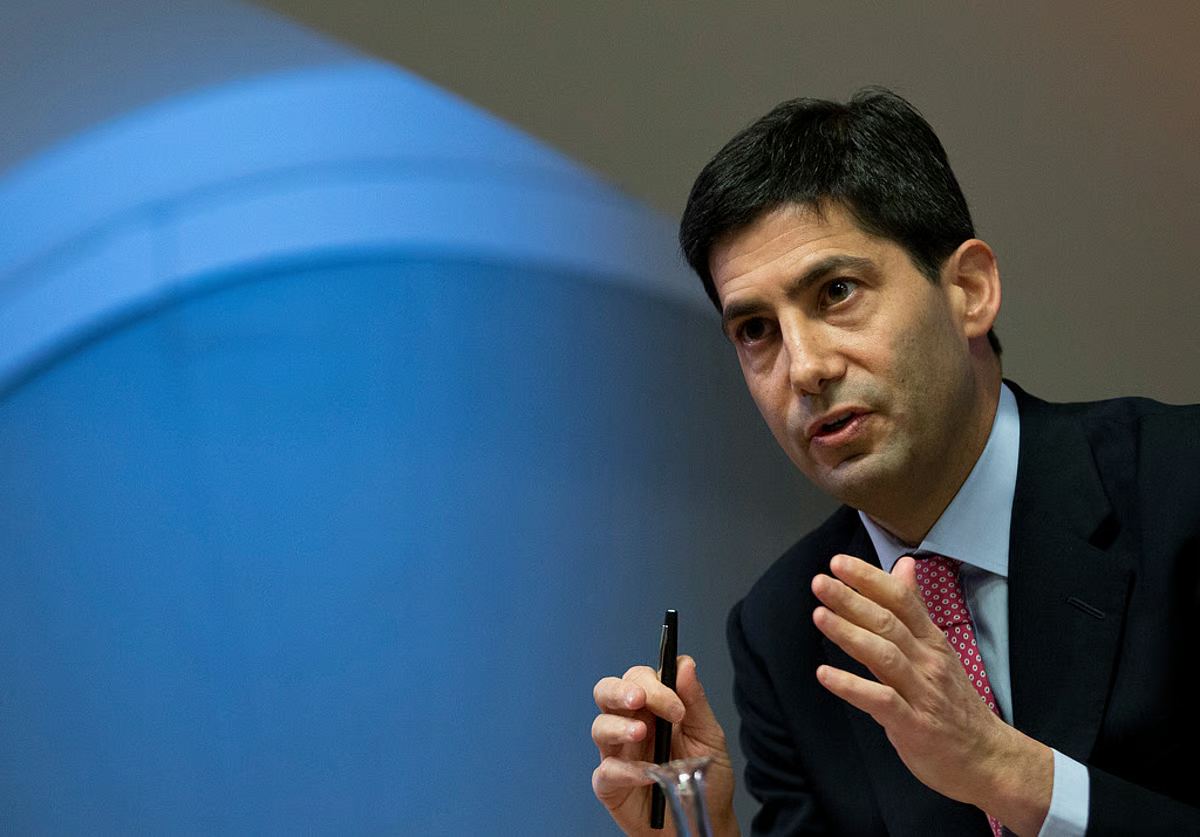

Former President Donald Trump has nominated Kevin Warsh to serve as the next chair of the Federal Reserve, potentially reshaping monetary policy should he be confirmed. The announcement, made late Tuesday, comes as the current chair, Jerome Powell, nears the end of his current term. This Federal Reserve chair nomination signals a potential shift towards a more hawkish stance on inflation, according to analysts.
Warsh, a former member of the Federal Reserve Board of Governors, served during the 2008 financial crisis. His nomination immediately sparked debate among economists and market observers, given his known views on interest rates and regulatory oversight. The timing of the announcement is notable, occurring amidst ongoing concerns about persistent inflation and the potential for a recession.
The Nomination of Kevin Warsh and Its Background
Warsh’s previous tenure at the Federal Reserve spanned from 2006 to 2011, during which he was a vocal advocate for tighter monetary policy. He frequently dissented from decisions to maintain low interest rates, arguing they risked fueling asset bubbles and future inflation. This history is central to understanding the implications of his potential leadership.
Warsh’s Stance on Inflation
Throughout his career, Warsh has consistently emphasized the importance of price stability. He has argued that the Federal Reserve should prioritize controlling inflation, even if it means slower economic growth. This contrasts with the more dovish approach favored by some, who prioritize full employment.
Experience During the 2008 Financial Crisis
Warsh’s experience navigating the 2008 financial crisis is considered a significant asset by supporters. He played a key role in the Fed’s response to the crisis, including the implementation of emergency lending programs. However, critics point to his earlier warnings about risk-taking as potentially insufficient to prevent the crisis itself.
The nomination process will involve scrutiny from the Senate Banking Committee, which will hold hearings to assess Warsh’s qualifications and views. Confirmation requires a majority vote in the Senate. The current political climate and the composition of the Senate will significantly influence the outcome.
Meanwhile, current Fed Chair Jerome Powell’s term is set to expire in February 2024. While President Biden previously indicated his support for Powell for a second term, the possibility of a change in administration could alter the landscape. The White House has not yet commented on Trump’s nomination.
Implications for Monetary Policy
A Warsh-led Federal Reserve is widely expected to adopt a more aggressive approach to combating inflation. This could involve raising interest rates more quickly and potentially holding them higher for longer than under Powell’s leadership. Such a policy shift could have significant consequences for the economy.
Potential Impact on Interest Rates
Higher interest rates would increase borrowing costs for businesses and consumers, potentially slowing economic growth. This could lead to a decrease in investment and hiring. However, proponents argue that controlling inflation is essential for long-term economic stability.
Effects on the Labor Market
A more restrictive monetary policy could also lead to a cooling of the labor market. As economic growth slows, companies may be less inclined to hire, and unemployment could rise. This is a key concern for policymakers, as a strong labor market is a priority.
Additionally, Warsh’s views on financial regulation are likely to come under scrutiny. He has previously advocated for streamlining regulations, arguing they can stifle economic growth. This stance could lead to changes in the oversight of banks and other financial institutions. The debate over financial regulation is ongoing, with concerns about both excessive regulation and insufficient safeguards.
In contrast to some of his predecessors, Warsh has been critical of the Federal Reserve’s use of unconventional monetary policies, such as quantitative easing. He has argued that these policies can distort markets and create unintended consequences. This suggests a potential move away from these tools under his leadership.
The nomination also introduces uncertainty regarding the future of the Fed’s dual mandate – maintaining price stability and maximizing employment. While Warsh acknowledges the importance of both goals, his emphasis on inflation control suggests a potential rebalancing of priorities. This shift could impact the Fed’s response to future economic shocks. The economy is currently facing a complex set of challenges, including high inflation, slowing growth, and geopolitical risks.
The markets reacted with some volatility to the news of Warsh’s nomination, with stocks initially falling before stabilizing. Bond yields rose slightly, reflecting expectations of higher interest rates. However, the long-term impact remains uncertain.
The nomination of Kevin Warsh as the next Federal Reserve chair represents a significant development in the ongoing debate over monetary policy. His confirmation would likely usher in a new era at the central bank, with a greater focus on controlling inflation and potentially a more cautious approach to financial regulation.
The next step is for the Senate Banking Committee to schedule hearings for Warsh. These hearings are expected to take place in the coming weeks, with a vote on his confirmation likely before the end of the year. The outcome of the confirmation process will depend on a variety of factors, including the political climate and the views of individual senators. The confirmation timeline remains fluid and subject to change.