






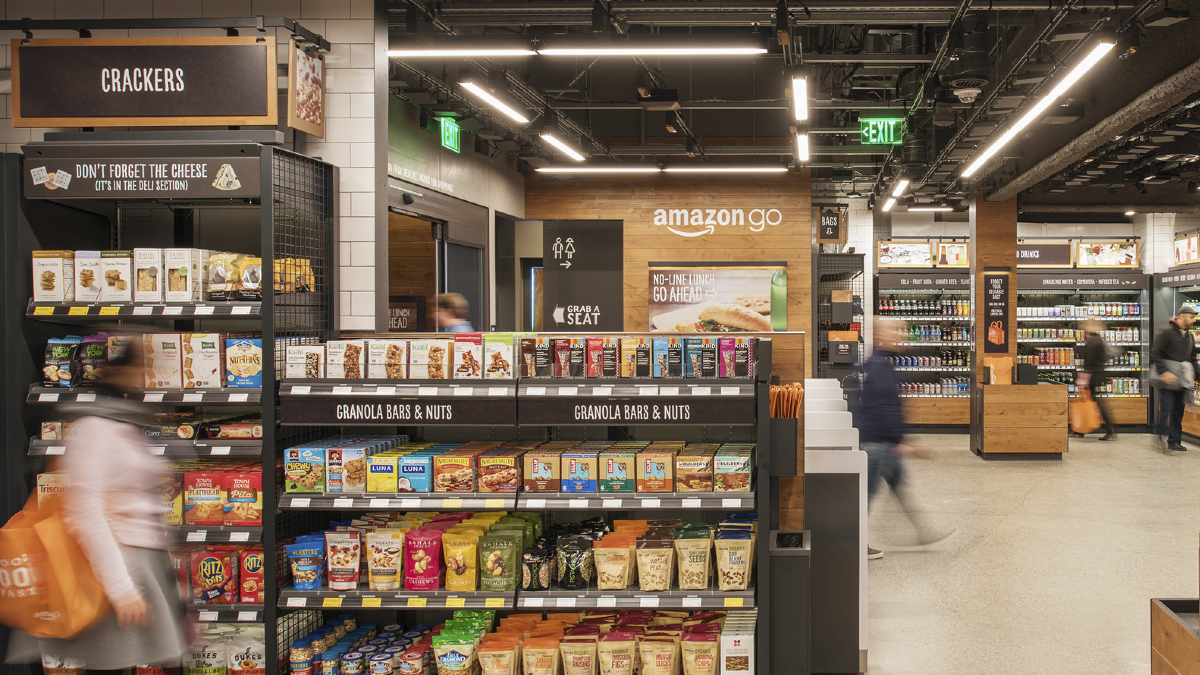

Amazon is closing all of its Amazon Go and Amazon Fresh stores, effectively ending its experiment with a network of cashierless convenience and grocery locations. The company announced Tuesday it will instead focus on expanding its grocery delivery services and its existing Whole Foods Market footprint. This move signals a shift in strategy for Amazon’s grocery stores, acknowledging challenges in achieving profitability and customer appeal with its own branded retail concepts.
The closures will impact locations across the United States, though a specific timeline for all store shutdowns hasn’t been released. Amazon will continue to offer its “Just Walk Out” technology to other retailers, such as stadiums and travel hubs, but will no longer operate these stores as a primary retail channel. This decision follows previous closures and scaling back of Amazon’s physical grocery presence over the past year.
The Demise of Amazon’s Grocery Store Experiment
Amazon’s foray into brick-and-mortar grocery retail, beginning with the first Amazon Go store in 2018, was largely seen as a testing ground for its innovative “Just Walk Out” technology. This system utilizes cameras and sensors to track shoppers’ selections, allowing them to bypass traditional checkout lines. However, despite the technological advancements, the stores struggled to attract sufficient customer traffic and generate consistent profits.
Economic Challenges and Lease Costs
According to an Amazon spokesperson earlier this year, the company “couldn’t make the economics work with the lease cost” in some locations, highlighting a key factor in the decision to close stores. Competition in the grocery sector is fierce, and establishing a new brand identity proved difficult. Additionally, the cost of implementing and maintaining the “Just Walk Out” technology is substantial.
The company stated in a blog post that while it saw “encouraging signals” from its Amazon-branded stores, it hadn’t created a “truly distinctive customer experience with the right economic model needed for large-scale expansion.” This suggests that the stores, while innovative, didn’t resonate strongly enough with consumers to justify continued investment.
Shifting Focus to Whole Foods and Delivery
Amazon isn’t abandoning the physical grocery space entirely. Instead, it’s doubling down on Whole Foods Market, which it acquired in 2017. The company plans to open more than 100 new Whole Foods stores in the coming years, capitalizing on the brand’s established reputation and customer loyalty. Whole Foods has experienced over 40% sales growth and expanded to 550 stores since the acquisition, according to Amazon.
This shift reflects a recognition that consumers have a stronger affinity for the Whole Foods brand than for Amazon Go or Amazon Fresh. The company also intends to expand its network of Whole Foods Market Daily Shop locations, smaller-format stores focused on convenience and grab-and-go meals. These Daily Shops share similarities with the original Amazon Go concept, but benefit from the established Whole Foods brand image.
Meanwhile, Amazon will continue to invest heavily in its grocery delivery services. The company’s online grocery business has seen significant growth in recent years, fueled by changing consumer habits and the convenience of home delivery. This expansion will likely include leveraging the existing infrastructure of Whole Foods and Amazon Fresh to fulfill online orders.
The move also highlights a broader trend in the retail industry, where companies are re-evaluating their physical store strategies in the face of increasing competition from e-commerce. Retail closures are becoming more common as businesses seek to optimize their operations and focus on the most profitable channels. Grocery delivery services are also experiencing rapid growth, driven by demand for convenience and efficiency.
The future of Amazon’s “Just Walk Out” technology remains uncertain, but the company intends to license it to other businesses. This could lead to wider adoption of cashierless checkout systems in various retail settings, such as airports, stadiums, and convenience stores. However, its success will depend on the ability of other retailers to integrate the technology effectively and provide a seamless customer experience.
Looking ahead, Amazon’s next steps will involve finalizing the closure plans for its Amazon Go and Amazon Fresh stores and accelerating the expansion of Whole Foods Market and its delivery services. The company will likely continue to monitor consumer behavior and adjust its strategy accordingly. The success of this revised approach, and the long-term viability of Amazon’s grocery business, will depend on its ability to effectively leverage its existing assets and adapt to the evolving needs of the market.