






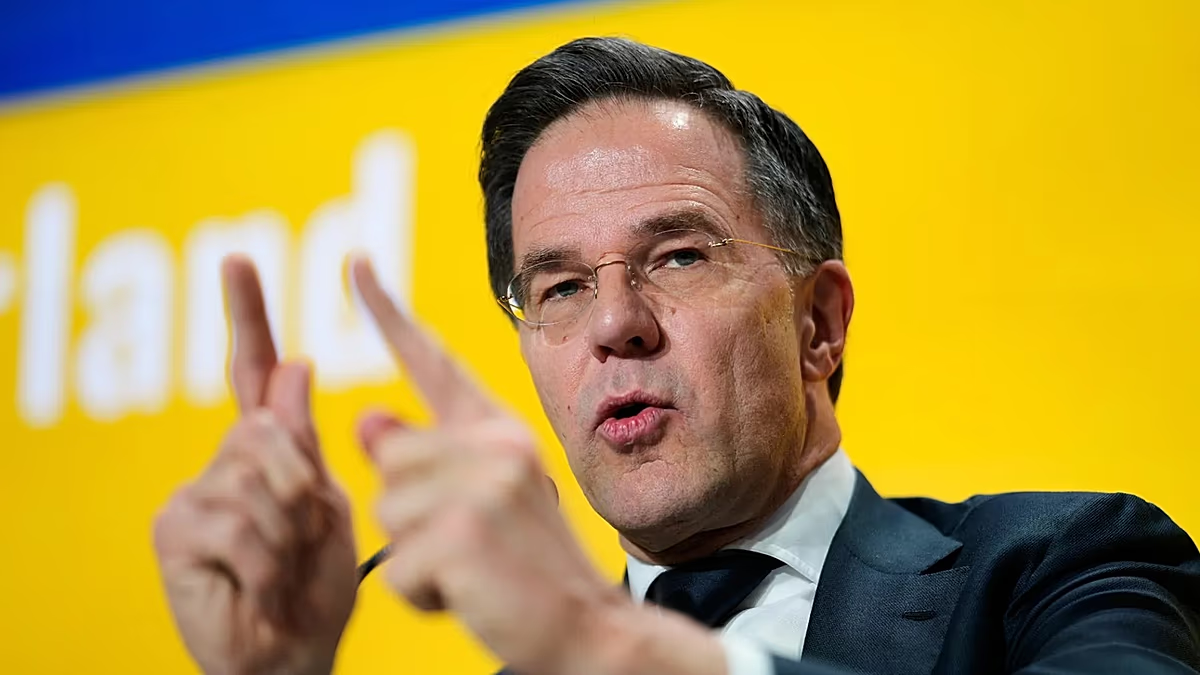

Recent comments by NATO Secretary General Mark Rutte regarding the European Union’s defense capabilities have sparked debate, but Danish MEP Henrik Dahl has publicly defended the NATO chief’s assessment. Dahl agrees with Rutte’s assertion that the EU currently relies heavily on the United States for critical military functions and isn’t yet positioned for fully independent defense. This discussion highlights the ongoing challenges to European defense autonomy and the complex relationship between the EU and its transatlantic ally.
The State of European Defense Autonomy
In an opinion article published by Euronews, Dahl argued that the EU’s current military infrastructure lacks the independent command, intelligence, and digital capabilities needed to function as a deterrent force without US support. He stated directly that, “As of today, the European pillar of NATO cannot function as a fully autonomous deterrent force without the United States.” This viewpoint directly addresses the concerns raised by Rutte this week.
Rutte’s original remarks, delivered before the European Parliament, triggered a swift backlash, particularly from France. The Secretary General cautioned that achieving complete independence from US security guarantees would require a significantly increased financial commitment – approximately 10% of GDP, compared to the current 5% goal – and even the development of an independent nuclear capability. He emphasized the importance of the US nuclear umbrella as a key guarantor of European freedom.
Backlash and French Opposition
The reaction to Rutte’s comments was largely negative, with many perceiving them as undermining efforts towards greater European strategic independence. French Foreign Minister Jean-Noël Barrot, on X, firmly rejected the notion that Europe couldn’t take charge of its own security, pointing to the European pillar within NATO.
Benjamin Haddad, France’s deputy minister for European affairs, further bolstered this stance in an interview with DW, highlighting Europe’s substantial financial aid to Ukraine as evidence of its ability to act independently. He pointed to rising global instability and even raised concerns about potential threats to Denmark’s sovereignty originating from US allies. This points to a growing sentiment in France concerning a need for greater sovereignty in all areas, including military affairs.
However, Dahl countered that “moral posturing and wounded pride are not substitutes for material capabilities.” He believes criticizing Rutte for honestly assessing the current situation is counterproductive and distracts from the necessary work of strengthening European defense capabilities.
Despite acknowledging the current reliance, Dahl doesn’t view complete independence as unrealistic. He stresses the importance of understanding the true costs and timeline involved in building a resilient European defense strategy, suggesting that downplaying these challenges hinders progress. According to Dahl, focusing on realistic improvements, rather than aspirational “dreams,” will ultimately lead to a stronger Europe.
The dispute also echoes past tensions, notably a 2019 incident where then-US President Donald Trump reportedly attempted to purchase Greenland from Denmark, culminating in an unprecedented diplomatic fallout. While resolved, this instance underscored the potential for unforeseen strain within the transatlantic alliance, further fueling discussions about European security policy.
Furthermore, the situation is complicated by the ongoing war in Ukraine and the increased need for coordinated defense efforts across Europe and with the United States. Addressing these challenges requires open dialogue and a pragmatic approach to building a more robust and independent European defense capability.
As discussions continue, European leaders will need to balance the desire for strategic autonomy with the reality of current military dependencies. The path forward likely involves increased investment in defense, closer collaboration between EU member states, and continued engagement with the United States. The coming months will be critical in determining how Europe responds to Rutte’s challenge and charts its future course regarding its role in transatlantic security.
To read the full opinion piece from Henrik Dahl, visit the Euroviews section of the Euronews website here.