






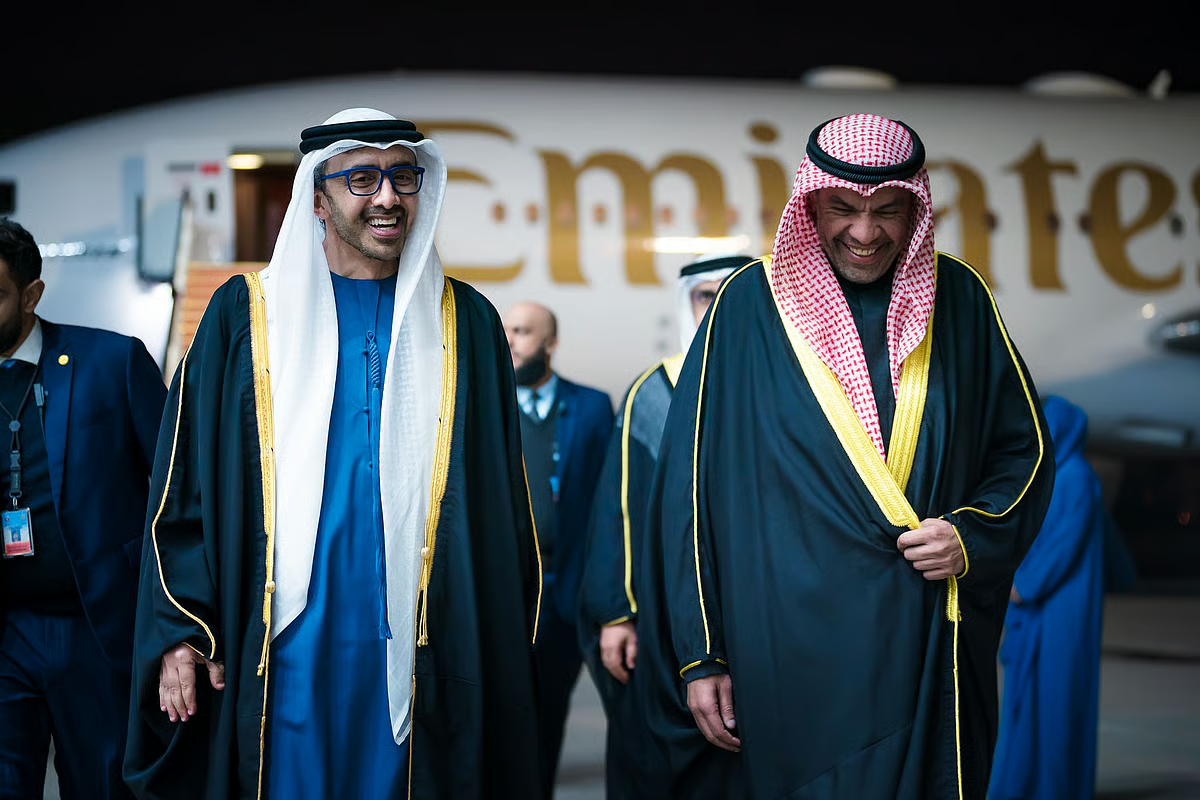

A high-level United Arab Emirates (UAE) delegation, led by Sheikh Abdullah bin Zayed Al Nahyan, Minister of Foreign Affairs, concluded a visit to Kuwait on Monday, focusing on strengthening bilateral relations and regional stability. The delegation, comprised of numerous ministers and officials, engaged in discussions with Kuwaiti counterparts regarding economic cooperation, security concerns, and shared interests in the Gulf region. This visit underscores the UAE’s commitment to collaborative diplomacy and addressing common challenges with its neighbors.
The delegation’s presence in Kuwait City signals a renewed emphasis on diplomatic engagement following recent regional developments. Meetings centered on enhancing trade ties, exploring investment opportunities, and coordinating efforts to promote peace and security. The UAE Ministry of Foreign Affairs confirmed the visit’s successful completion, highlighting the productive nature of the discussions. The visit took place on November 27, 2023.
Strengthening UAE-Kuwait Bilateral Relations
The core objective of the UAE delegation’s visit was to reinforce the longstanding bilateral relations between the UAE and Kuwait. Both nations share a history of close cooperation, particularly within the Gulf Cooperation Council (GCC). According to the UAE Ministry of Foreign Trade, non-oil trade between the two countries reached $7.2 billion in 2022, demonstrating a significant economic partnership.
Key Areas of Discussion
Discussions reportedly covered a wide range of topics, including:
Economic Cooperation: The delegation explored avenues for increased investment in key sectors such as renewable energy, infrastructure, and technology. Both countries are actively diversifying their economies away from reliance on hydrocarbons, creating opportunities for joint ventures and knowledge sharing.
Regional Security: Maintaining stability in the Gulf region was a central theme. The UAE and Kuwait share concerns regarding regional conflicts and external interference, and likely discussed coordinated approaches to address these challenges. This included potential collaboration on counter-terrorism efforts and maritime security.
Political Coordination: The delegation aimed to align positions on key regional and international issues, ensuring a unified stance within the GCC and other multilateral forums. This is particularly important given ongoing geopolitical tensions and the need for a cohesive regional response.
Additionally, the delegation included Dr. Thani bin Ahmed Al Zeyoudi, Minister of Foreign Trade, indicating a strong focus on expanding economic ties. The presence of Ahmed bin Ali Al Sayegh, Minister of Health and Prevention, suggests potential collaboration in healthcare initiatives and pandemic preparedness.
The extensive composition of the delegation – including ministers of economy, tourism, youth affairs, and state – reflects the breadth of the UAE’s engagement with Kuwait. Sheikh Theyab bin Saif Al Nahyan’s participation, alongside several undersecretaries and ambassadors, further underscores the importance the UAE places on this partnership.
Meanwhile, Kuwait has been actively pursuing its own economic diversification plans under “Kuwait Vision 2035,” which aims to transform the country into a regional financial and commercial hub. The UAE’s experience in these areas could provide valuable insights and potential investment opportunities for Kuwait.
In contrast to some regional tensions, the UAE and Kuwait have maintained a consistently strong relationship, built on mutual respect and shared interests. This stability is crucial for regional security and economic prosperity. The UAE’s proactive diplomatic efforts, such as this visit, contribute to a more stable and predictable environment in the Gulf.
The visit also comes amidst ongoing efforts to de-escalate conflicts in the broader Middle East. The UAE has consistently advocated for peaceful resolutions to regional disputes and has played a mediating role in several conflicts. This commitment to diplomacy was likely reiterated during discussions with Kuwaiti officials.
Furthermore, the delegation’s discussions likely touched upon the importance of strengthening GCC cooperation in the face of evolving global challenges, including climate change and cybersecurity threats. These issues require a coordinated regional response to mitigate their impact and ensure sustainable development.
The UAE’s focus on bilateral relations with Kuwait is part of a broader strategy to strengthen ties with its neighbors and promote regional integration. This approach is seen as essential for addressing shared challenges and fostering economic growth. The delegation’s visit represents a significant step in furthering these objectives.
Looking ahead, the UAE and Kuwait are expected to continue working on implementing the agreements and understandings reached during the visit. The Ministry of Foreign Trade will likely lead efforts to expand economic cooperation, while the Ministries of Foreign Affairs will focus on maintaining political coordination. The specific timelines for these initiatives remain uncertain, but the momentum generated by the visit suggests a commitment to swift action. Further announcements regarding joint projects and initiatives are anticipated in the coming months, and observers will be watching for concrete outcomes from these discussions.