






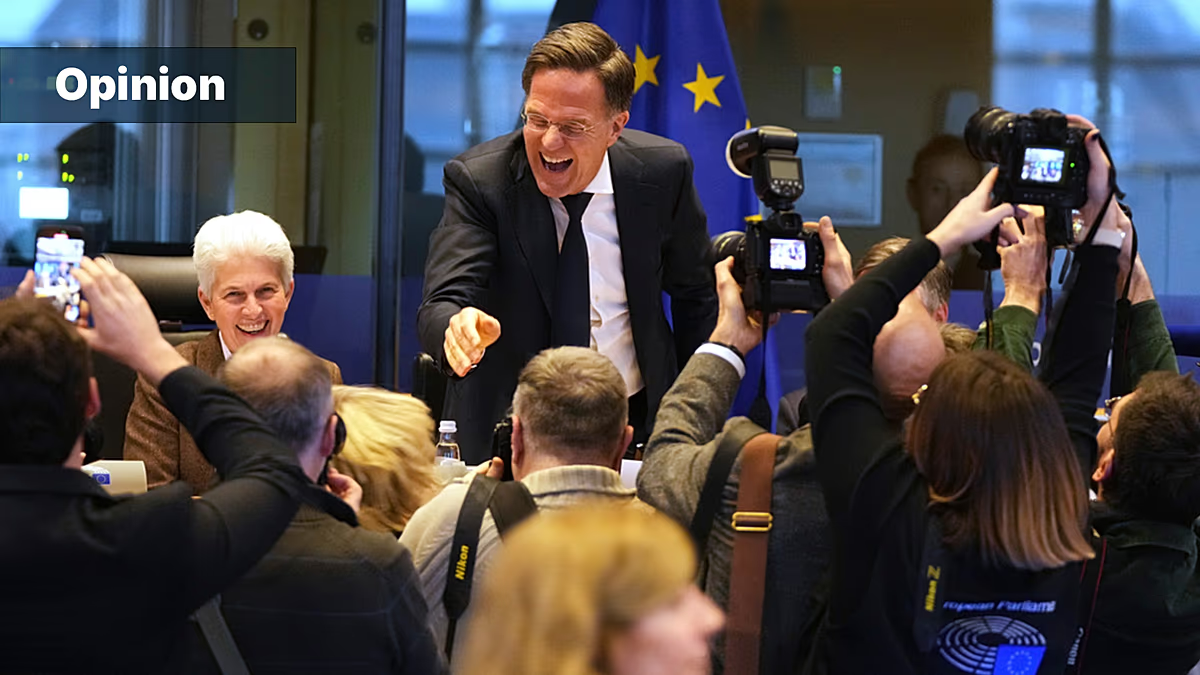

Recent statements by outgoing Dutch Prime Minister Mark Rutte sparked debate within the European Parliament concerning the continent’s current defense capabilities. Rutte bluntly asserted that Europe, as it stands, lacks the independent military strength to effectively deter Russia without the vital support of the United States. This assessment, while prompting criticism, highlights a crucial discussion about European strategic autonomy and the realistic timeline for achieving it.
The reaction to Rutte’s remarks was swift, ranging from disappointment to accusations of negativity. However, analysts argue focusing on the core issue – Europe’s current military limitations – is a more productive approach than dismissing his assessment as pessimistic. Examining the underlying capabilities is essential for charting a viable path forward.
The Current State of European Strategic Autonomy
Rutte’s claim centers on the fact that key elements of a robust deterrent posture are currently reliant on US contributions to NATO. While European nations collectively spend a significant amount on defense, the effectiveness of that spending is hampered by fragmentation and structural dependencies. According to the Council on Foreign Relations, the United States accounts for over 70% of NATO’s total defense expenditure.
Firstly, Europe does not possess a fully independent strategic command structure capable of managing large-scale, high-intensity conflicts without American involvement. The existing NATO command system, developed during the Cold War, is inherently integrated with US leadership and infrastructure. The architecture of this system, while effective, reflects decades of American strategic influence.
Secondly, and critically, Europe’s digital and informational infrastructure lags behind that of the United States. Modern deterrence requires advanced intelligence gathering, secure communication networks, and robust cyber defenses – areas where the US maintains a significant advantage. Without these capabilities, situational awareness and operational coordination are severely compromised, diminishing any potential deterrent effect.
Capabilities vs. Aspirations
The debate surrounding defense capabilities isn’t about political will, but rather acknowledging a current reality. Many European leaders advocate for increased strategic autonomy, and the push for greater European defense spending reflects this ambition. However, simply increasing budgets isn’t sufficient; resources must be strategically allocated to address specific gaps in command, control, and technological infrastructure.
Strategic autonomy is increasingly viewed as a necessary “insurance policy,” particularly given shifting geopolitical dynamics and potential changes in US foreign policy priorities. The concept, long championed by figures like General de Gaulle, is gaining renewed attention as Europe seeks to better safeguard its interests.
The Long Road Ahead
Building true military independence is a monumental undertaking, requiring sustained investment over decades. It isn’t merely a matter of acquiring new hardware, but of establishing independent logistical chains, developing a competitive European defense industrial base, and fostering greater interoperability between national armed forces. Estimates suggest that achieving significant progress will require hundreds of billions of euros in new investments annually.
Furthermore, internal consensus within Europe on defense matters remains a challenge. Differing national priorities and strategic cultures can hinder coordinated action and impede the development of a unified defense posture. Building a genuinely independent European defense capability will necessitate overcoming these internal divisions.
The focus should be on an honest assessment of needs, and a commitment to long-term, substantial investment. “Moral self-affirmation” or wishful thinking won’t strengthen Europe’s defensibility.
Rutte’s statements, therefore, shouldn’t be viewed as a discouragement, but as a realistic starting point for a necessary conversation. The path toward strategic autonomy is long and complex, demanding sustained effort and a clear-eyed understanding of Europe’s current limitations. The question now is whether European nations will translate political aspirations into concrete action, investing in the capabilities needed to secure their future and potentially reshape the transatlantic security landscape. Continued dialogue and a pragmatic approach to defense spending will be crucial in the years ahead.