






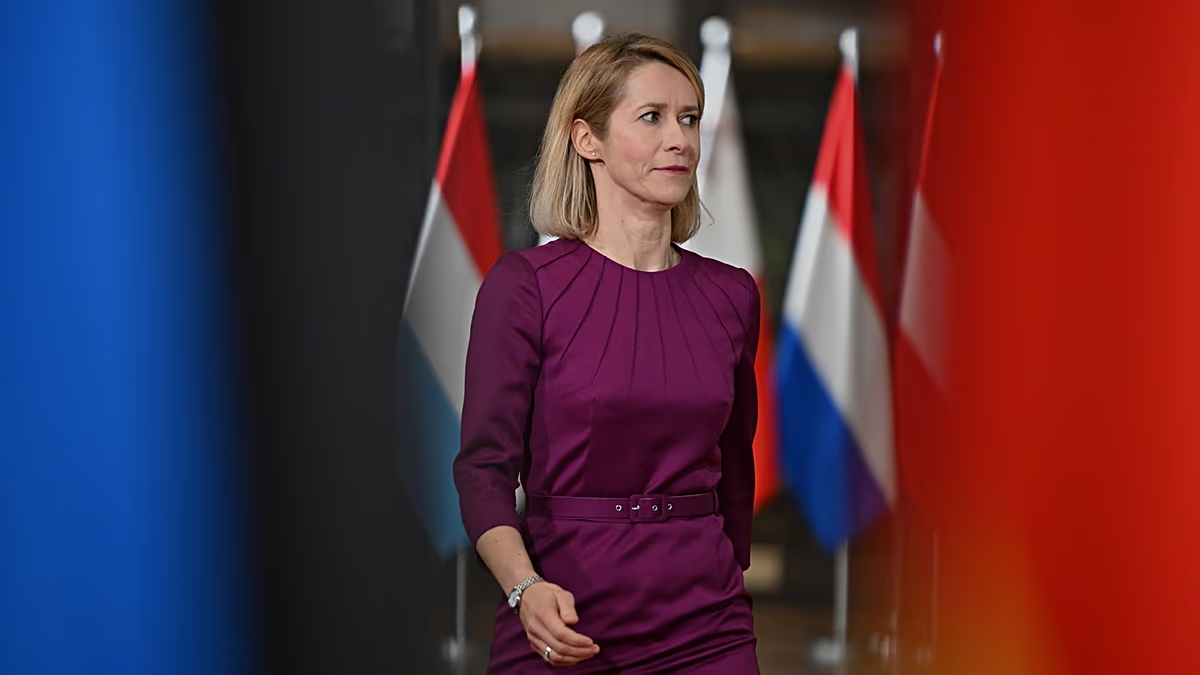

European Union High Representative Kaja Kallas has emphasized a need for increased European defense capabilities, stating the changes in the transatlantic relationship with the United States are “structural, not temporary.” Her comments come amidst continued fallout from recent US actions challenging established alliances and a broader shift towards what she described as “coercive power politics.” The EU is responding with ambitious plans to bolster its defense spending and reduce reliance on American military resources.
The urgency stems from an unprecedented dispute involving US President Donald Trump’s attempt to acquire Greenland from Denmark through tariffs, narrowly averted by an agreement on Arctic security. However, the incident served as a stark wake-up call for European leaders regarding the reliability of US security commitments. The situation has prompted a fundamental reassessment of Europe’s strategic autonomy.
The Shifting Transatlantic Security Landscape
Kallas argued that Europe can no longer assume the United States will prioritize its security needs as it has in the past. “Europe is no longer Washington’s primary centre of gravity,” she stated at the European Defence Agency’s annual conference. This assertion builds on a perceived trend of diminishing US engagement in European affairs over recent administrations, pushing the continent to take more responsibility for its own defense.
Acknowledging the US will remain a partner, Kallas stressed that no major power can sustainably outsource its survival. This perspective has fueled a series of EU initiatives aimed at strengthening defense industrial capacity and enhancing military preparedness. The EU has identified 2030 as the target date for achieving “full defense readiness,” including bolstering defenses against potential Russian aggression.
Geopolitical Challenges Fueling the Change
The call for increased European security isn’t solely a reaction to US policy. Kallas highlighted a complex and deteriorating geopolitical environment, characterized by Russia as a “major security threat,” China as a “long-term challenge,” and instability in the Middle East. According to her assessment, these factors collectively strain the international order established after World War II and raise the specter of a return to power-based competition.
These challenges necessitate a more proactive and self-reliant European security posture. The EU initiatives include exploring joint procurement of weaponry and increasing investment in critical defense technologies. They’re aiming to diversify supply chains and reduce dependence on single suppliers, particularly in sectors where the US currently holds a dominant position.
Meanwhile, comments from NATO Secretary General Mark Rutte this week, dismissing European ambitions for greater defense independence as “dreaming,” triggered a wave of criticism in Brussels and Paris. Although Kallas did not directly address Rutte’s remarks, she advocated for greater coordination between the EU and NATO, especially in burden-sharing between allies.
Kallas proposed a reframing of NATO itself, suggesting it “become more European to maintain its strength” as the US increasingly focuses its resources and attention beyond the continent. This aligns with growing discussions about the future role and structure of the alliance in light of evolving global dynamics. European defense policy is therefore closely tied to the future of NATO.
Implications for European Security & Defense
The current shift represents a significant investment in European military capabilities, moving beyond soft power and focusing on hard security realities. While the US remains a major influence, the EU is positioning itself to be a more equal partner – and a more capable actor – in shaping the future of transatlantic security. This could involve a greater willingness to act independently on certain issues.
The EU’s steps towards greater autonomy in defense have also sparked debate around potential duplication of effort with NATO. Finding the right balance between strengthening European capabilities and maintaining a strong, unified alliance will be a key challenge in the years ahead. Furthermore, securing sufficient funding and overcoming political hurdles within the EU member states will be crucial for the successful implementation of these ambitious plans.
Looking ahead, the progress of EU defense initiatives will be closely watched by both allies and potential adversaries. The outcome of these efforts will not only determine the future of European security but also influence the broader global balance of power. The conversation around increased financial commitment to European defense is expected to continue gaining momentum.