






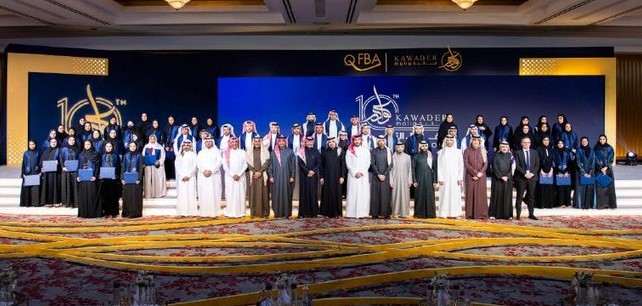

Doha, Qatar – The Qatar Finance and Business Academy (QFBA) recently celebrated the graduation of 58 Qatari students from its tenth cohort of the “Kawader Malia” program, a national initiative focused on developing financial literacy and skills within the Qatari workforce. The ceremony, held under the patronage of Qatar Central Bank Governor HE Sheikh Bandar Bin Mohammed Bin Saoud Al-Thani, underscores the nation’s ongoing commitment to strengthening its financial sector through human capital investment. This graduation brings the total number of “Kawader Malia” program alumni to 382 since its launch in 2013.
The graduation ceremony was attended by key figures including CEOs and officials from prominent Qatari banks and financial institutions, highlighting the program’s strong ties with the industry. These connections are designed to support participants’ career progression and the broader economic diversification goals outlined in Qatar National Vision 2030.
Investing in Qatar’s Financial Future with Kawader Malia
The “Kawader Malia” program is strategically designed to address the evolving needs of Qatar’s financial services landscape. According to QFBA CEO Dr. Khalifa Al Salahi Al Yafei, the tenth iteration represents a significant improvement in methodology, focusing on four core competencies: banking literacy, financial literacy, business acumen, and crucial social and emotional skills.
This comprehensive approach represents a shift towards holistic professional development, extending beyond purely technical knowledge. The program’s duration has been extended to six months, and learning modules restructured to cater to two distinct groups. These include individuals already employed in the finance sector and recent university graduates entering the job market.
Program Enhancements & Training Structure
Enhancements to the program included updated training materials and a dual-track system for participants. The program incorporated practical training conducted in collaboration with seven local and international training institutes, providing diverse learning environments. This collaboration allowed for specialized training tailored to different career paths within financial services.
Additionally, the QFBA engaged nine independent trainers with recognized expertise alongside eleven senior professionals from the banking, insurance, and investment industries. These industry leaders shared insights into real-world challenges and best practices, directly benefiting the students. A total of 20 workshops were also organized during the six-month period, covering a wide array of relevant topics.
The “Kawader Malia” program is primarily aimed at Qatari nationals. It seeks to equip them with the essential knowledge and skills to excel in both current and future roles within the banking industry and wider financial services ecosystem. The program’s content reflects the importance of a skilled workforce in building a robust and resilient financial system.
The development of soft skills, such as communication and teamwork, is also a critical component. These skills are increasingly valued by employers and contribute to a more collaborative and effective work environment. Moreover, fostering business acumen prepares participants to understand market dynamics and contribute to strategic decision-making.
Qatar has been actively investing in its workforce to support its economic diversification. Initiatives like “Kawader Malia” play an important role in this effort by developing a pipeline of qualified professionals for the financial sector. This aligns with the country’s broader strategy to reduce reliance on hydrocarbons and foster a knowledge-based economy.
Looking ahead, the QFBA is expected to continue refining the “Kawader Malia” program based on participant feedback and evolving industry demands. The impact of the program on the employment rates of its graduates will be a key metric to watch in the coming months, alongside any potential expansion of the program’s curriculum to incorporate emerging technologies like fintech. Further announcements regarding the next cohort and any potential program modifications are anticipated in early 2024.