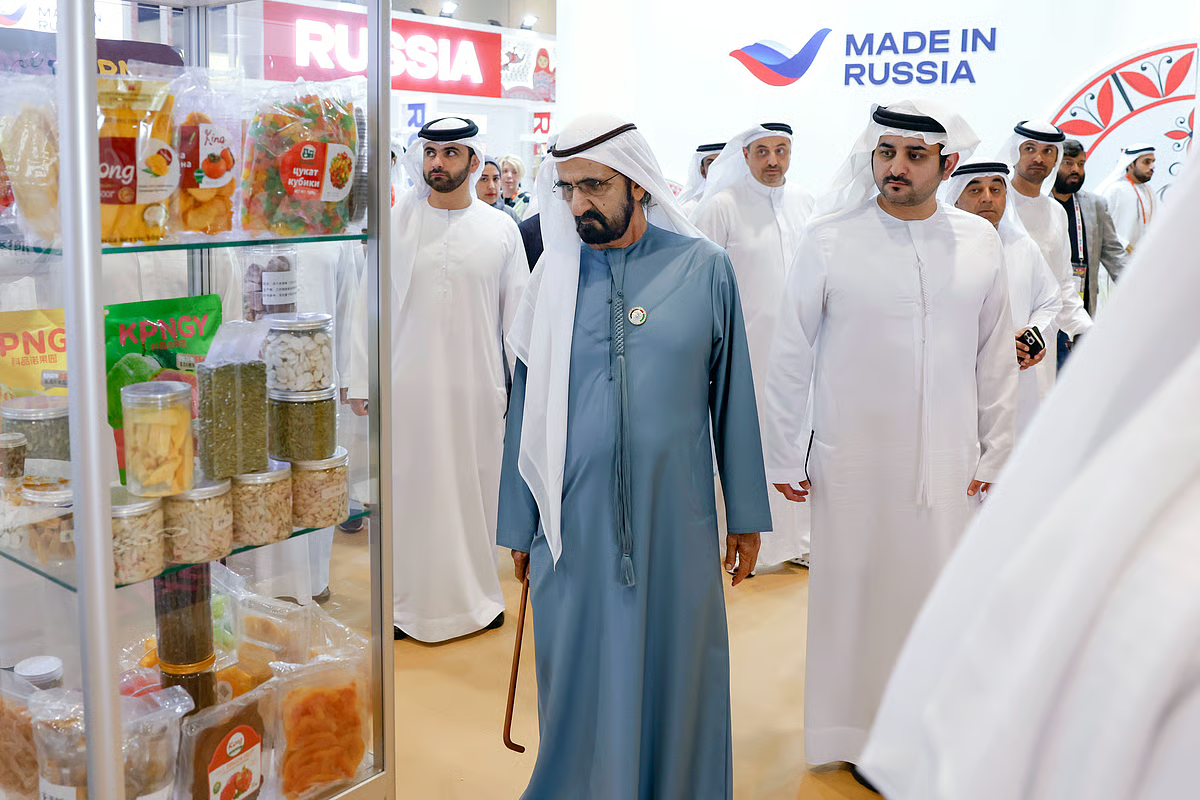

The United Arab Emirates (UAE) is solidifying its position as a crucial player in global food markets, particularly as worldwide supply chains face increasing disruption. Recent statements from UAE Vice President Sheikh Mohammed bin Rashid Al Maktoum highlighted the nation’s strategic importance in facilitating food trade and bolstering international supply networks. This emphasis was underscored during a visit to Gulfood 2024, a major food and beverage trade show in Dubai, showcasing the UAE’s commitment to the sector and its role as a central trade hub.
Sheikh Mohammed’s comments came as Gulfood 2024 drew to a close, bringing together over 8,500 exhibitors from 195 countries and displaying more than 1.5 million food products. The event served as a platform to discuss challenges and opportunities in the food industry, with a focus on sustainable solutions and innovative agricultural technologies. Dubai’s leadership views the city as a key location for international cooperation in strategic industries, including food security.
The UAE’s Growing Role in Global Food Markets
The UAE’s emergence as a significant force in global food markets is driven by several factors. Its geographic location, acting as a bridge between East and West, provides logistical advantages for trade. Furthermore, substantial investments in infrastructure, including ports and logistics networks, have enhanced its capacity to handle and distribute large volumes of food products. According to the UAE Ministry of Economy, the non-oil sector, including food and beverage, is a key driver of economic diversification.
Strategic Investments and Infrastructure
The UAE has been proactively investing in agricultural technology and food processing facilities to reduce its reliance on imports and enhance its domestic food production capabilities. These investments aim to improve efficiency, reduce waste, and promote sustainable farming practices. The country is also exploring innovative solutions like vertical farming and desalination technologies to address water scarcity challenges, a major concern in the region.
Additionally, the UAE is actively pursuing trade agreements with key agricultural producers worldwide. These agreements aim to secure stable food supplies and diversify import sources. Recent partnerships with India and Brazil, for example, focus on increasing the import of grains, fruits, and vegetables. These efforts are part of a broader national food security strategy.
Dubai as a Global Trade Hub
Dubai specifically benefits from its status as a major re-export hub. Its free zones and streamlined customs procedures facilitate the movement of goods, making it an attractive destination for food companies looking to access regional markets. The Jebel Ali Port, one of the largest and busiest ports in the world, plays a critical role in handling the increasing volume of food trade passing through the UAE.
Sheikh Mohammed emphasized Dubai’s continued role as a “global meeting point” for collaboration and the development of sustainable solutions. This vision aligns with the UAE’s broader commitment to environmental sustainability and its efforts to promote responsible food production and consumption. The country is increasingly focused on attracting investment in sustainable agriculture and food technologies.
During his visit to Gulfood 2024, Sheikh Mohammed toured national pavilions representing countries like the United States, India, Italy, Türkiye, Saudi Arabia, Egypt, Spain, Russia, and Ukraine. He received briefings on their respective food products, agricultural innovations, and export capabilities. This engagement underscores the UAE’s commitment to fostering international partnerships and understanding the diverse landscape of the food industry.
The ongoing geopolitical tensions, particularly the conflict in Ukraine, have further highlighted the importance of stable and diversified food supply chains. The UAE has been actively working to mitigate the impact of these disruptions by exploring alternative sourcing options and strengthening its logistical infrastructure. This proactive approach has positioned the UAE as a reliable partner for countries seeking to secure their food supplies.
The UAE’s focus extends beyond simply facilitating trade; it also encompasses promoting food safety and quality standards. The country has implemented stringent regulations and inspection procedures to ensure that imported and domestically produced food products meet international benchmarks. This commitment to quality builds trust among consumers and trading partners. The Emirates Authority for Standardization and Metrology (ESMA) plays a key role in enforcing these standards.
The increasing global population and the growing demand for food are placing significant pressure on agricultural resources. The UAE recognizes the need for innovative solutions to address these challenges and is actively investing in research and development in areas such as precision agriculture, alternative proteins, and food waste reduction. These initiatives aim to enhance food production efficiency and promote sustainable consumption patterns. Food security is a national priority.
Looking ahead, the UAE is preparing to host Gulfood 2026. Organizers anticipate even greater participation and a continued focus on innovation and sustainability. The success of Gulfood 2024 indicates a strong trajectory for the event and reinforces its position as a leading global platform for the food industry. The UAE’s long-term strategy involves becoming a global leader in food technology and a key contributor to global food security, but the success of these ambitions will depend on continued investment, international cooperation, and adaptation to evolving global challenges.
The next steps involve continued implementation of the national food security strategy, further development of agricultural infrastructure, and ongoing negotiations for trade agreements. Monitoring the impact of geopolitical events on supply chains and the adoption of new technologies will be crucial in assessing the UAE’s progress in achieving its food security goals.