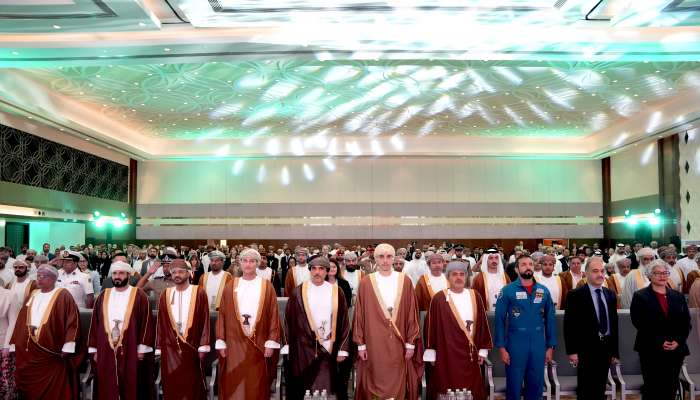

The Sultanate of Oman is rapidly establishing itself as a key player in the global space industry, and this ambition was powerfully underscored with the opening of the second edition of the Middle East Space Conference in Muscat today. Held at the Oman Convention and Exhibition Centre, the event brings together over 500 leading experts and CEOs from government agencies and private companies across 30 nations, alongside more than 85 distinguished speakers. The conference signals a significant commitment to fostering space diplomacy, attracting investment, and building a sustainable space sector within the region.
Oman’s Vision for a Thriving Space Sector
Under the patronage of HH Sayyid Dr. Kamil bin Fahad Al Said, Secretary General at the Secretariat General of the Council of Ministers, the three-day Middle East Space Conference is focused on several crucial objectives. These include creating a platform for enhanced international and regional collaboration, facilitating the transfer of knowledge and best practices, and attracting both experts and investors to capitalize on the burgeoning opportunities within the Omani and wider regional space landscape. A core aim is to solidify Oman’s position as a leading gateway for space services, directly supporting the nation’s economic diversification efforts.
National Policy and Accelerated Growth
Dr. Ali Amer Al Shethani, Undersecretary of the Ministry of Transport, Communications, and Information Technology for Communications and Information Technology, highlighted the transformative nature of the space sector in Oman. He stated that the sector’s accelerated growth is a direct result of a clear national vision, guided by the leadership of His Majesty Sultan Haitham bin Tarik Al Said. This vision is being meticulously implemented through the National Policy and Executive Program for the Space Sector (2023–2033), launched earlier this year.
Investing in Capacity Building and Innovation
The Ministry, through the National Space Programme, is actively investing in fundamental areas such as building national capabilities, fostering scientific research and innovation, and nurturing entrepreneurship within the space domain. This strategic approach is designed to ensure the long-term sustainability and competitiveness of Oman’s space sector. The focus on space technology is a key component of this growth.
Oman as a Regional Hub: From Ambition to Reality
Dr. Al Shethani proudly declared that Oman has become a “model hub” for the space world, particularly within the Middle East. This transformation began with the successful experimental rocket launch from Duqm, Al Wusta Governorate, during the previous conference in January 2024. This achievement demonstrated Oman’s technical prowess and commitment to turning ambitious goals into tangible realities. The launch served as a catalyst for increased interest and investment in the Omani space program.
Key Agreements and Economic Impact
A significant milestone was the signing of an agreement with Airbus Defence and Space for the “Designing, Manufacturing, and Launching the Omani Communications Satellite.” This project is expected to empower local institutions, maximize local value addition, and accelerate the growth of the sector. Field surveys indicate substantial progress since the launch of the national space policy, with a doubling of companies operating in the sector and a 200% increase in investment, leading to a threefold rise in employment opportunities. This positive trend is significantly contributing to the development of the digital economy.
The global space economy is currently valued at over $600 billion and is projected to reach $1.8 trillion by 2035. This growth is driven by the expansion of low Earth orbit activities, the increasing involvement of the private sector, and the emergence of innovative space services like in-orbit servicing and manufacturing in microgravity environments. This makes space a critical element for sustainable development and future economic prosperity.
International Collaboration and Startup Support
Pacôme Révillon, CEO of Novaspace, emphasized Oman’s dedication to enhancing the space sector as a strategic pillar for national development and a pathway to long-term sustainability. He highlighted the importance of regional cooperation and the promotion of innovation across the Middle East. The conference sessions will delve into national strategies, regulatory frameworks, infrastructure development, education, research, and innovation.
HH Sayyid Dr. Kamil bin Fahad Al Said and Eng. Said bin Hamoud Al Maawali, Minister of Transport, Communications, and Information Technology, recognized the winners of the Oman Space Accelerator Program. This intensive 15-week program supported 10 startups with specialized training and mentorship from both local and international experts.
Strategic Partnerships and Technological Advancement
The first day of the conference saw the signing of two landmark agreements. The first was the “Artemis Accords” between Oman and the United States, fostering cooperation in peaceful space exploration, including a return to the Moon and future missions to Mars. This agreement is expected to elevate Oman’s position in the global scientific and technological landscape and open doors for youth and researchers. The second agreement involved Omantel and OQ Gas Networks, collaborating to provide satellite services for monitoring and controlling gas pipeline networks.
Meanwhile, MB Group of Companies and Eutelsat signed an agreement to enhance satellite communication services in Oman, aligning with Oman Vision 2040 and bolstering the nation’s digital infrastructure. The agreement focuses on designing, building, and launching the MB-Sat-1 satellite, with services expected to begin in early 2027, covering the entire Middle East region.
Exhibition and Future Outlook
An accompanying exhibition showcased the capabilities of over 50 local and international companies specializing in space technologies and sciences. This provided a valuable platform for exchanging expertise, building partnerships, attracting investment, and raising awareness about the latest advancements in the space industry. The space conference is a testament to Oman’s commitment to becoming a significant force in the global space arena.
The sessions covered a wide range of topics, including national space strategies, investment opportunities, international partnerships, access to space, infrastructure development, and financing future endeavors. The event clearly demonstrates Oman’s ambition to not only participate in the global space race but to lead the way in regional collaboration and innovation.