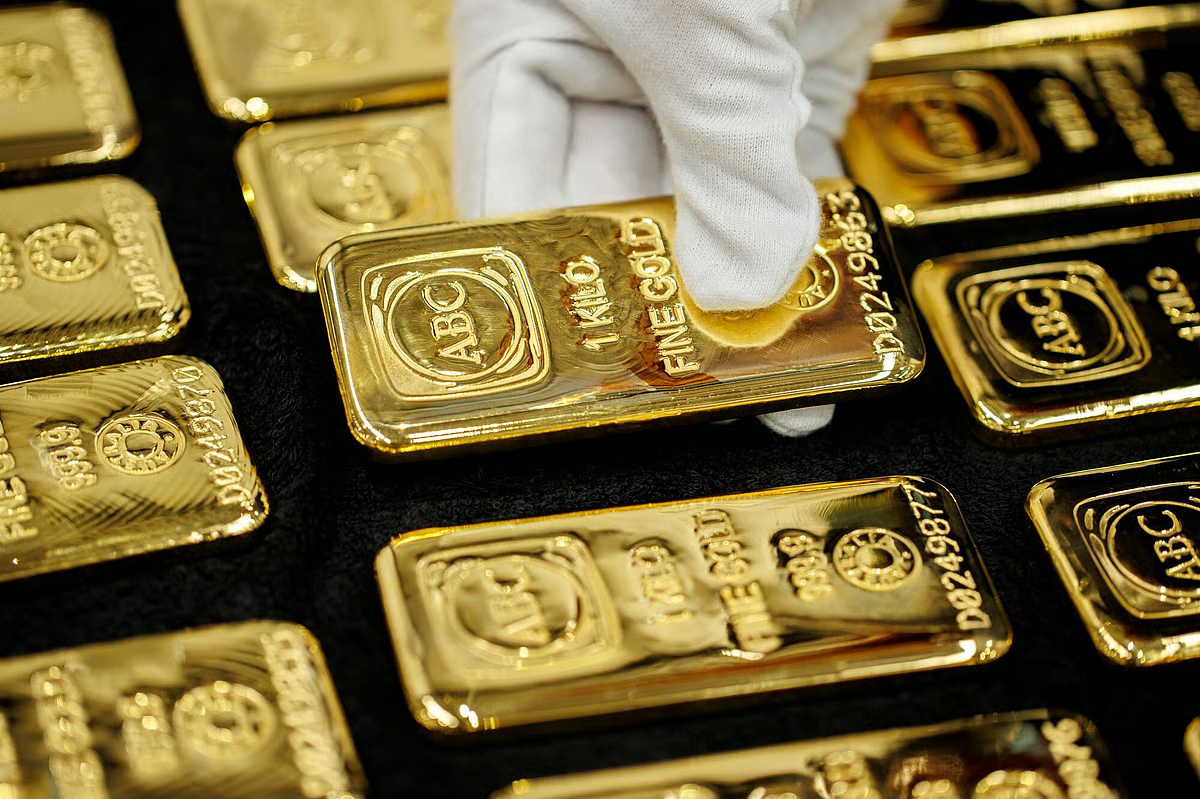

Gold prices surged to a record high on Tuesday, breaching the $5,000 per ounce threshold for the first time in history. The unprecedented rally has sparked intense debate among investors: is now the time to take profits, or should they hold onto their gold investments? The increase was observed across major global markets, including New York, London, and Singapore, signaling widespread demand.
The rapid ascent began in early trading and continued throughout the day, driven by a confluence of economic and geopolitical factors. This milestone represents a significant shift in the precious metals landscape, prompting questions about the sustainability of the rally and its potential impact on the broader financial system. Analysts are now closely monitoring market reactions and potential interventions.
What’s Driving the Historic Gold Price Surge?
Several interconnected factors contributed to the record-breaking gold price. A weakening U.S. dollar, coupled with persistent inflationary pressures, has traditionally boosted demand for gold as a hedge against currency devaluation and eroding purchasing power. According to data from the Bureau of Labor Statistics, the Consumer Price Index (CPI) remains above the Federal Reserve’s target rate of 2%.
Geopolitical Instability
Escalating geopolitical tensions, including conflicts in Eastern Europe and the Middle East, have also played a crucial role. Investors often flock to safe-haven assets like gold during times of uncertainty, seeking to preserve capital amidst potential market turmoil. The increased risk premium associated with these events has further fueled investment in precious metals.
Central Bank Buying
Central banks worldwide have been steadily increasing their gold reserves in recent years, diversifying away from U.S. dollar-denominated assets. This trend, particularly noticeable among emerging market economies, represents a long-term structural shift in global financial holdings. The World Gold Council reported a net purchase of 889 tonnes of gold by central banks in 2023, a trend that has continued into 2024.
Interest Rate Expectations
Shifting expectations regarding future interest rate cuts by the Federal Reserve have also influenced gold’s performance. Lower interest rates reduce the opportunity cost of holding non-yielding assets like gold, making them more attractive to investors. The market currently anticipates at least two rate cuts before the end of the year, although the timing and magnitude remain uncertain.
Sell or Hold: Investor Strategies in a New Era
The question of whether to sell or hold gold now is complex and depends heavily on individual investment goals and risk tolerance. Some analysts suggest that the current rally is overextended and a correction is inevitable. They point to historical patterns of boom-and-bust cycles in the gold market and advise investors to lock in profits.
However, others maintain a bullish outlook, arguing that the fundamental drivers of gold’s price – inflation, geopolitical risk, and central bank demand – remain firmly in place. These investors believe that gold has the potential to climb even higher, potentially reaching $5,500 or even $6,000 per ounce in the coming months. They advocate for a long-term holding strategy.
Considerations for Selling
Investors considering selling should evaluate their initial investment thesis and determine whether the current price reflects a fair valuation. Tax implications of selling should also be carefully considered. Furthermore, diversifying into other asset classes, such as equities or real estate, could be a prudent move to reduce overall portfolio risk.
Arguments for Holding
Those inclined to hold gold emphasize its role as a portfolio diversifier and a hedge against systemic risk. They argue that gold’s long-term performance has historically outpaced inflation, preserving wealth over time. Additionally, the ongoing de-dollarization trend and the potential for further geopolitical shocks could continue to support gold prices.
Impact on the Broader Market and Related Assets
The surge in gold prices has had ripple effects across the broader market. Gold mining stocks have generally benefited from the higher gold prices, although their performance can also be influenced by factors such as production costs and operational efficiency. Silver, another precious metal, has also experienced gains, though typically less pronounced than gold. The price of silver is currently trading around $28 per ounce.
Meanwhile, the strong performance of gold has put pressure on other safe-haven assets, such as the Japanese Yen and the Swiss Franc. Investors may be reallocating capital from these currencies into gold, seeking higher potential returns. The bond market has also been affected, with yields remaining relatively subdued despite the inflationary environment.
In contrast, sectors sensitive to interest rate hikes, like real estate and certain financial institutions, may face headwinds as the prospect of rate cuts is factored into market valuations. The overall impact on the stock market remains mixed, with some sectors benefiting from the increased risk appetite while others are weighed down by concerns about inflation and economic growth.
Looking Ahead: What to Watch
The immediate future of gold prices will likely depend on several key developments. The release of upcoming inflation data will be crucial in shaping expectations about the Federal Reserve’s monetary policy. Any significant escalation in geopolitical tensions could also trigger a renewed surge in demand for safe-haven assets.
Furthermore, investors will be closely monitoring central bank activity and any further announcements regarding gold reserve purchases. The next Federal Open Market Committee (FOMC) meeting, scheduled for June 12-13, will be a key event to watch for clues about the timing and extent of future interest rate cuts. Uncertainty remains high, and market volatility is expected to continue in the near term.
The long-term trajectory of gold will be determined by the interplay of these factors and the evolving global economic landscape. While the $5,000 milestone has been reached, the question of whether this represents a peak or a stepping stone to further gains remains open for debate.