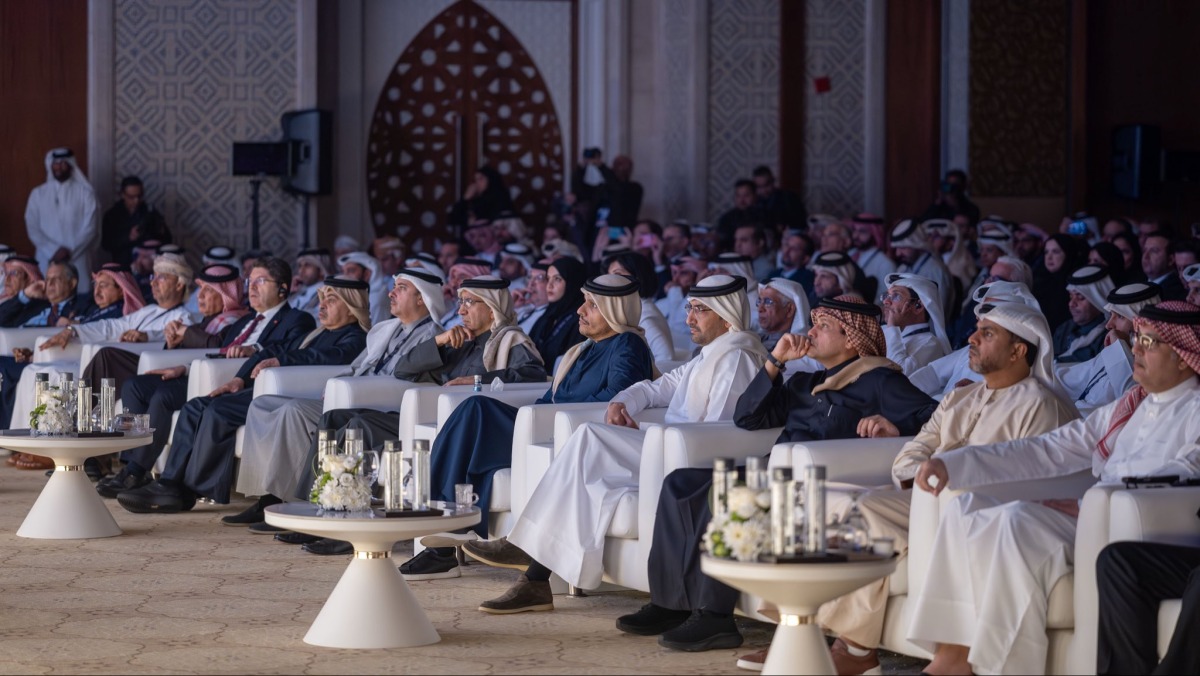

Doha, Qatar – The inaugural Doha Legal Forum commenced on Monday, bringing together international policymakers, legal experts, and scholars to discuss emerging trends and future directions in the field of law. Hosted by the Ministry of Justice in collaboration with the Qatar International Court and Dispute Resolution Centre (QICDRC), the forum aims to foster dialogue and collaboration on critical legal issues facing the global community. The event underscores Qatar’s growing role as a hub for legal innovation and dispute resolution.
Prime Minister and Minister of Foreign Affairs HE Sheikh Mohammed bin Abdulrahman bin Jassim Al-Thani officially opened the forum, which is being held under the theme “Emerging Trends and Forward-Looking Insights.” Attendees include Minister of Justice and Minister of State for Cabinet Affairs HE Ibrahim bin Ali Al Mohannadi, and President of the Court of Cassation and President of the Supreme Judicial Council HE Dr. Hassan bin Lahdan Al Hassan Al Mohannadi, alongside ministers of justice from various nations and prominent figures in the legal profession.
The Significance of the Doha Legal Forum
The establishment of the Doha Legal Forum reflects Qatar’s commitment to strengthening the rule of law and promoting access to justice, both domestically and internationally. According to the Ministry of Justice, the forum provides a platform for sharing best practices and addressing challenges related to legal frameworks in a rapidly changing world. This initiative aligns with Qatar’s National Vision 2030, which prioritizes good governance and a robust legal system.
Focus Areas and Key Discussions
The forum’s agenda encompasses a wide range of topics, including international commercial law, investment arbitration, and the impact of technology on legal practice. Approximately 40 speakers are scheduled to present their insights, with three roundtable discussions planned featuring around 13 speakers from approximately 13 countries. These discussions are expected to delve into specific areas of concern and potential solutions.
One key area of focus is expected to be the evolving landscape of dispute resolution. The QICDRC, a co-host of the event, has established itself as a leading international court in the region, offering a neutral and efficient forum for resolving complex commercial disputes. The forum will likely explore ways to enhance the effectiveness of international arbitration and mediation mechanisms.
Additionally, the impact of emerging technologies, such as artificial intelligence and blockchain, on legal systems is anticipated to be a prominent theme. These technologies present both opportunities and challenges for the legal profession, raising questions about data privacy, cybersecurity, and the automation of legal tasks. Experts will likely discuss the need for regulatory frameworks to address these issues.
The forum also provides a space to discuss international law and its application in contemporary conflicts and global challenges. With increasing geopolitical tensions, the role of international legal institutions in maintaining peace and security is more critical than ever. Participants may explore ways to strengthen these institutions and promote adherence to international legal norms.
However, the precise outcomes of the roundtable discussions and the extent to which specific policy recommendations will emerge remain to be seen. The forum is primarily intended as a platform for dialogue and knowledge sharing, rather than a negotiation or decision-making body.
Meanwhile, the event is expected to boost Qatar’s profile as a center for legal expertise and attract further investment in the country’s legal infrastructure. The QICDRC has been actively working to expand its reach and attract cases from around the world, and the Doha Legal Forum is a significant step in that direction.
In contrast to many legal conferences focused on specific jurisdictions, the Doha Legal Forum adopts a broader, international perspective. This approach allows for a more comprehensive understanding of the challenges and opportunities facing the legal community globally. The Ministry of Justice stated that this inclusive approach was a deliberate choice to encourage diverse viewpoints and foster collaboration.
Looking ahead, the Ministry of Justice has indicated its intention to make the Doha Legal Forum an annual event. The success of this inaugural edition will likely determine the scope and focus of future forums. Observers will be watching to see whether the forum leads to concrete initiatives or policy changes in the area of international legal cooperation and dispute resolution. The next forum is tentatively scheduled for late 2024, pending a formal announcement.