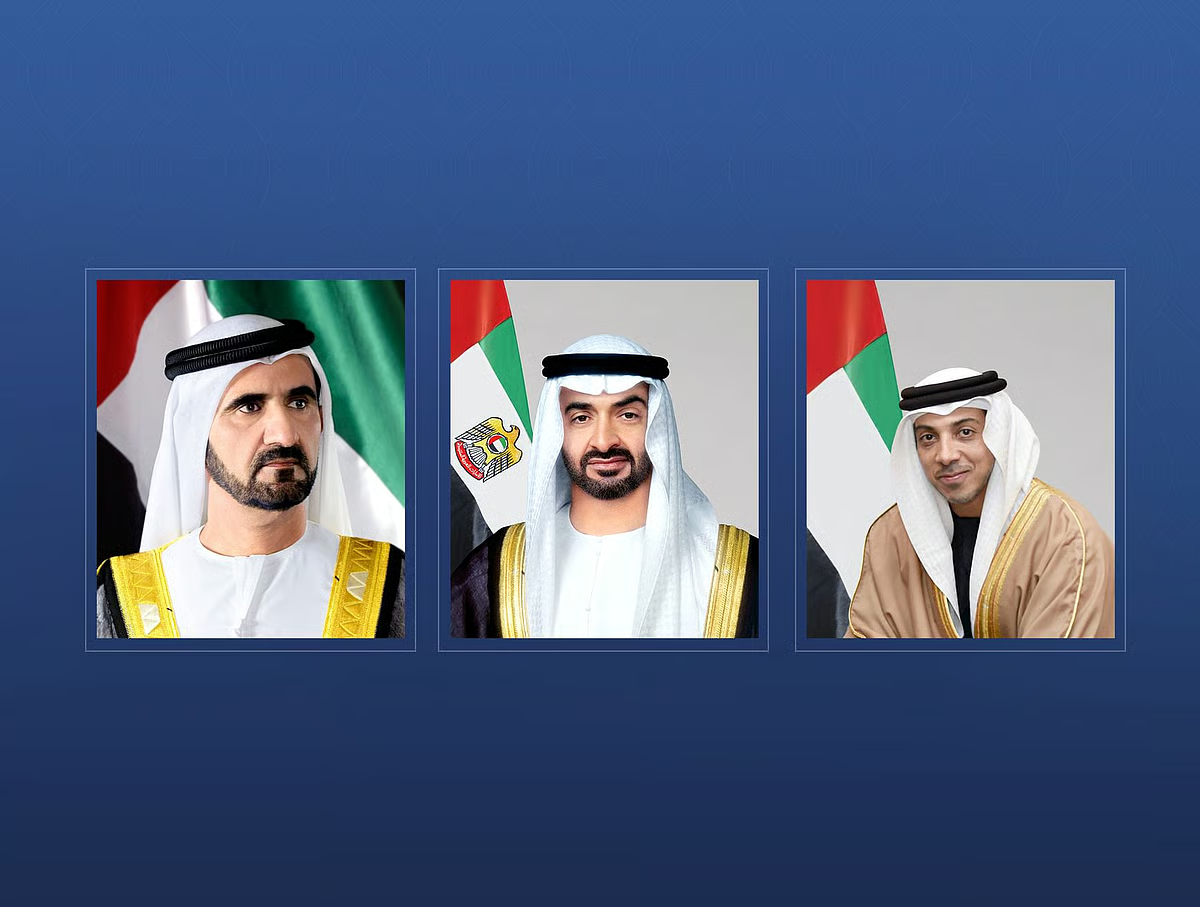

The United Arab Emirates (UAE) leadership has expressed deep condolences to the Emir of Kuwait, Sheikh Meshal Al-Ahmad Al-Jaber Al-Sabah, following the recent passing of Kuwait’s former Emir, Sheikh Nawaf Al-Ahmad Al-Sabah. This display of diplomatic relations underscores the strong ties between the two Gulf nations. Messages of sympathy were dispatched by both His Highness Sheikh Mohammed bin Rashid Al Maktoum, Vice President and Prime Minister of the UAE and Ruler of Dubai, and Sheikh Mansour bin Zayed Al Nahyan, Vice President, Deputy Prime Minister and Chairman of the Presidential Court.
Sheikh Nawaf Al-Ahmad Al-Sabah died on Saturday, December 16, 2023, at the age of 86, after a period of illness. His passing marks the end of a significant era in Kuwaiti history and initiates a period of transition for the nation. The UAE has declared a three-day period of mourning, with flags flown at half-mast as a mark of respect for the late Emir.
Strengthening UAE-Kuwait Diplomatic Relations
The swift and heartfelt condolences from the UAE leadership highlight the close and historically significant diplomatic relations between the two countries. Both nations are key members of the Gulf Cooperation Council (GCC), a political and economic alliance of Gulf states seeking regional stability and cooperation. This relationship extends beyond political alignment to encompass substantial economic partnerships and shared security interests.
According to the UAE Ministry of Foreign Affairs, the messages conveyed sincere sympathy and empathy to the Emir of Kuwait, the Al-Sabah family, and the Kuwaiti people. They also lauded Sheikh Nawaf’s decades of dedicated service to Kuwait and his contributions to regional peace and stability. The UAE leadership affirmed their unwavering support for Kuwait during this period of national mourning and transition.
Kuwait’s Transition of Power
Sheikh Meshal Al-Ahmad Al-Jaber Al-Sabah was formally named as Kuwait’s new Emir on Saturday, immediately following the announcement of Sheikh Nawaf’s death. He had previously served as the Crown Prince and was widely expected to assume the role. This seamless transfer of power is considered a positive sign for Kuwait’s continued stability, particularly in a region often characterized by political volatility.
The new Emir faces several key challenges, including navigating complex regional dynamics and addressing domestic economic concerns. Kuwait possesses significant oil reserves, but diversifying its economy away from hydrocarbons remains a priority. Maintaining strong alliances with regional partners, like the UAE, will be crucial in achieving these goals.
Regional Implications and GCC Unity
The passing of Sheikh Nawaf and the subsequent accession of Sheikh Meshal have prompted expressions of grief and solidarity from across the Arab world. The event serves as a reminder of the interconnectedness of the GCC states and the importance of maintaining unity in the face of shared challenges. The UAE’s response is indicative of its commitment to this regional cooperation.
However, the broader geopolitical landscape continues to present complexities. Ongoing conflicts in the region, fluctuating oil prices, and evolving international relationships all contribute to a dynamic and sometimes unpredictable environment. The stability of Kuwait, and its continued role within the GCC, is therefore of paramount importance to the UAE and other member states.
The UAE and Kuwait have a long history of collaboration on various fronts, including infrastructure projects, investment initiatives, and security cooperation. This partnership is expected to continue under the new Kuwaiti leadership, further bolstering economic ties and promoting regional stability. The two nations also frequently coordinate on humanitarian aid efforts and initiatives aimed at addressing regional challenges.
Furthermore, the UAE’s consistent demonstration of support for Kuwait, as evidenced by the condolences and mourning period, reinforces its position as a reliable and influential partner in the Gulf region. This is particularly significant given the UAE’s own growing role in international affairs and its efforts to promote a peaceful and prosperous Middle East. The strength of these international partnerships is a key component of the UAE’s foreign policy.
The relationship between the UAE and Kuwait also extends to cultural exchange and people-to-people connections. Both countries actively promote tourism and cultural understanding, fostering closer ties between their citizens. This cultural diplomacy contributes to a stronger and more resilient relationship built on mutual respect and shared values. The focus on regional security is also a common ground for both nations.
Looking ahead, the coming weeks will be crucial as Sheikh Meshal Al-Ahmad Al-Jaber Al-Sabah begins to shape his vision for Kuwait’s future. The formation of a new government and the articulation of key policy priorities will be closely watched by regional observers. The UAE is expected to continue offering its full support to Kuwait during this transition, working collaboratively to address shared challenges and promote mutual prosperity. The extent of any policy shifts within Kuwait remains to be seen, and will likely influence the dynamics of the GCC in the coming months.