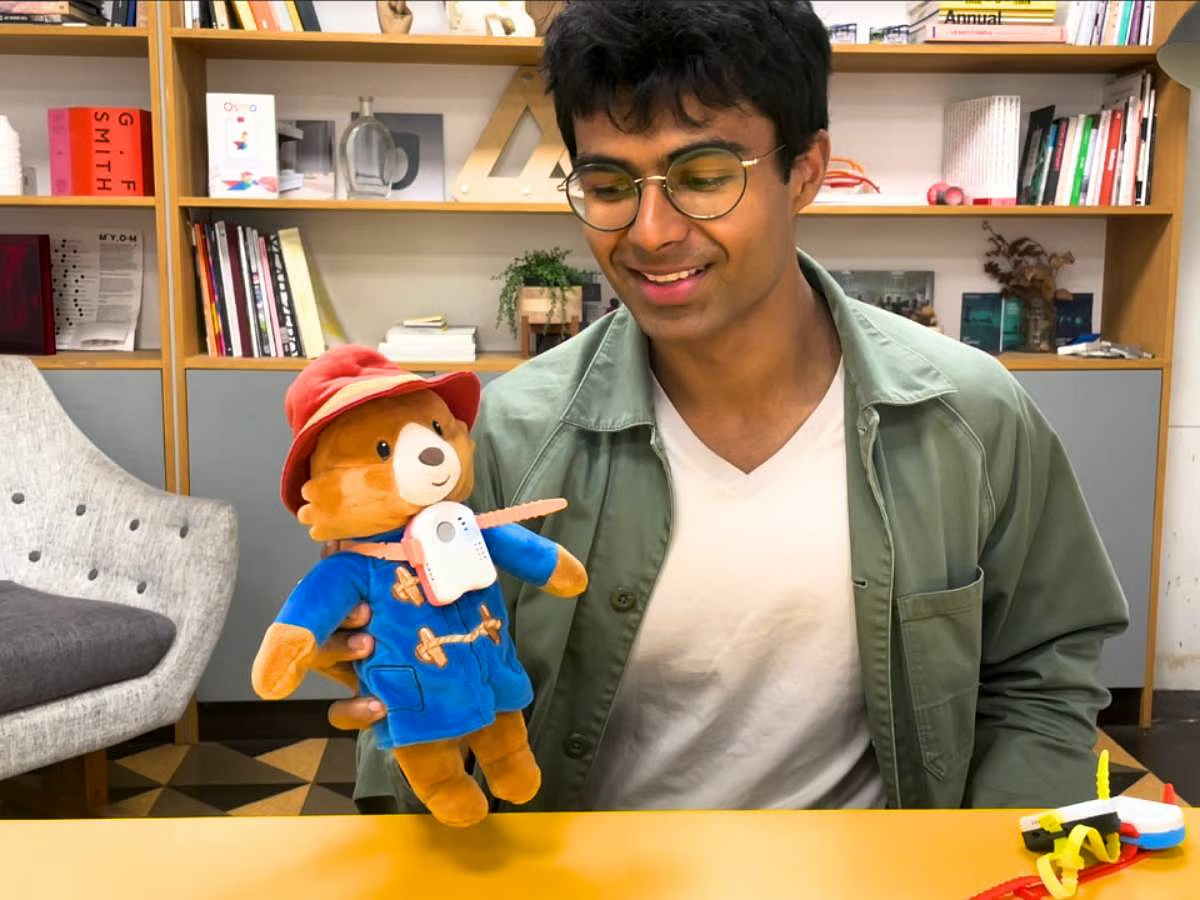

ElatoAI, a San Francisco-based startup founded by a UAE alumnus, is gaining traction in the rapidly evolving field of artificial intelligence companions. The company is developing AI-powered toys designed to offer interactive experiences beyond traditional screens, aiming to redefine how children engage with technology. Founded by Deb, a former student of Delhi Private School Sharjah, ElatoAI is attracting attention from developers and parents alike with its focus on natural language processing and accessible AI.
The Rise of AI Companions and ElatoAI’s Approach
The market for AI-driven products is experiencing significant growth, with applications ranging from virtual assistants to personalized learning tools. ElatoAI distinguishes itself by focusing on physical, toy-based companions, a departure from the predominantly screen-based interactions common with current AI offerings. This approach, according to the company, is designed to foster more natural and engaging relationships with AI, particularly for younger users.
Deb’s upbringing in Sharjah and subsequent education at the University of Illinois at Urbana-Champaign heavily influenced his entrepreneurial path. He credits his school environment with fostering a spirit of participation and experimentation, qualities he now prioritizes in product development. His early exposure to robotics competitions and online learning platforms, including MIT’s Classical Mechanics course, laid the groundwork for his technical expertise.
From Early Experiments to Startup Founder
Deb’s initial interest in building things began at age nine with simple electronic projects assembled in Kolkata. This hands-on experience, though often resulting in failures, instilled in him the importance of the process over the outcome. Later, while working at companies like Coursera and Asana in San Francisco, he honed his skills in product development and user interaction.
The core idea for ElatoAI emerged following the release of OpenAI’s early voice AI demonstrations. Deb questioned the limitations of existing voice AI, specifically its reliance on screens and complex setups. He envisioned an AI companion that could interact naturally, anytime, and anywhere, much like a character from the movie Her or a toy from Toy Story.
Early Traction and Technical Challenges
ElatoAI has quickly gained recognition within the developer community. Its open-source GitHub repositories have garnered over 1,800 stars, demonstrating significant interest and collaboration. The company was also featured in the OpenAI Cookbook, alongside established tech firms like Stripe and Supabase, solidifying its position as an innovator in real-time voice AI on hardware.
This exposure translated into early sales, with ElatoAI delivering over 100 devices to customers in more than 20 countries. Demand is coming from parents and tech enthusiasts seeking novel ways to integrate AI into their lives. However, initial growth presented technical hurdles, particularly regarding performance for users outside of the United States.
Early users reported issues with audio quality and reliability due to server latency. In response, ElatoAI undertook a complete backend redesign, successfully restoring performance globally and ensuring a consistent user experience regardless of location. This experience underscored the company’s commitment to iterative development and rapid problem-solving.
Addressing User Trust and Expanding into New Markets
Beyond technical challenges, ElatoAI also faced concerns regarding the use of AI with children. Parents expressed reservations about data privacy and the potential impact of AI on learning and development. The company addressed these concerns by prioritizing transparency and open-sourcing its technology and prompts, allowing users to fully understand how the AI operates and utilizes data.
A key upcoming feature is the ability to run the AI locally on a MacBook, eliminating the need for an internet connection and keeping user data entirely within the home. This move is designed to further enhance user trust and address privacy concerns. The company is also exploring opportunities in the UAE, recognizing the region’s growing interest in AI and its unique linguistic landscape.
The UAE presents a particularly promising market due to its high proportion of bilingual and trilingual households. ElatoAI’s character-based AI can support language learning by providing conversational practice in both English and Arabic. Additionally, the company sees potential for its AI companions to assist with home learning, offering personalized guidance in subjects like math and science aligned with local curricula.
Funding and Future Outlook
ElatoAI recently completed a small friends and family funding round to support ongoing development and expansion. The company is preparing to launch a Kickstarter campaign, having already been selected as a “Project We Love” by the platform. This crowdfunding initiative will be crucial for scaling production and reaching a wider audience.
Looking ahead, Deb envisions ElatoAI as a leader in the emerging category of voice-first physical AI companions. The company aims to create toys that are not only entertaining but also educational and adaptable, providing a safe and engaging way for children to interact with AI. The success of the Kickstarter campaign and the continued development of robust, privacy-focused AI models will be key factors to watch in the coming months.
Nivetha Dayanand is Assistant Business Editor at Gulf News, where she spends her days unpacking money, markets, aviation, and the big shifts shaping life in the Gulf. Before returning to Gulf News, she launched Finance Middle East, complete with a podcast and video series.
Her reporting has taken her from breaking spot news to long-form features and high-profile interviews. Nivetha has interviewed Prince Khaled bin Alwaleed Al Saud, Indian ministers Hardeep Singh Puri and N. Chandrababu Naidu, IMF’s Jihad Azour, and a long list of CEOs, regulators, and founders who are reshaping the region’s economy.
An Erasmus Mundus journalism alum, Nivetha has shared classrooms and newsrooms with journalists from more than 40 countries, which probably explains her weakness for data, context, and a good follow-up question.
When she is away from her keyboard (AFK), you are most likely to find her at the gym with an Eminem playlist, bingeing One Piece, or exploring games on her PS5.