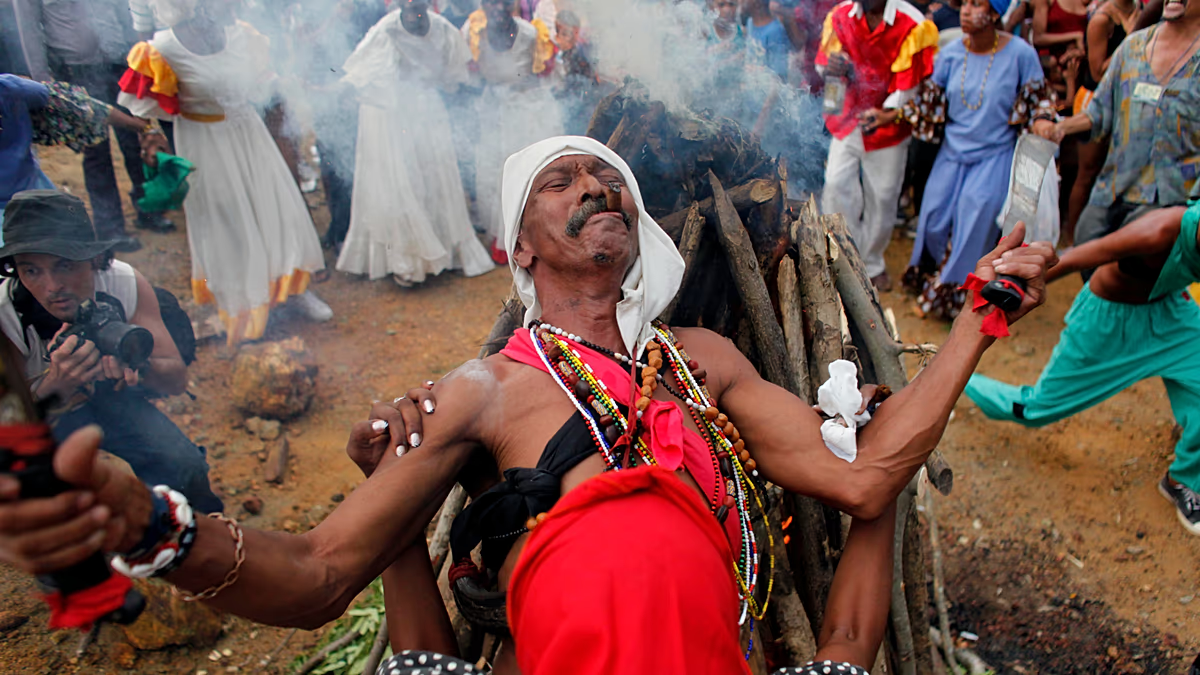

As Cuba faces increasing political and economic pressure, practitioners of Santería, an Afro-Cuban religion, recently held ceremonies seeking peace and spiritual healing for the nation. The rituals, performed by priests and priestesses on Sunday, come amid heightened tensions with the United States and predictions of unrest that emerged earlier this year. These ceremonies highlight the significant role of faith and tradition in Cuban society during times of crisis.
The ceremonies took place across Cuba, with leading figures in Santería families offering gifts to deities and chanting in the ancient Yoruba language. These practices are rooted in the traditions brought to Cuba by enslaved Africans and blended with Spanish influences, forming a core part of the island’s cultural identity. The religious leaders specifically prayed for an end to violence and conflict, aligning with prophecies made in late December.
Understanding Santería and its Role in Cuba
Santería, officially known as Regla de Ocha, is a syncretic religion that combines Yoruba beliefs with Catholicism. Brought to Cuba by enslaved people from West Africa, primarily the Yoruba people, it developed as a way to maintain cultural and spiritual practices under oppressive conditions. The religion centers around the worship of orishas, divine beings who represent different aspects of nature and human life.
Historical Context of Afro-Cuban Religions
The transatlantic slave trade forcibly brought millions of Africans to Cuba, and with them, their religious beliefs. These beliefs were often practiced in secret, disguised within the framework of Catholicism to avoid persecution. Over time, this blending of traditions created a unique Afro-Cuban religious landscape, with Santería being one of the most prominent expressions. Britannica provides a detailed overview of Santería’s history and practices.
The recent ceremonies are particularly noteworthy because of predictions made by Cuban babalawos – Santería priests specializing in divination – on January 2nd. These predictions foretold the possibility of war and violence impacting Cuba in 2024. Interestingly, just days later, on February 3rd, the United States carried out an operation in Caracas, Venezuela, which some observers connected to the earlier prophecies.
However, the connection between the Caracas operation and the Santería predictions remains speculative. The United States government has not directly linked the operation to Cuba, and the babalawos’ prophecies are open to interpretation. Nevertheless, the timing fueled anxieties within Cuba, prompting the religious leaders to seek divine intervention.
Additionally, Cuba is currently grappling with a severe economic crisis, marked by shortages of food, medicine, and fuel. These hardships have led to increased social unrest and emigration. The deteriorating economic situation, coupled with ongoing political tensions with the United States, creates a volatile environment where spiritual solace and calls for peace are particularly resonant.
Meanwhile, the U.S. government continues to maintain a decades-long embargo against Cuba, which significantly impacts the island’s economy. The Biden administration has taken some steps to ease restrictions, but the embargo remains largely in place. The political relationship between the two countries remains complex and fraught with challenges. The U.S. State Department offers information on U.S.-Cuba relations.
In contrast to the political complexities, the Santería ceremonies represent a deeply rooted cultural response to hardship. The practice offers a sense of community and hope for many Cubans, providing a spiritual framework for navigating difficult times. The use of Yoruba chants and traditional offerings underscores the enduring legacy of African traditions in Cuba.
Looking ahead, the situation in Cuba remains uncertain. The economic crisis is likely to persist, and political tensions with the United States are unlikely to ease significantly in the near future. The continued practice of Santería and other Afro-Cuban religions will likely serve as a source of strength and resilience for the Cuban people as they navigate these challenges. Observers will be watching for further developments in both the political and spiritual spheres to understand the evolving dynamics on the island.