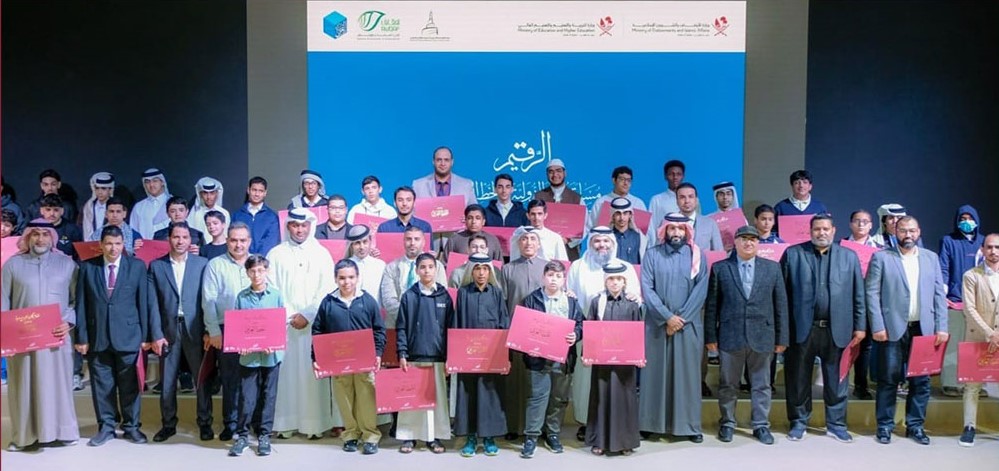

Doha, Qatar – The Ministry of Endowments and Islamic Affairs (Awqaf) and the Ministry of Education and Higher Education (MOEHE) recently honored students participating in the second annual “Al-Raqeem” Arabic calligraphy competition. The initiative, designed to foster appreciation for traditional Islamic art forms, saw participation from nearly 500 students across Qatar’s public and private schools. This year’s competition focused on the Ruq’ah script and a verse emphasizing familial piety.
The awards ceremony, held in Doha, was attended by high-ranking officials from both ministries, including Undersecretary of Awqaf, HE Dr. Sheikh Khalid bin Mohammed bin Ghanim Al-Thani, and Undersecretary of MOEHE, HE Dr. Ibrahim bin Saleh Al Nuaimi. The event recognized the students’ dedication and skill in preserving a vital element of Arab and Islamic heritage.
Strengthening Cultural Identity Through Arabic Calligraphy
According to ministry officials, the “Al-Raqeem” competition is a key component of broader efforts to reinforce cultural identity among Qatari youth. HE Dr. Sheikh Khalid bin Mohammed bin Ghanim Al-Thani highlighted the partnership between the ministries as a successful model for integrating aesthetic and educational values into the curriculum. The competition aims to connect students with the Holy Qur’an and the rich artistic traditions of the Arab world.
The initiative comes as part of a growing global interest in traditional arts and crafts. However, preserving these skills requires active cultivation within educational systems, particularly in regions where they originate. The MOEHE emphasized the importance of incorporating such art forms to develop students’ aesthetic sensibilities and moral understanding.
Competition Details and Participation
Launched in October and concluding in December 2025, the competition attracted 479 students from 24 schools, including a significant and commendable inclusion of four schools dedicated to students with disabilities. This broad participation demonstrates the competition’s growing reach and its commitment to inclusivity, according to Dr. Saleh bin Ali Al Akhn Al Marri, Chairman of the Organising Committee of the Qatar International Arabic Calligraphy Competition.
Participants were tasked with rendering the 23rd verse of Surah Al-Isra in the Ruq’ah script. This specific verse was chosen for its emphasis on respecting parents, linking the artistic skill of calligraphy with important ethical teachings. The selection of Ruq’ah, a widely used and relatively accessible script, aimed to encourage broad participation.
The competition wasn’t solely focused on the final product. Students also benefited from introductory programs and workshops covering the history of Arabic calligraphy, its diverse styles, and the proper use of tools. Training materials, including specialized pens, were provided to support their artistic development.
Participation statistics reveal a diverse range of students involved. Of the 479 participants, 110 were Qatari nationals. Public schools contributed 258 students from ten institutions, while private schools accounted for 221 participants from fourteen schools. The full list of participating schools was released by the Ministry of Endowments and Islamic Affairs.
The Ministry of Endowments and Islamic Affairs collaborated with the Museum of Islamic Art to ensure the competition maintained high artistic standards. Supervision was also provided by the MOEHE’s departments of programs and activities, private schools, and kindergartens, alongside the administrations of the participating schools.
The success of this year’s competition underscores the importance of initiatives that promote Islamic art and cultural heritage. The organizers noted the positive response from students, educators, and the wider community.
Looking ahead, the organizing committee plans to build on this momentum by further developing future editions of “Al-Raqeem” and potentially expanding its scope to include additional calligraphic styles and skill levels. The timing of the next competition and any potential changes to the format remain to be announced, but officials indicated a continued commitment to fostering appreciation for Arabic calligraphy among Qatar’s youth.