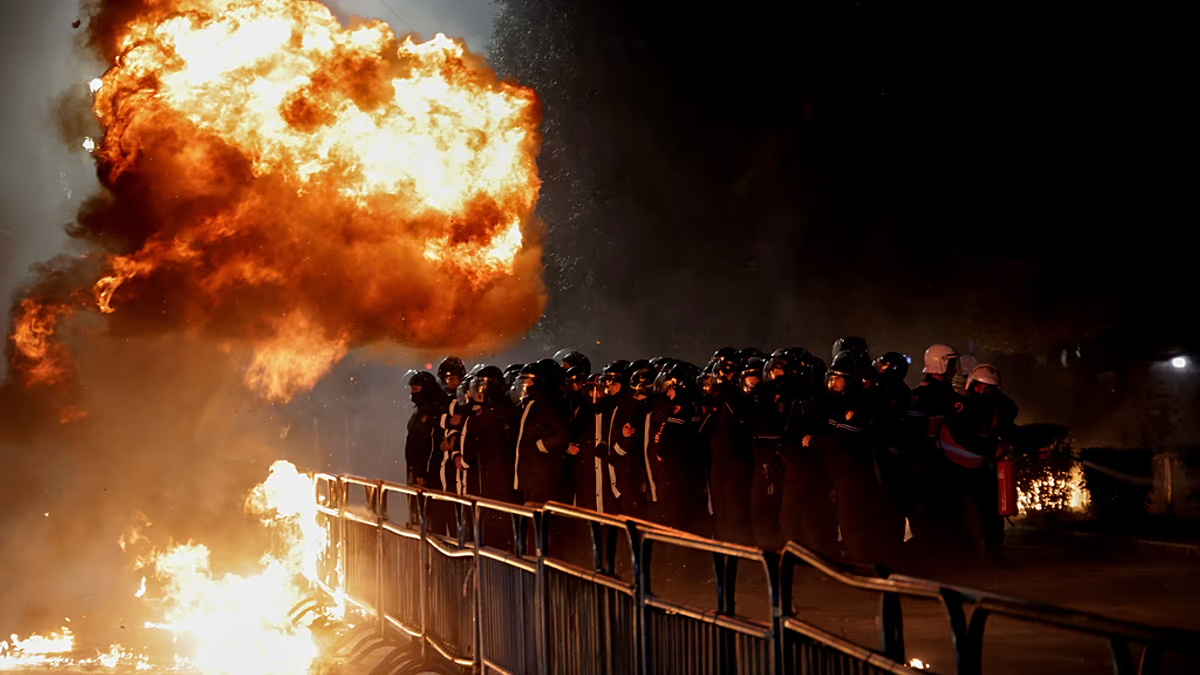

Violent protests in Tirana erupted Saturday evening as demonstrators clashed with police, accusing Prime Minister Edi Rama’s government of widespread corruption. Opposition leader Sali Berisha led the thousands of protesters who gathered in the capital, demanding Rama’s resignation and the formation of a transitional government to oversee early elections. The unrest highlights growing political tensions and concerns over governance in Albania.
The clashes began after speeches concluded, with some protesters reportedly throwing Molotov cocktails at police stationed near government buildings. Law enforcement responded with tear gas and water cannons in an attempt to disperse the crowds. Further confrontations occurred as protesters attempted to breach police cordons surrounding the parliament building, escalating the intensity of the Tirana protests.
Growing Discontent Fuels Albania Protests
The demonstrations represent a culmination of mounting frustration with alleged corruption and perceived links between political figures and organized crime. Both the ruling Socialist Party and the opposition Democratic Party have traded accusations, creating a climate of distrust and political instability. This latest outbreak of unrest underscores the fragility of democratic institutions in the Balkan nation.
According to a police statement, at least ten officers sustained minor injuries during the clashes. Sali Berisha claimed that 25 protesters were arrested, stating, “This is the last kilometre toward the end of Edi Rama’s regime.” The opposition aims to capitalize on public dissatisfaction to force early elections and a change in leadership.
Recent Corruption Allegations
The immediate catalyst for the protests stems from a recent corruption case involving Deputy Prime Minister Belinda Balluku. In November, a corruption court suspended Balluku, a close ally of Rama, over allegations related to a public procurement scandal. Balluku has denied the accusations, while Rama criticized the suspension as an infringement on the executive branch’s independence.
However, the situation remains fluid. The Constitutional Court temporarily reinstated Balluku in December pending a final ruling. A parliamentary committee is scheduled to review a request from prosecutors to lift her immunity next Wednesday, potentially paving the way for her arrest. The Council of Europe has been monitoring Albania’s progress in strengthening its rule of law and tackling corruption.
Meanwhile, Sali Berisha himself faces scrutiny over allegations of awarding public contracts to associates, accusations he vehemently denies. This reciprocal blame game further exacerbates the political crisis and fuels public cynicism.
Broader Context of Political Instability
The current unrest is not isolated. Albania has experienced periods of political turmoil in the past, often linked to disputed election results and accusations of corruption. The country is striving to meet the requirements for European Union membership, which includes demonstrating a commitment to good governance and the rule of law. The European Commission regularly assesses Albania’s progress towards EU accession.
Additionally, concerns about organized crime and its influence on Albanian politics have been persistent. The government has pledged to crack down on criminal networks, but critics argue that more comprehensive reforms are needed to address the root causes of the problem. The Albania protests are a symptom of these deeper systemic issues.
Looking ahead, the parliamentary committee’s decision regarding Belinda Balluku’s immunity will be a crucial moment. Further protests are likely, and the situation could escalate if the government does not address the underlying concerns about corruption and governance. Observers will be closely watching how the Albanian authorities respond to these challenges and whether they can restore public trust. Stay informed about developments in the Tirana situation and Albania’s political landscape as events unfold.