





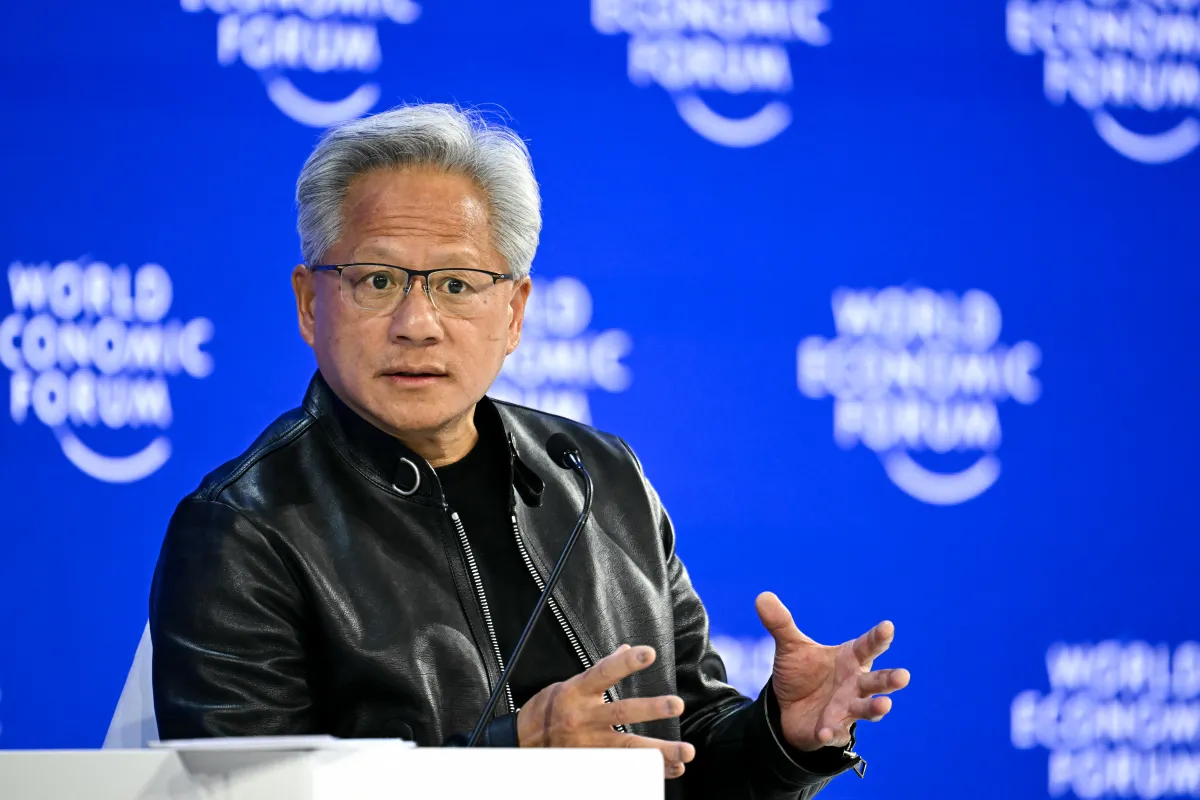

The World Economic Forum in Davos this week saw a significant shift in focus, with discussions heavily dominated by artificial intelligence (AI). Top tech executives, including leaders from Tesla, Nvidia, Microsoft, and Anthropic, convened to discuss the technology’s potential and address growing concerns about a possible AI bubble. The conversations extended beyond technological advancements to encompass geopolitical implications and the competitive landscape within the industry.
While traditionally a forum for global issues like climate change and poverty, this year’s event featured a prominent presence from tech companies, with large-scale exhibits from Meta, Salesforce, and others. This change in dynamic, coupled with candid remarks from CEOs, highlighted the increasing influence and urgency surrounding the development and deployment of AI technologies.
The Rise of AI at Davos and Concerns Over a Bubble
The pervasive discussion of artificial intelligence at Davos underscores its growing importance in the global economy. Executives painted a picture of transformative potential across various sectors, from healthcare to finance. However, this optimism was tempered by acknowledgements of potential risks and the possibility of overinflated expectations.
Satya Nadella, CEO of Microsoft, reportedly emphasized the need for widespread AI adoption to avoid a market correction, suggesting that insufficient usage could lead to a “popped bubble.” This sentiment reflects a broader concern that the current level of investment in AI infrastructure may not be sustainable without a corresponding increase in practical applications and user engagement. The focus on broad adoption contrasts with some other viewpoints.
Geopolitical Tensions and AI Development
The discussion around AI wasn’t confined to business strategy; it also touched upon international relations. Dario Amodei, CEO of Anthropic, publicly criticized a recent U.S. administration decision allowing Nvidia to continue selling advanced chips to China. This highlights the strategic importance of AI technology and the potential for geopolitical competition in its development and control.
Amodei’s argument, according to reports, centered on the idea that providing China with cutting-edge AI capabilities could accelerate their advancements in the field, potentially creating a strategic imbalance. This perspective underscores the dual-use nature of AI technology and the challenges of balancing economic interests with national security concerns. The debate over chip exports is a key element of the current tech landscape.
Competitive Dynamics Among AI Leaders
Beyond the broader industry concerns, the Davos meeting also revealed a heightened sense of competition among AI leaders. Executives were observed engaging in more direct critiques of each other’s strategies and technologies than in previous forums. This shift suggests a maturing market where companies are actively vying for dominance.
Jensen Huang, CEO of Nvidia, reportedly focused on the need for continued investment in AI infrastructure, framing it as a driver of job creation. This message could be interpreted as a defense of Nvidia’s position as a key supplier of AI hardware and a call for further support for the industry. Meanwhile, the presence of multiple CEOs in the same location allowed for real-time observation of these competitive tensions.
The dynamic between companies like Anthropic, a significant Nvidia customer, and Nvidia itself is particularly noteworthy. While reliant on Nvidia’s GPUs, Anthropic’s criticism of Nvidia’s chip sales to China demonstrates a willingness to challenge even its key partners when it comes to strategic issues. This illustrates the complex web of relationships within the AI ecosystem.
The increased visibility of tech companies at Davos, replacing some of the traditional focus on global challenges, signals a changing power dynamic. The substantial investment by companies like Microsoft and Meta in prominent event spaces reflects their growing influence and their desire to shape the global conversation around technology. This shift in focus, however, has drawn some criticism, with observers noting the relative lack of attention given to issues like climate change.
The discussions also touched on the need for talent acquisition and retention, with companies likely seeking to attract skilled workers without driving up labor costs excessively. This competition for talent is a common feature of rapidly growing industries, and AI is no exception. The demand for AI specialists is currently very high.
Looking ahead, the implications of these conversations are likely to be felt in the coming months. Increased scrutiny of AI chip exports to China is expected, as governments grapple with the balance between economic interests and national security. Furthermore, the pressure to demonstrate practical applications of AI will likely intensify, as investors and policymakers seek to validate the current level of investment. The ongoing debate surrounding responsible AI development and deployment will also continue to shape the industry’s trajectory, with a focus on mitigating potential risks and ensuring equitable access to the technology.