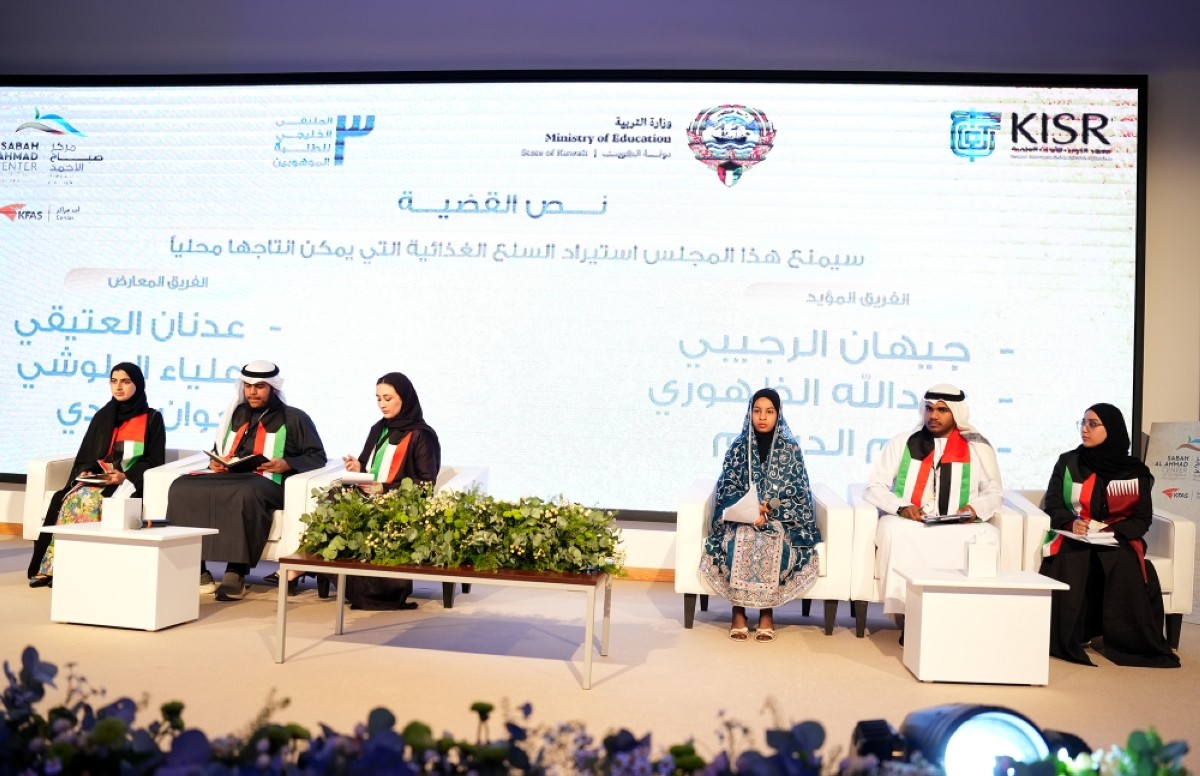

Kuwait is actively investing in its future, and a key component of that investment is nurturing the next generation of innovators. This week, the Sabah Al-Ahmad Center for Giftedness and Creativity successfully concluded the third Gulf Cooperation Council (GCC) Forum for Talented Students, focusing on the critical issue of food security and its link to a sustainable future. The forum, held under the patronage of Education Minister Jalal Al-Tabtabaei, brought together bright young minds from across the region to explore challenges and potential solutions in the food sector.
Strengthening Food Security Through Youth Innovation
The GCC Forum, themed “Safe Food… Promising Future,” wasn’t simply a theoretical exercise. It was designed to bridge the gap between academic learning and real-world application. As Nida Al-Daihani, director of the center, explained, the program incorporated “specialized training programs, scientific workshops, and field visits” to allow students to directly connect their studies with practical challenges. This hands-on approach is crucial for fostering a generation equipped to tackle complex issues like ensuring a stable and resilient food supply.
The Importance of Regional Collaboration
The forum’s GCC-wide scope highlights the understanding that food security is a regional concern. Collaboration between member states is vital, given shared environmental challenges like water scarcity and climate change, which directly impact agricultural production. By bringing together talented students from different backgrounds, the forum encourages the exchange of ideas and the development of collaborative solutions that can benefit the entire region.
Exploring the Science of Sustainable Food Production
A significant portion of the forum was dedicated to exploring the scientific underpinnings of sustainable food production. Through a partnership with the Kuwait Institute for Scientific Research, students delved into a variety of crucial areas. Workshops and lectures covered topics ranging from poultry production and fish farming – both vital for diversifying food sources – to more advanced techniques like tissue culture and microbiology.
Focus on Modern Agricultural Techniques
Livestock management was also a key area of study, emphasizing the need for efficient and responsible animal husbandry. These sessions weren’t just about learning what to do, but how to do it sustainably, minimizing environmental impact and maximizing resource utilization. The inclusion of these modern agricultural techniques demonstrates Kuwait’s commitment to embracing innovation in its pursuit of food security.
Showcasing Kuwaiti Initiatives and Entrepreneurship
The forum wasn’t solely focused on learning; it also provided a platform to showcase existing efforts and inspire future entrepreneurs. The “Khairat Al-Kuwait” exhibition highlighted the work of both government and private entities dedicated to bolstering national food production. This provided students with valuable insights into the current landscape and the opportunities available to them.
Furthermore, the closing ceremony specifically spotlighted pioneering Kuwaiti initiatives, with a particularly strong emphasis on projects led by women. This recognition underscores the vital role women play in driving sustainability and food security within the country. It also serves as a powerful motivator for young female students considering careers in these fields.
Developing Critical Thinking and Problem-Solving Skills
Beyond the technical aspects of food production, the forum also prioritized the development of essential soft skills. Students actively participated in debates, where they were challenged to analyze complex issues and articulate well-reasoned arguments. This focus on critical thinking and problem-solving is just as important as scientific knowledge in addressing the long-term challenges of ensuring a safe and sustainable food supply. The ability to analyze data, identify potential risks, and propose innovative solutions will be invaluable as these students move forward in their academic and professional careers.
The Role of Innovation in Agriculture
The forum’s success in fostering these skills is a testament to the thoughtful design of the program. It’s clear that the organizers understand that achieving true food security requires more than just increasing production; it demands a new generation of thinkers who can approach the problem with creativity and a commitment to sustainability. This also ties into broader discussions around agritech and the future of farming.
Kuwait’s Growing Role as a Regional Hub
The Sabah Al-Ahmad Center for Giftedness and Creativity has firmly established Kuwait as a regional leader in nurturing talent. Nida Al-Daihani emphasized that the forum “strengthens Kuwait’s role as a regional hub” for creative minds. The center’s commitment to providing these opportunities is laying the groundwork for larger and more impactful future editions of the GCC Forum.
The event’s positive reception and demonstrable impact on participating students suggest a bright future for regional collaboration on food security and sustainable development. By investing in its youth and fostering a culture of innovation, Kuwait is taking proactive steps to ensure a resilient and prosperous future for itself and its neighbors. Further information on the Sabah Al-Ahmad Center for Giftedness and Creativity and their initiatives can be found on their official website, encouraging continued engagement and support for these vital programs.