
European leaders are bracing for a potential trade war with the United States as President Donald Trump continues to threaten tariffs over Greenland, escalating tensions at the World Economic Forum in Davos. The dispute, which began with Trump’s expressed interest in purchasing the autonomous Danish territory, has quickly evolved into a broader conflict over trade and international relations. European officials are preparing to respond forcefully if Trump follows through on his threats to impose tariffs on February 1st.
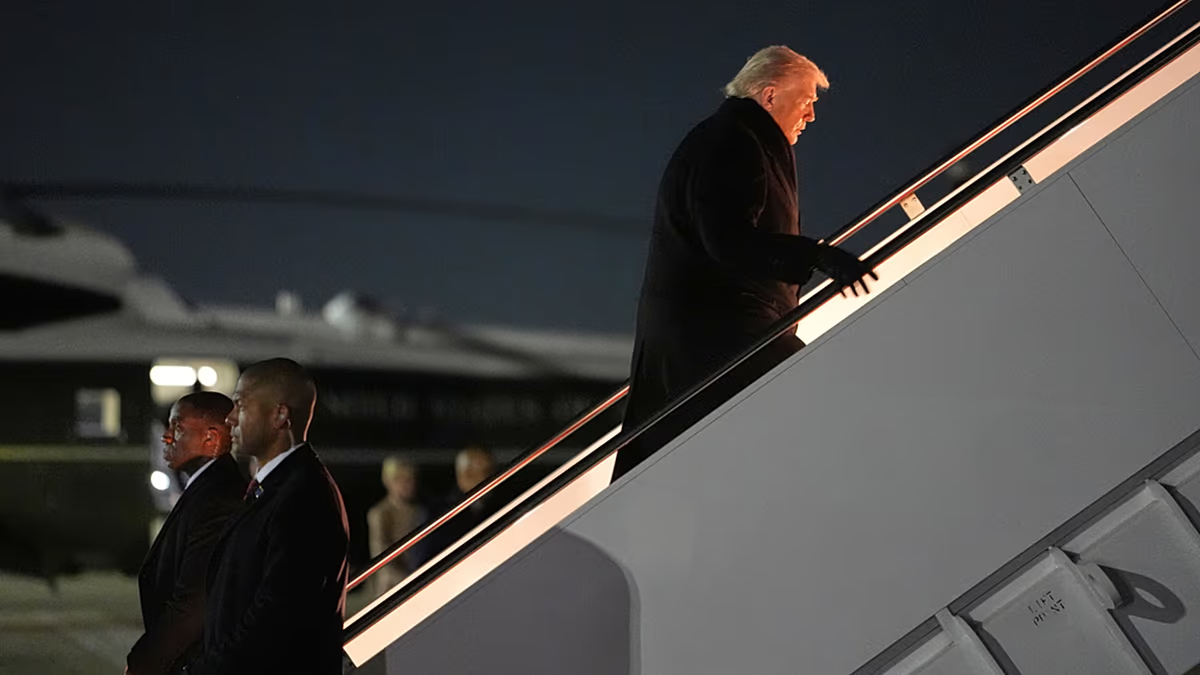
The situation unfolded rapidly this week, with a sharp increase in rhetoric from both sides. Trump’s plane briefly returned to the US due to a minor electrical fault, but he is now en route to Switzerland. Meanwhile, European leaders have signaled their willingness to defend the EU’s interests, with Belgian Prime Minister Bart de Wever issuing a firm warning: “Here and no further. Back down or we’re going all the way.”
Trump’s Greenland Tariffs Threaten EU-US Trade Relations
French President Emmanuel Macron has condemned Trump’s approach as “unpredictability and useless aggressivity,” stating that Europe “prefers respect over bullies” and is prepared to utilize its trade “bazooka” – a powerful set of retaliatory measures – against both the US and China. European Commission chief Ursula von der Leyen has vowed an “unflinching, united and proportional” response, and is expected to meet with Trump in Davos.
The escalating conflict is overshadowing discussions on other critical issues, including the situation in Ukraine. A planned announcement of an $800 billion prosperity plan involving Ukraine, Europe, and the US has been delayed, according to reports from the Financial Times, with six officials citing the Greenland dispute as the reason. Nadia Calviño, chief of the European Investment Bank, emphasized the need for dialogue but urged Europe to focus on its collective strength, stating, “United, we are unbeatable.”
Trump’s stance remains unclear. When asked how far he would go to acquire Greenland, he simply stated, “You’ll find out.” This ambiguity is fueling concerns among European leaders and raising the stakes for upcoming negotiations.
Gaza Board of Peace Adds Complexity
Adding another layer of complexity to the situation, Trump’s invitations to world nations to join his Gaza Board of Peace are becoming entangled in the Greenland dispute. The EU is now grappling with whether to participate, a decision that could further strain relations with the US. France has expressed reservations, citing concerns that the Board’s charter undermines the United Nations and grants excessive power to Trump. Belgian Foreign Minister Maxime Prévot accused Trump of attempting to “replace the United Nations’ system” with his own initiative.
EU officials have privately voiced concerns about the Board’s framework, membership selection, and mandate, advocating for a return to a focus on Gaza itself rather than creating a parallel governing body. The invitation extended to Russian President Vladimir Putin also presents a significant political challenge for European participation, with Hungary already accepting its seat.
EU-Mercosur Deal Faces Parliamentary Hurdles
Meanwhile, the European Parliament is set to vote today on whether to refer the EU-Mercosur trade agreement to the EU Court of Justice, potentially delaying its approval. The vote is expected to be close, with divisions emerging within political groups. The Liberal Renew Europe, the Greens/EFA, and the Left are pushing for the referral, but internal disagreements threaten to derail the effort. The outcome could significantly impact the future of the trade deal and further complicate the EU’s trade agenda.
Other developments include Marine Le Pen’s appeal trial in Paris regarding the alleged misuse of EU funding, and a fatal train crash in Barcelona.
The coming days will be crucial as European leaders attempt to navigate this escalating crisis. All eyes are on Trump’s address to the World Economic Forum and his anticipated meetings with European Commissioners. The EU’s response will likely shape the future of transatlantic trade relations and set the tone for international cooperation in the months to come. Stay updated on the World Economic Forum’s proceedings here.