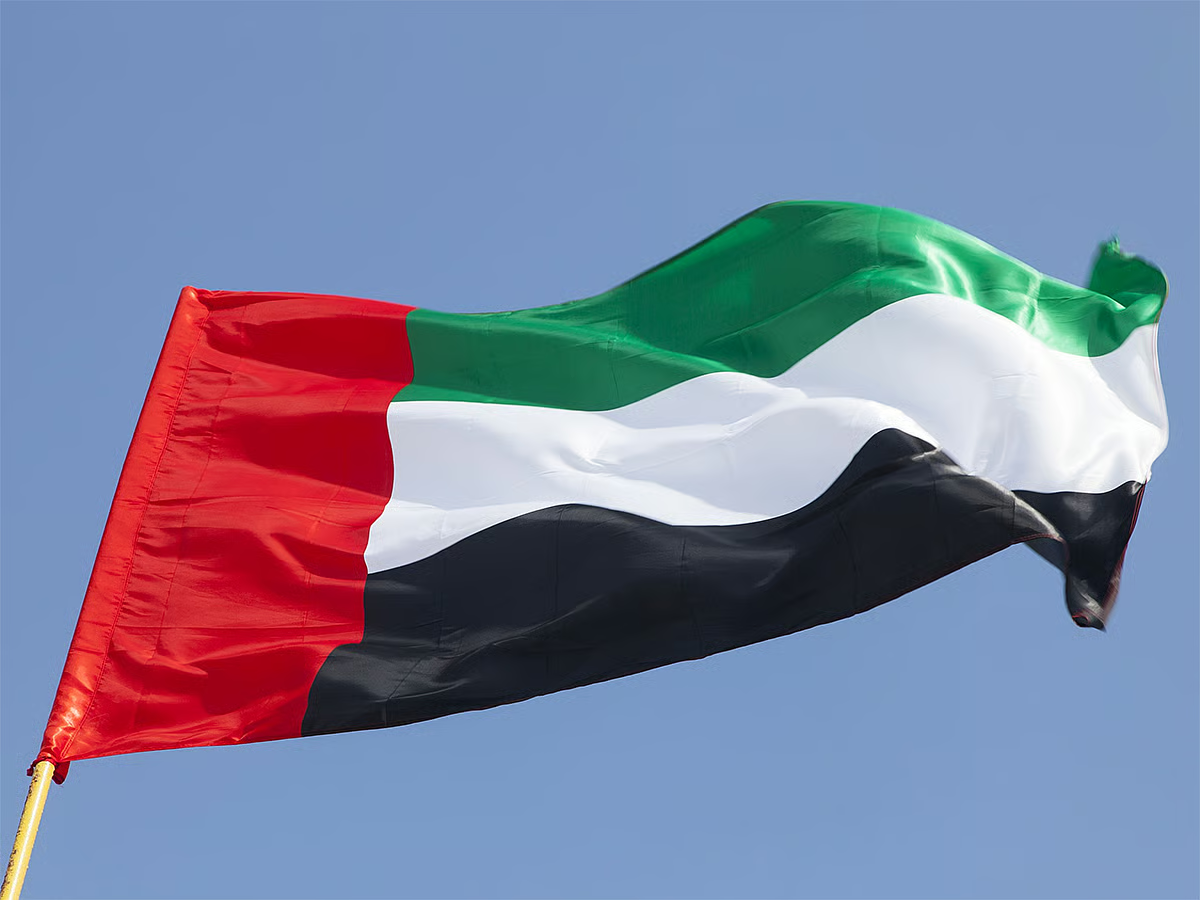

The United Arab Emirates (UAE) has strongly condemned the recent terrorist attack in Northeastern Nigeria that resulted in numerous civilian casualties. The attack, occurring on December 24th, targeted communities in Borno State, raising concerns about escalating violence in the region. The UAE’s Ministry of Foreign Affairs issued a statement expressing its deep sorrow and solidarity with the victims and their families, reaffirming its firm stance against all forms of terrorism. This Nigeria terrorist attack underscores the ongoing security challenges facing the nation.
According to reports, the attack involved armed assailants targeting several villages, resulting in dozens of deaths and widespread destruction. The incident occurred during a period of heightened activity by various armed groups operating in the region. The UAE’s condemnation highlights the international community’s concern over the deteriorating security situation and the humanitarian impact on affected populations. The statement emphasized the UAE’s support for Nigeria’s efforts to combat terrorism and maintain stability.
UAE Condemns Escalating Violence Following Nigeria Terrorist Attack
The UAE’s swift response reflects its commitment to international peace and security, and its consistent opposition to violent extremism. The Ministry of Foreign Affairs stated its belief that such acts of terrorism contradict all religious and human values. This condemnation is part of a broader pattern of UAE statements against terrorism globally, demonstrating a proactive stance on regional and international security issues.
Background on the Borno State Conflict
Borno State, located in Northeastern Nigeria, has been at the epicenter of the conflict involving Boko Haram and, more recently, the Islamic State West Africa Province (ISWAP). These groups have been responsible for a decade-long insurgency characterized by bombings, kidnappings, and attacks on civilian and military targets. The region faces significant humanitarian challenges, including widespread displacement and food insecurity.
The conflict’s roots are complex, stemming from socio-economic grievances, political marginalization, and religious extremism. While the Nigerian military has made gains against the insurgents in recent years, attacks continue to occur, particularly in rural areas. The recent surge in violence suggests a potential resurgence of militant activity, prompting increased concern from regional and international actors.
However, the situation is further complicated by the presence of other armed groups and criminal networks operating in the region, contributing to a broader security crisis. These groups often exploit the instability to engage in activities such as cattle rustling, kidnapping for ransom, and illicit trade. The porous borders and challenging terrain make it difficult for security forces to effectively control the area.
Implications of the Attack and UAE’s Response
The latest attack is likely to exacerbate the humanitarian crisis in Borno State, increasing the number of internally displaced persons and straining already limited resources. The incident could also undermine efforts to rebuild trust between communities and the government. Additionally, it may embolden other militant groups to carry out similar attacks.
The UAE’s condemnation serves as a signal of support for the Nigerian government and its people. It also reinforces the international consensus that terrorism is a global threat requiring a coordinated response. The UAE has previously provided humanitarian aid to Nigeria and has engaged in counter-terrorism cooperation with regional partners. This latest statement could pave the way for increased collaboration in the future.
Meanwhile, regional security analysts suggest that the attack highlights the need for a more comprehensive approach to addressing the root causes of the conflict. This includes tackling poverty, promoting education, and fostering inclusive governance. Strengthening border security and improving intelligence sharing are also crucial steps. The Council on Foreign Relations notes that a purely military solution is unlikely to be effective in the long term.
In contrast to some regional responses, the UAE’s statement focused solely on condemnation and solidarity, avoiding specific commitments to increased aid or military assistance. This approach aligns with the UAE’s broader foreign policy strategy of prioritizing diplomatic engagement and humanitarian support. The country has historically favored a nuanced approach to conflict resolution, emphasizing dialogue and mediation.
The incident also raises concerns about the potential for the conflict to spill over into neighboring countries, such as Cameroon, Niger, and Chad. These countries are already facing their own security challenges and are struggling to cope with the influx of refugees from Nigeria. The Lake Chad Basin region remains a volatile area, requiring sustained international attention.
The Nigerian government has pledged to intensify its efforts to combat terrorism and bring the perpetrators of the attack to justice. The military has launched operations to clear the affected areas and provide security to vulnerable communities. However, the effectiveness of these operations remains to be seen, given the vastness of the region and the resilience of the insurgents. The ongoing security situation also impacts Nigeria’s economic development.
Looking ahead, the international community will be closely monitoring the situation in Northeastern Nigeria. The Nigerian government is expected to provide a detailed report on the attack and its response in the coming days. Further assessments will be needed to determine the full extent of the damage and the long-term impact on the affected communities. The success of counter-terrorism efforts will depend on sustained cooperation between Nigeria and its regional and international partners, as well as a commitment to addressing the underlying causes of the conflict.