
European leaders are set to convene an emergency summit in Brussels on Thursday to address escalating trade threats from former U.S. President Donald Trump. The summit, called by European Council President António Costa, comes after Trump publicly suggested imposing tariffs of up to 10% on goods from several European nations if they don’t consider selling Greenland to the United States. The situation highlights growing concerns about potential economic disruption stemming from the upcoming U.S. presidential election.
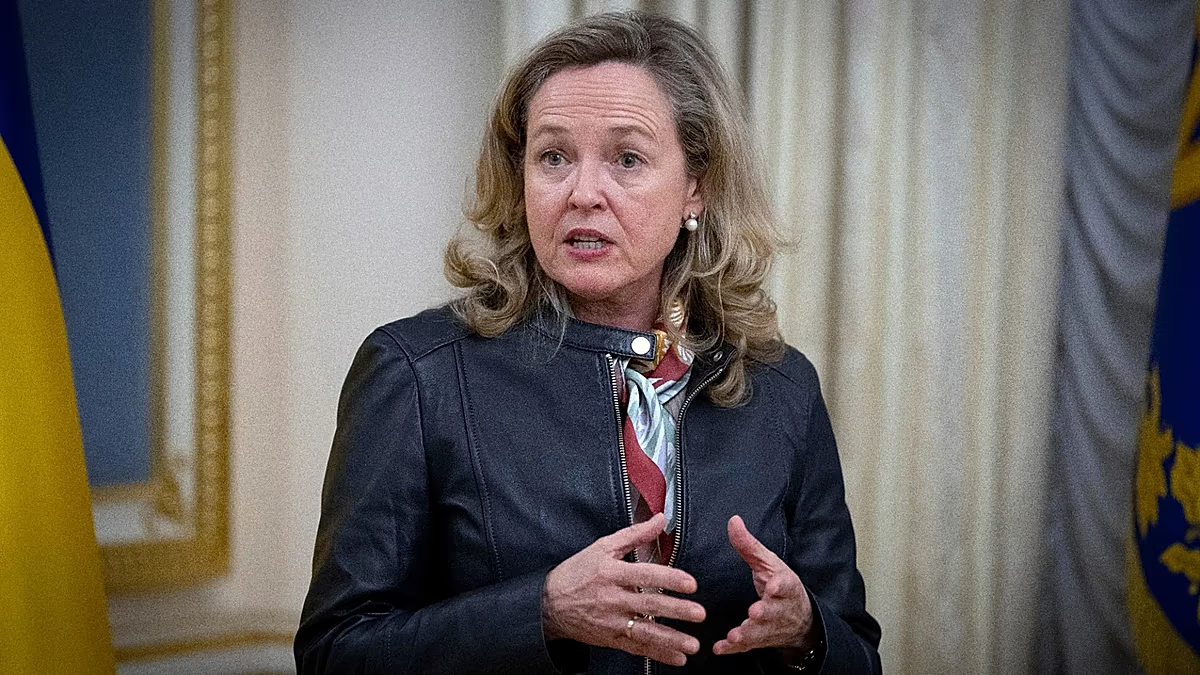
The extraordinary meeting will focus on formulating a unified European response to Trump’s proposals, which are widely viewed as unconventional and potentially damaging to transatlantic economic relations. European Investment Bank President Nadia Calviño emphasized the need for a strong, collective stance, stating Europe must “show the superpower we have” in the face of these challenges. The summit’s outcome will be closely watched by global markets and policymakers.
Responding to Trump’s Trade Threats
The core issue revolves around Trump’s renewed interest in acquiring Greenland, a self-governing territory within the Kingdom of Denmark. He has linked this desire to the possibility of imposing significant tariffs on European imports, specifically targeting countries like Germany, France, and others. This approach represents a departure from traditional diplomatic and trade negotiations.
According to reports, some EU member states, including France and Germany, are advocating for the use of retaliatory measures should Trump follow through on his tariff threats. This stance reflects a growing frustration with the unpredictable nature of Trump’s trade policies, which have previously included tariffs on steel and aluminum.
The Anti-Coercion Instrument
The European Union has a relatively new tool at its disposal: the Anti-Coercion Instrument. Adopted in 2023, this mechanism allows the EU to counter economic pressure from non-EU countries by imposing restrictions on trade, investment, and access to the single market. The European Commission details the instrument’s capabilities on its website.
While the Anti-Coercion Instrument has yet to be utilized, the current situation is prompting discussions about its potential deployment. However, using the instrument is a complex decision with potential ramifications, including further escalation of trade tensions. Some analysts suggest a cautious approach, prioritizing diplomatic solutions before resorting to punitive measures.
The potential tariffs also raise concerns about the broader impact on the global economy. Increased trade barriers could disrupt supply chains, raise prices for consumers, and slow economic growth. The situation adds another layer of uncertainty to an already volatile international landscape. The concept of globalization itself is being re-examined in light of these protectionist tendencies.
Calviño stressed the importance of both pragmatism and firmness in the EU’s response. She indicated a willingness to engage in dialogue with the U.S., but also emphasized the need to defend European interests and principles. This balancing act will be central to the discussions in Brussels.
The upcoming summit is not solely focused on the Greenland issue. It also provides an opportunity for European leaders to address other pressing challenges, including the ongoing war in Ukraine, energy security, and the future of the EU’s economic competitiveness. However, Trump’s trade threats are undoubtedly dominating the agenda.
Looking ahead, the outcome of the European Council summit will be crucial in shaping the future of transatlantic trade relations. The EU’s response will signal its willingness to stand up to external pressure and defend its economic interests. It remains to be seen whether a diplomatic solution can be found, or if the threat of tariffs will materialize, potentially triggering a new era of trade conflict. Stay informed about developments in European business news for further updates.