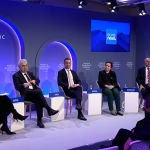

Saudi Arabia will host the World Economic Forum (WEF) International Meeting on Cooperation and Growth in Jeddah on April 22-23, the Kingdom announced Friday. This marks the first regular, high-level international forum to be held in Saudi Arabia under the WEF umbrella, building on previous engagements like the special meeting in Riyadh last year. The World Economic Forum meeting aims to foster dialogue and collaboration on pressing global economic challenges.
The announcement came at the close of the WEF’s 56th Annual Meeting in Davos, Switzerland, where Saudi Minister of Economy and Planning Faisal Al Ibrahim detailed the event. He emphasized the importance of sustained international cooperation to drive economic growth and invited active participation from global leaders. The Jeddah meeting is intended to continue the momentum established during the 2024 Riyadh gathering.
Saudi Arabia and the World Economic Forum: A Growing Partnership
Saudi Arabia’s increasing role in hosting major international events, such as the World Economic Forum meeting, reflects the Kingdom’s broader economic diversification strategy, known as Vision 2030. This plan aims to reduce reliance on oil revenue and position Saudi Arabia as a global hub for business and investment. Hosting the WEF event aligns with these goals by attracting international attention and fostering economic partnerships.
Focus on Global Cooperation
The Jeddah meeting will center on themes of international cooperation and sustainable growth, according to the WEF. These topics are particularly relevant given current geopolitical and economic uncertainties, including ongoing conflicts and inflationary pressures. Discussions are expected to cover a range of issues, potentially including energy transitions, technological innovation, and global trade.
Additionally, the meeting is expected to address challenges related to inclusive growth and reducing inequality. The WEF has increasingly focused on stakeholder capitalism, emphasizing the importance of considering the interests of all stakeholders – including employees, customers, communities, and the environment – not just shareholders. This approach is likely to be a key theme in Jeddah.
Building on the Riyadh Special Meeting
The Jeddah event builds directly on the success of the WEF Special Meeting held in Riyadh in April 2024. That meeting, convened amidst heightened global tensions, brought together leaders to discuss de-escalation and collaboration on shared challenges. The Saudi government reported that the Riyadh meeting resulted in significant commitments to address issues like food security and climate change.
However, some observers noted that the Riyadh meeting also served as a platform for Saudi Arabia to showcase its economic reforms and investment opportunities. The Jeddah meeting is expected to continue this dual purpose, promoting both global cooperation and Saudi Arabia’s economic agenda. Economic growth and diversification will likely be central to the discussions.
Meanwhile, the choice of Jeddah as the host city is significant. Jeddah is a major commercial hub and gateway to the Red Sea, and it is undergoing significant development as part of Vision 2030. Hosting the WEF meeting in Jeddah will further enhance the city’s profile as a destination for international business and tourism. The Kingdom is also investing heavily in infrastructure projects to support its growing role as a global meeting point.
In contrast to the larger Annual Meeting in Davos, the International Meeting on Cooperation and Growth is designed to be a more focused and action-oriented event. The WEF aims to facilitate concrete outcomes and partnerships, rather than simply providing a platform for discussion. This emphasis on practical solutions is intended to address the urgent challenges facing the global economy.
Looking ahead, the success of the Jeddah meeting will be measured by the extent to which it generates tangible commitments and fosters greater international cooperation. The WEF has not yet released a detailed agenda or list of confirmed participants, but further details are expected in the coming weeks. Observers will be watching to see how the meeting addresses key global challenges and whether it leads to concrete progress on issues like global trade and sustainable development.
The next step will be the release of the official agenda and participant list, anticipated by the end of March. The impact of the meeting on regional and global economic policy remains to be seen, and will depend on the level of engagement from key stakeholders.